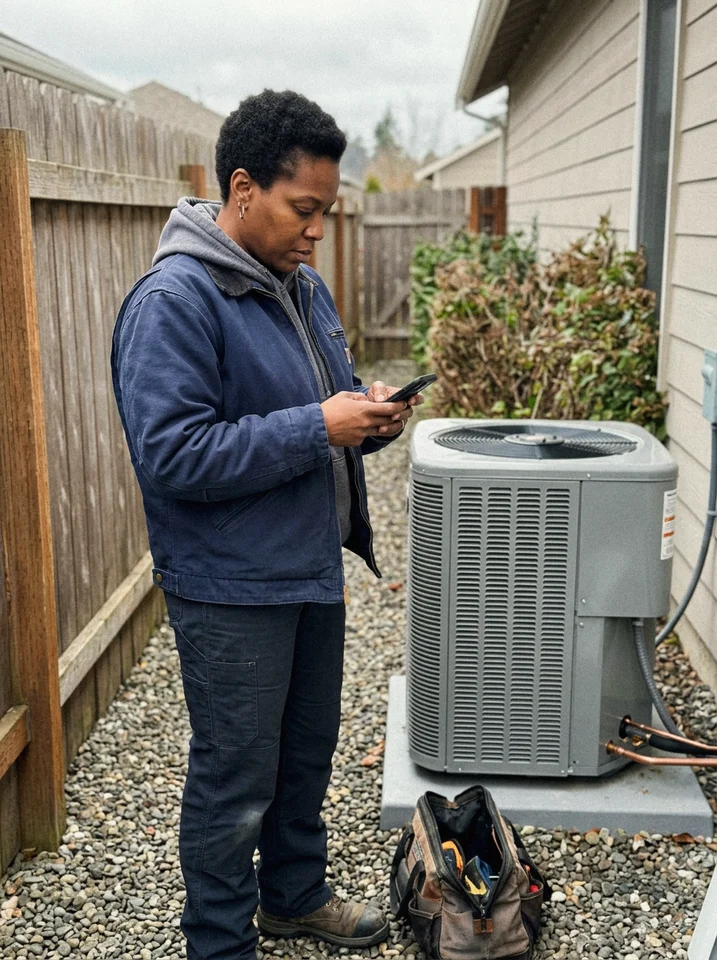
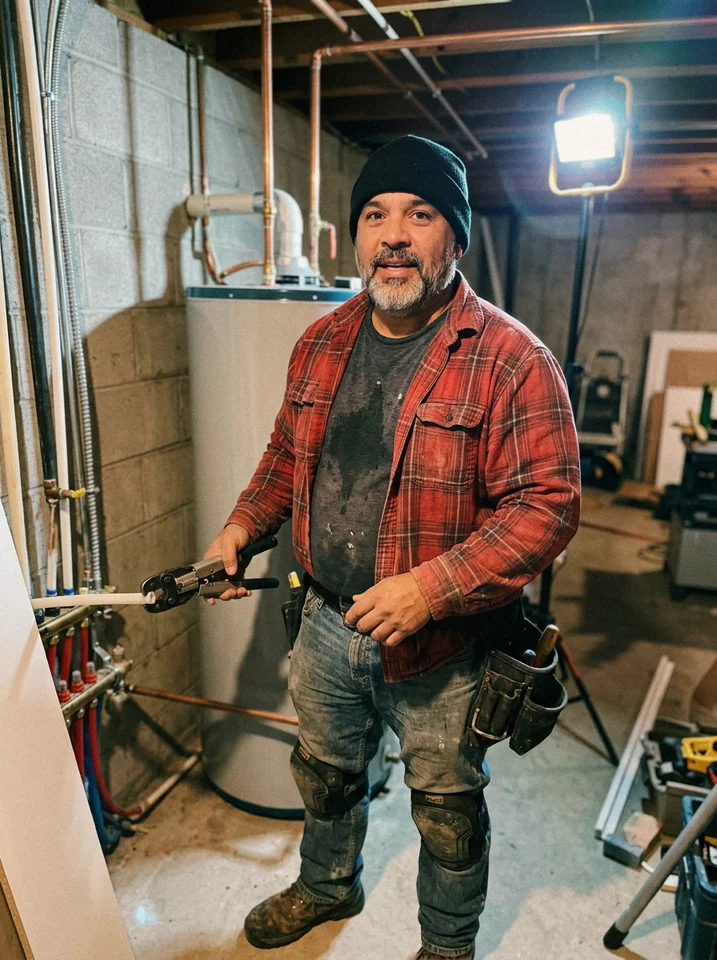
Many small jobs, one tidy system.
Handyman work is a steady stream of small jobs that add up. Revcore helps you quote fast, keep the schedule full, and collect on the spot so the little jobs never become big headaches.
14-day free trial, no credit card required.

What handyman contractors need from software
Handyman businesses need software that makes small jobs quick to quote, keeps the day packed with nearby stops, and collects payment before the truck leaves the driveway. Revcore Pro gives you saved line items for common fixes, a crew board with a job map, and text-to-pay or card-on-file charges on every visit, all tied to one customer history for repeat work.
Where handyman jobs get stuck.
The same few things cost handyman crews time and money on every job. This is what Revcore takes off your plate.
- 01
So many small quotes
Build estimates fast from saved line items your whole team can use.
- 02
Keeping the day full
Schedule back-to-back jobs by area and confirm with GPS clock-in.
- 03
Collecting on every visit
Bill on completion with card or ACH so nothing slips through.
How a handyman job runs in Revcore.
From the first call to the final payment, every step happens on the same job record, so nobody retypes anything and nothing waits on the office.





Handyman job, example
Catch the call before the next guy does
1/7
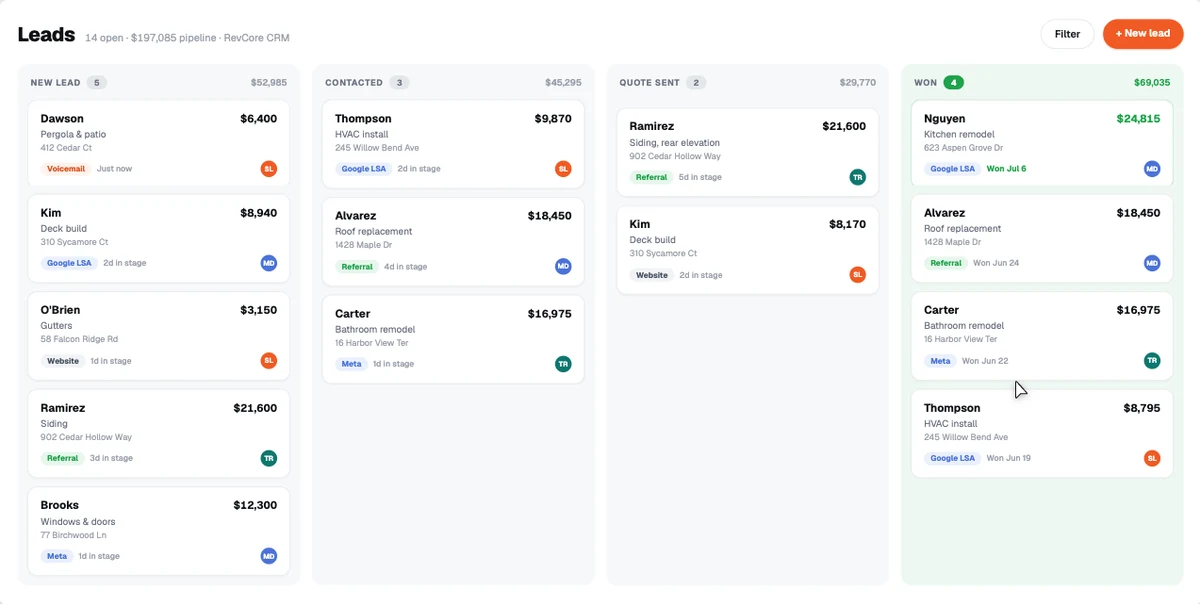
Web forms land on the pipeline as leads. Two-way texting lets you reply in seconds, so the homeowner with a leaky faucet and a sagging door hears from you while you are still on a ladder.
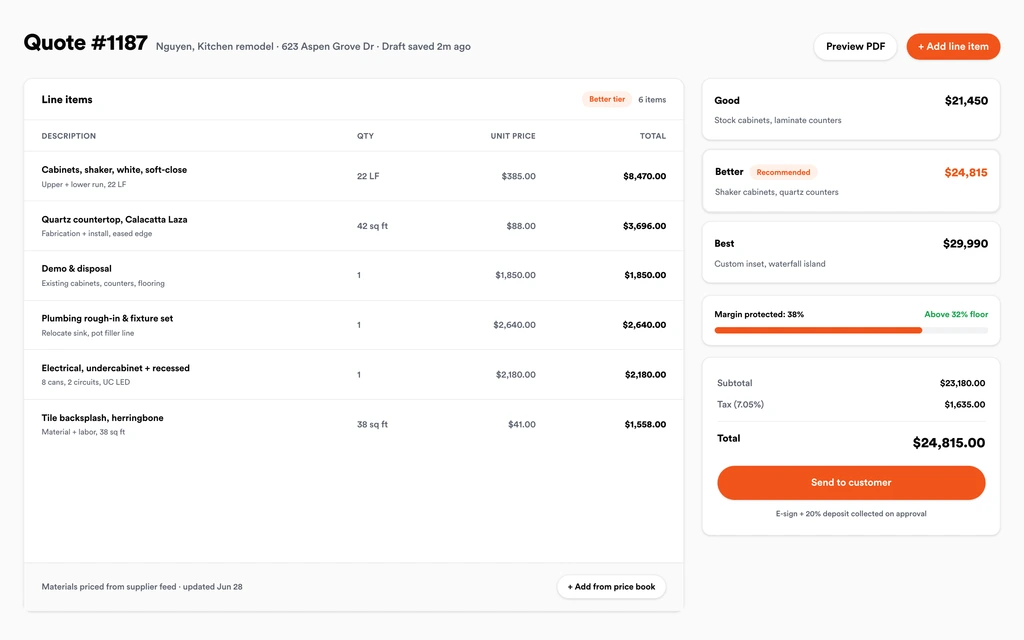
CRM and pipelinePick from saved line items like drywall patch, faucet swap, door rehang, or TV mount, and adjust the hours. Send the quote to the customer's phone and let them approve and pay a deposit on the bigger lists.
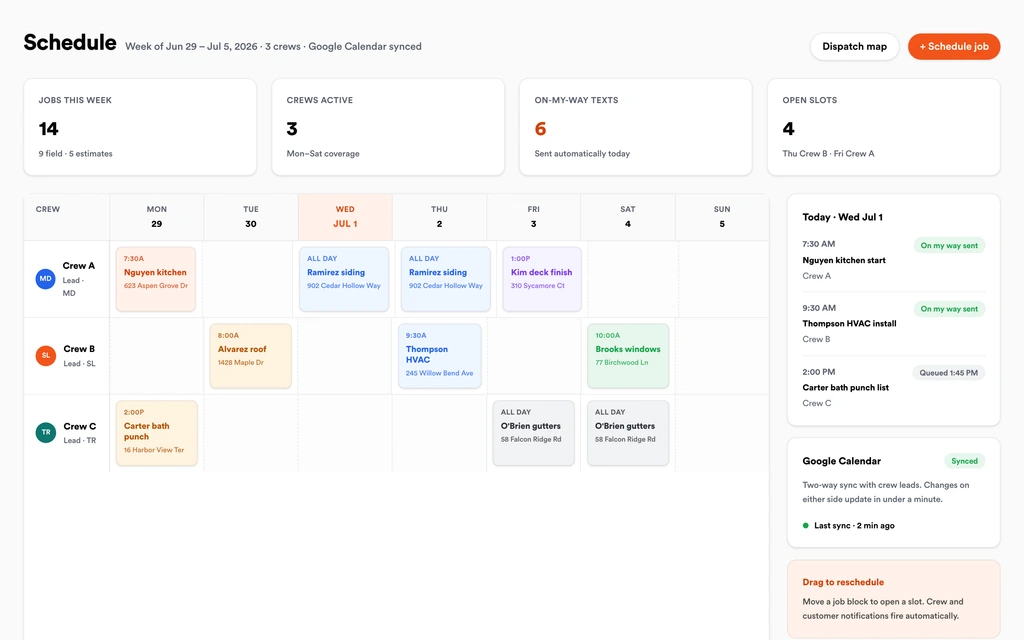
EstimatesDrag jobs onto the crew board and use the job map to group them by neighborhood, so a morning of small fixes on the east side does not turn into an afternoon of crosstown driving.
Field and dispatchAn automatic appointment reminder goes out by text before the visit. The homeowner can unlock the gate or move the car, and your tech spends less time knocking and waiting on the porch.
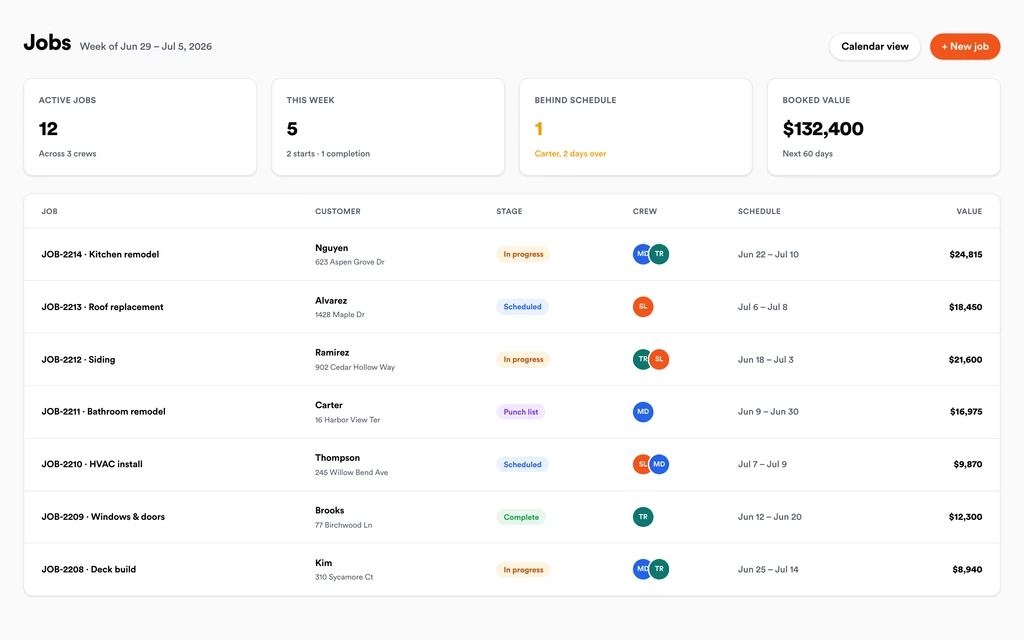
CommunicationsShoot before and after photos, mark up the spot where the leak came through, and note the paint color or the part you used. It all stays on the customer, so the next call starts with the full history.
Job tracking and photosWhen the customer asks about the loose railing too, add it to the job as a change order and get an approval by text. The added work lands on the invoice instead of getting done for free.
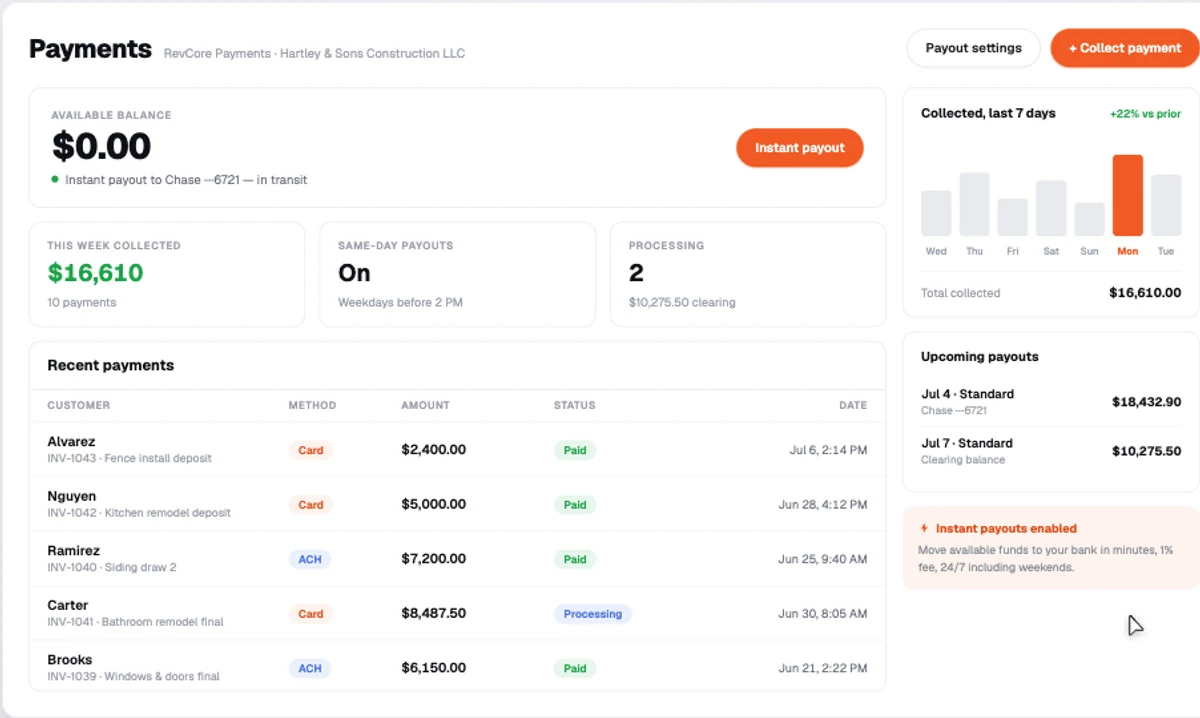
Homeowner portalInvoice from the finished job with labor, materials, and extras already on it. Charge the card on file in the driveway or send a text-to-pay link, and payouts land in 1 to 2 business days, or instantly for eligible accounts, so small tickets never pile up as receivables.
PaymentsSet up for the way handyman jobs run.
Template estimates
Saved pricing for common jobs, so quotes stay consistent across the team.
On-site estimates
Build and send a quote from the truck and turn it into a job.
Job photos and notes
Document each fix on the customer history for repeat work.
Field payments
Charge the card on file or send a text-to-pay link before you head to the next job.
What to look for in handyman software.
Take this list to any demo or trial, ours included. If a tool cannot show you each of these on a real job, keep looking.
Saved line items for common fixes
Most handyman quotes repeat the same twenty tasks. Your software should let you build them once and reuse them so every tech quotes the same price.
Quotes sent from the truck
Small jobs are won on speed. Look for estimates you can build and send from a phone, with approval and deposit collected in the same step.
A packed day in one area
Six short jobs spread across town lose an hour of billable time. Look for a job map that shows where every job sits, so you can keep a tech's day in one area.
Payment on every visit
Chasing a small invoice costs more than it is worth. Text-to-pay links and card-on-file charges should be built in, not bolted on.
Customer history for repeat work
Handyman customers call back for the next fix. Photos, notes, and past invoices should sit on one timeline so you can quote with context.
Easy add-ons during the visit
The second request often comes while you are on site. Adding it as a change order with a quick text approval keeps it billable.
Review requests after the job
Neighborhood reputation drives handyman work. Look for automatic review requests that go out once a job is marked complete and paid.
Seats that fit a growing crew
Adding a second or third tech should not double your software bill. Look for plans with crew seats included rather than a charge per user.
The whole platform comes standard.
Quoting is the start. Every handyman account runs the full job, from the first lead to the final payment, in one login.
- CRM and pipelineEvery lead and job on one board
- Estimates and proposalsGood, Better, Best, signed on the spot
- Scheduling and dispatchCrews on one shared calendar
- CommunicationsTexts, calls, and email in one thread
- Invoicing and paymentsDeposits and finals, paid online
- Service agreementsRecurring work, tracked
- AutomationsFollow-ups that send themselves
- ReportingRevenue and close rate at a glance
Comparing handyman software?
Honest side-by-sides with the tools handyman crews weigh most. Every plan is one flat price with crew seats included. See pricing.
- Revcore vs JobberPopular with small service crews. Revcore adds change orders, fast payouts, and seats included.
- Revcore vs Housecall ProScheduling and payments for home service. Revcore keeps estimates, jobs, and payouts in one login.
- Revcore vs ServiceM8Job management built for small teams. Revcore adds a pipeline, presentations, and automations.
- Revcore vs SquareSolid for payments alone. Revcore ties the payment to the quote, job, and customer history.
- Revcore vs WorkizField service with phone features. Revcore pairs dispatch and texting with estimates and a homeowner portal.
- All comparisons →
“One system from the first call to the final payment. We retired four separate subscriptions the month we switched.”

Composite operator based on early-access usage. Outcomes are illustrative; individual results vary.






Handyman questions, answered.
Still deciding if Revcore fits your crew? Talk to our team.
What is the best software for handyman businesses?
It depends on how many techs you run and how much you quote. Solo operators often start with Jobber or Housecall Pro for scheduling and invoicing, and some use Square for payments alone. Revcore Pro fits handyman companies that want saved line items, a crew board, change orders, and fast payouts (1 to 2 business days, or instant for eligible accounts) in one login, with crew seats included in a flat plan instead of priced per user.
How do I price handyman jobs consistently across techs?
Build saved line items for your common tasks, like drywall repair, fixture swaps, and door adjustments, with your labor rate and typical materials. Every tech quotes from the same list, and you can still adjust hours or add items on site. The estimate goes to the customer's phone for approval and deposit.
Can I charge a trip fee or minimum service charge?
Yes. Add a trip fee or minimum charge as a saved line item and include it on quotes and invoices. Because it lives in your saved items, every tech applies it the same way instead of deciding at the door.
How do I handle a customer's honey-do list with many small tasks?
Put each task on one estimate as its own line item so the customer can see what each fix costs and approve the list together. The approved estimate becomes a job, and anything added on the day goes on as a change order the customer approves by text.
Can I keep track of work done at the same house over time?
Yes. Every job, photo, note, estimate, and payment sits on the customer's timeline. When they call about the next repair, you can see the paint color from last spring, the parts you used, and what they paid, before you ever pull up.
Does Revcore work for property managers and landlords who send repeat jobs?
You can keep the property manager as the contact, track each unit or address with custom fields, and invoice each job from the finished work. Recurring visits, like quarterly unit checks, can run on a service agreement billed monthly, quarterly, semiannually, or annually.
Can I get paid before leaving the job?
Yes. Invoice from the finished job and charge the card on file, or send a text-to-pay link if the homeowner is not home. ACH is also available, and payouts land in 1 to 2 business days, or instantly for eligible accounts.
Does it work on my phone in the field?
Yes. Revcore runs on the web, iOS, and Android, so handyman crews can open the job, add photos, take a signature, and collect payment from the site.
How fast can we switch over?
Most crews are live within a week. Paid plans include hands-on onboarding: we import your customers and pricing, set up your proposal templates, and add your team, then check in until it sticks.
What does Revcore Pro cost for handyman?
Plans start at $249/mo billed monthly ($207/mo on annual billing, 2 months free) with crew seats included, plus CRM, estimating, scheduling, and invoicing. Every plan includes a 14-day free trial with no credit card required.