Design the system, install it clean, support it for life.
Smart home work spans devices, low-voltage runs, and ongoing service. Revcore keeps every component, room, and recurring plan organized so installs scale and clients stay happy.
14-day free trial, no credit card required.

What smart home contractors need from software
Smart home and low-voltage installers need software that turns a room-by-room design into a clear proposal, keeps device models, locations, and network details organized for the install team, and bills ongoing support. Revcore Pro handles itemized proposals, project documentation, staged payments, and recurring service plans in one login. It does not design systems, program devices, or monitor networks, so those stay in your integration and remote management tools.
Where smart home jobs get stuck.
The same few things cost smart home crews time and money on every job. This is what Revcore takes off your plate.
- 01
Multi-room scopes that get messy
Build a room-by-room device list that the quote and the crew both work from.
- 02
Device specs scattered everywhere
Keep models, locations, and credentials on the job file for clean handoffs.
- 03
Recurring support that goes unbilled
Set up service plans with automatic reminders and recurring invoices.
How a smart home job runs in Revcore.
From the first call to the final payment, every step happens on the same job record, so nobody retypes anything and nothing waits on the office.




Smart Home job, example
Qualify the project
1/7
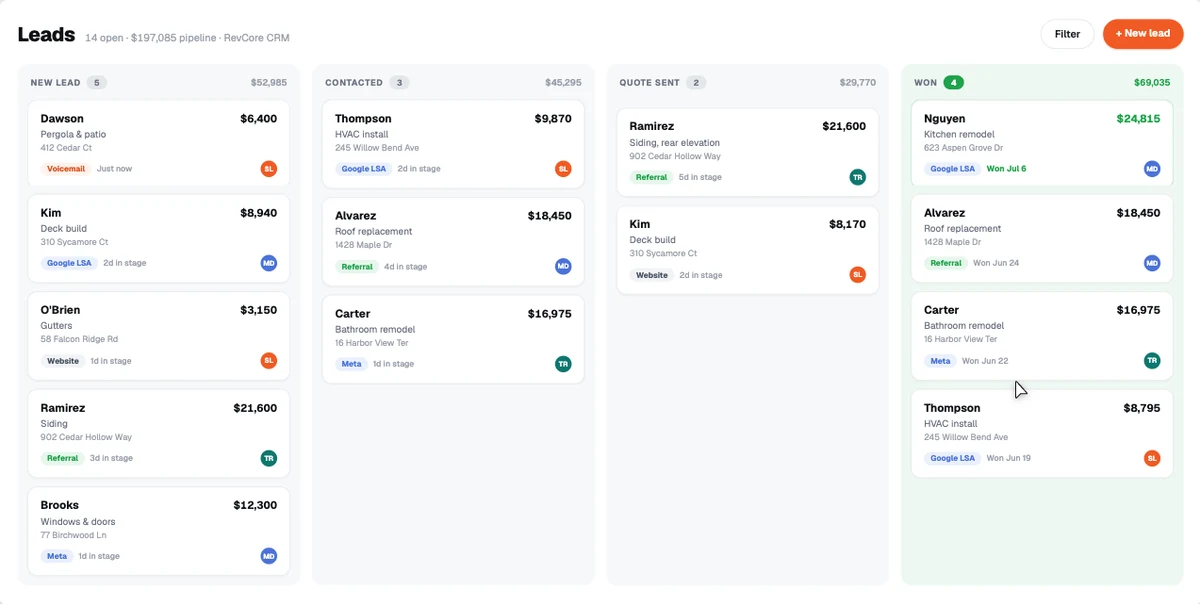
A multi-step survey on your site asks about rooms, current devices, network setup, and budget before anyone drives out. Leads land on the pipeline with their source, so you can see which channels bring in whole-home projects.
SurveysPhotograph the rack location, the panel, existing wiring, and each room, then mark up where the cameras, speakers, access points, and keypads go. Room names, network notes, and client preferences become custom fields on the job.
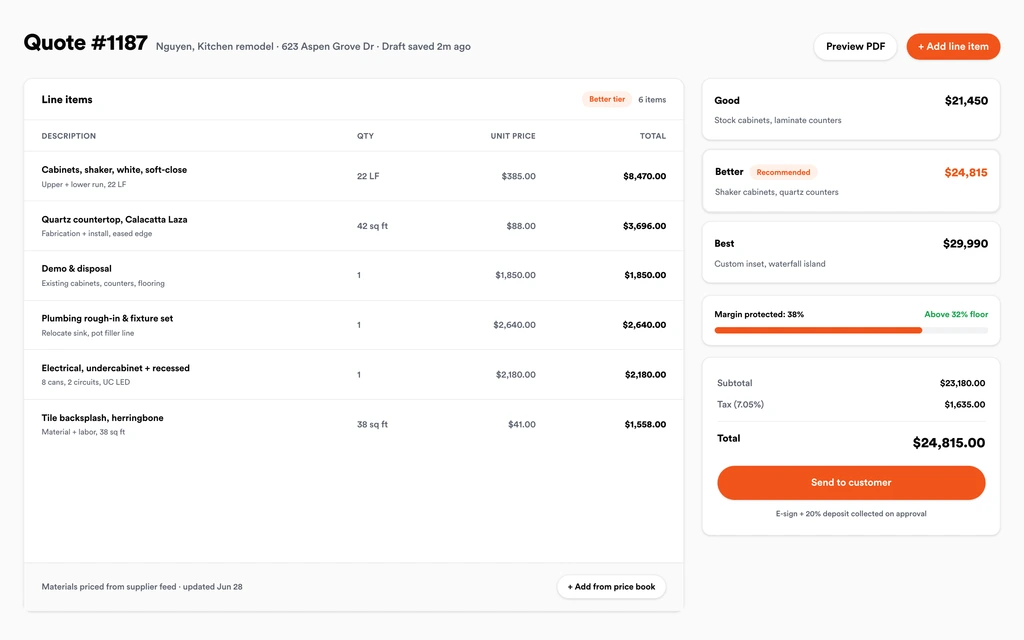
Job tracking and photosPrice devices and labor per room from saved line items and assemblies, and offer tiers like essentials, whole-home, and premium. A margin check on each tier shows what the job earns before the client sees it.
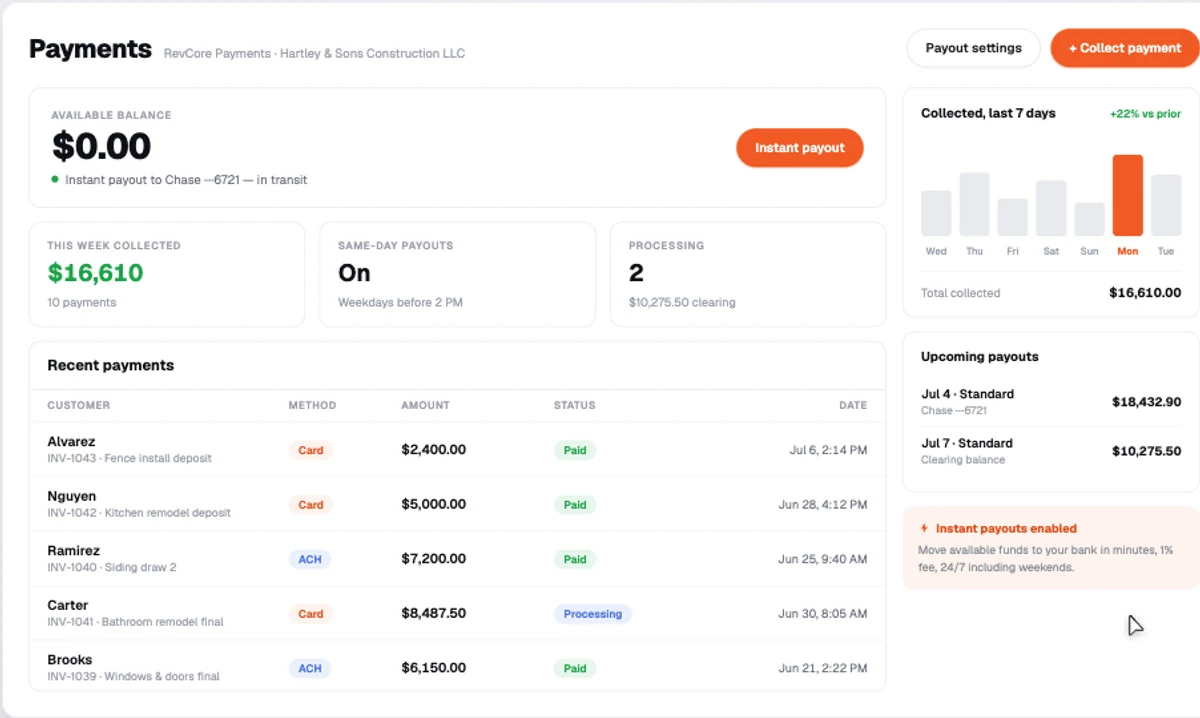
EstimatesThe client e-signs and pays the deposit from their phone, and the approved proposal becomes a job with no retyping. Your team orders equipment through your usual distributor accounts, and the deposit covers it before it ships.
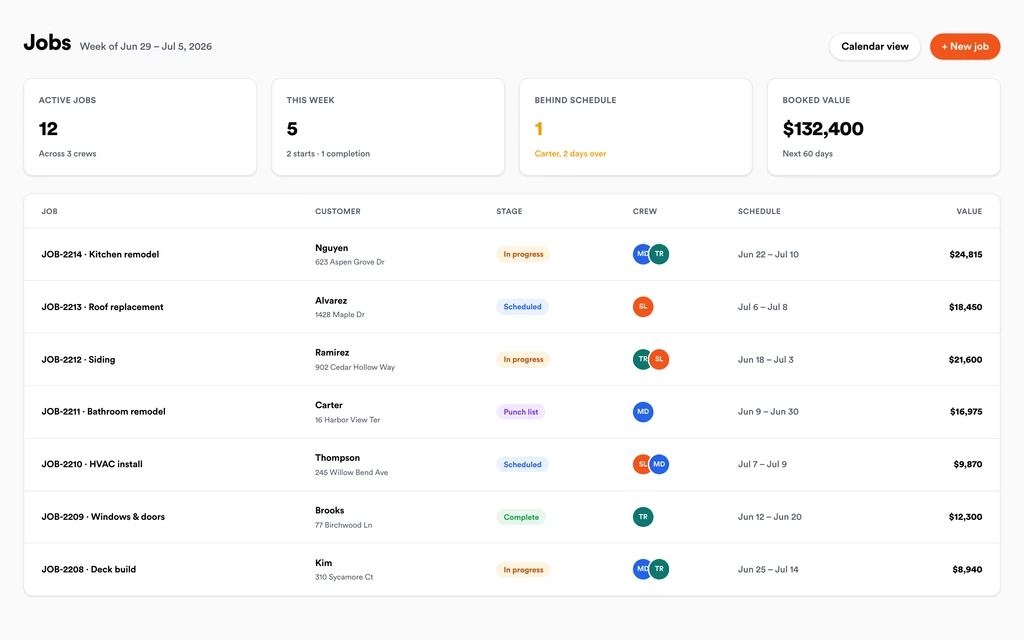
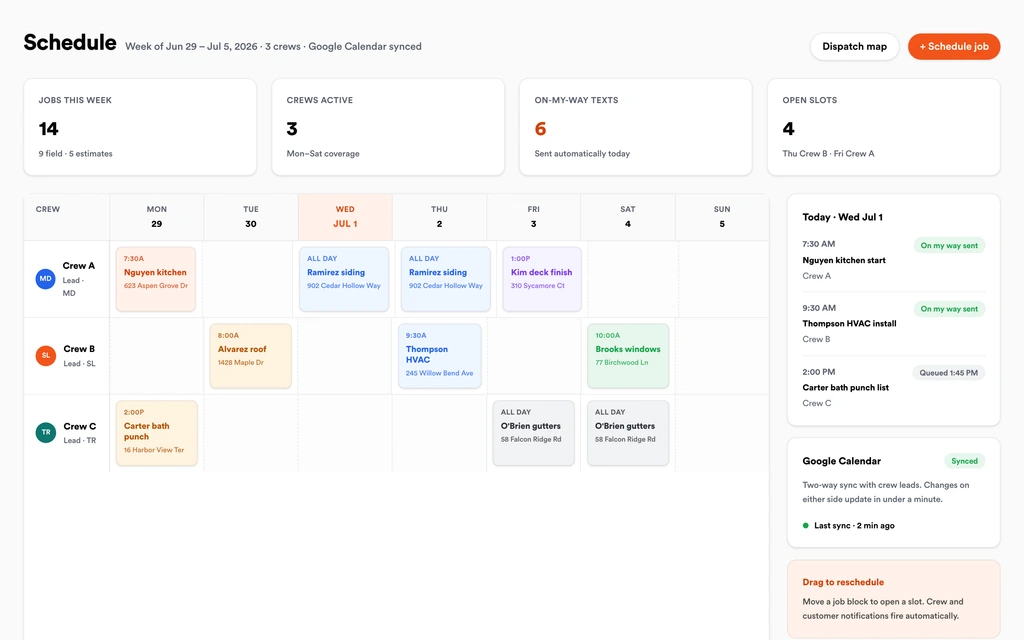
PaymentsBook the prewire during construction and the trim and programming visit later, as separate visits on the crew board. Coordinate with the builder by sharing progress in the portal, and crews clock in with GPS.
SchedulingStore device models, serial numbers, locations, and wiring photos on the job so the next tech can service it without a site visit to figure it out. The client sees the finished photos and documents in the branded homeowner portal.
Homeowner portalInvoice the final stage with any added rooms and change orders already on it, and collect by card or ACH. Enroll the client in a support plan that bills monthly or annually, schedules check-in visits, and tracks the equipment covered.
Service agreementsSet up for the way smart home jobs run.
Itemized proposals
Room-by-room device and labor pricing clients approve from their phone.
System documentation
Devices, wiring, and settings stored on the project for every install.
Service plans
Recurring support billed automatically so you stay top of mind.
Stage payments
Collect deposits, install, and final payments without chasing.
What to look for in smart home software.
Take this list to any demo or trial, ours included. If a tool cannot show you each of these on a real job, keep looking.
Room-by-room itemized proposals
Smart home clients want to see what goes where. Proposals should list devices and labor per room and let them compare tiers.
Device records that survive handoff
Models, serials, locations, and wiring photos should live on the job, so any tech can service the system without calling the installer.
Multi-visit project scheduling
Prewire, trim, and programming happen weeks apart. The schedule should hold separate visits on one job and move them when the builder slips.
Change orders when the client adds rooms
Scope creep is constant. Added devices should be priced, approved by the client in a portal, and rolled onto the invoice automatically.
Stage payments
Equipment is expensive up front. Look for deposits, milestone billing, and progress billing that work without building every invoice by hand.
Recurring support plans
Ongoing support is where smart home margin compounds. Plans should bill the card on file every cycle and schedule check-in visits automatically.
Custom fields for your own specs
Every integrator tracks different details, from rack layout to network notes. Custom fields on jobs and contacts let you capture them your way.
The whole platform comes standard.
Quoting is the start. Every smart home account runs the full job, from the first lead to the final payment, in one login.
- CRM and pipelineEvery lead and job on one board
- Estimates and proposalsGood, Better, Best, signed on the spot
- Scheduling and dispatchCrews on one shared calendar
- CommunicationsTexts, calls, and email in one thread
- Invoicing and paymentsDeposits and finals, paid online
- Service agreementsRecurring work, tracked
- AutomationsFollow-ups that send themselves
- ReportingRevenue and close rate at a glance
Comparing smart home software?
Honest side-by-sides with the tools smart home crews weigh most. Every plan is one flat price with crew seats included. See pricing.
- Revcore vs JobberSimple service scheduling and invoicing. Revcore adds room-by-room tiers and support plans.
- Revcore vs Housecall ProResidential service platform. Revcore adds project milestones and a client portal for change orders.
- Revcore vs HubSpotMarketing and sales CRM. Revcore adds scheduling, job records, and payments.
- Revcore vs Service FusionField service with flat pricing. Revcore adds tiered proposals with margin checks.
- All comparisons →
“Service calls used to take days to bill. Now the tech collects on site and the payment is in before the truck leaves the driveway.”

Composite operator based on early-access usage. Outcomes are illustrative; individual results vary.






Smart Home questions, answered.
Still deciding if Revcore fits your crew? Talk to our team.
What is the best software for smart home installers?
Many integrators use a system design and proposal tool built for AV, plus a separate CRM and billing system. General service platforms like Jobber and Housecall Pro are also common with smaller installers. Revcore Pro fits smart home companies that want itemized proposals, project documentation, stage payments, and support plans in one login.
Can I build room-by-room proposals?
Yes. Save devices and labor as line items and assemblies, then group them by room in the proposal and offer tiers like essentials and whole-home, each with a margin check. The client approves, e-signs, and pays the deposit from their phone.
Where do I store device settings and network details?
On the job file, using notes, photos, and custom fields for models, serials, locations, and network notes. Treat passwords with care and follow your own security practices, since the job file is shared with your team based on their role.
Does Revcore program or monitor smart home devices?
No. Revcore runs the business side: leads, proposals, scheduling, documentation, and billing. Device programming, remote monitoring, and network management stay in the manufacturer platforms and remote management tools you already use. Log what you configured on the job for the next tech.
Can I bill recurring support plans?
Yes. Service agreements bill monthly, quarterly, semiannually, or annually, charge the card on file each cycle, schedule support visits, track the covered equipment, and auto-renew. A recurring revenue view shows what the support plan base brings in each month, so you can see it grow.
How do I handle prewire on new construction?
Create the job at signing, then schedule the prewire visit when the builder is ready and the trim visit later. Bill a milestone at prewire and share progress photos in the portal with the client or builder, so nobody has to walk the site to check on it.
Does Revcore order equipment from distributors?
No. Revcore does not connect to distributors or manage inventory. Order through your usual distributor accounts and log the equipment on the job with models and serials so it carries onto the invoice and the handoff record for future service.
Does it work on my phone in the field?
Yes. Revcore runs on the web, iOS, and Android, so smart home crews can open the job, add photos, take a signature, and collect payment from the site.
How fast can we switch over?
Most crews are live within a week. Paid plans include hands-on onboarding: we import your customers and pricing, set up your proposal templates, and add your team, then check in until it sticks.
What does Revcore Pro cost for smart home?
Plans start at $249/mo billed monthly ($207/mo on annual billing, 2 months free) with crew seats included, plus CRM, estimating, scheduling, and invoicing. Every plan includes a 14-day free trial with no credit card required.