How to follow up on an estimate: a 14-day cadence for unsold jobs
The homeowner has your price and has gone quiet. Here is how long to wait, how many times to follow up, exactly what to text, email and say on each touch, how to handle "we went with someone else", and which parts to automate so no quote slips through.

By The Revcore team
Reviewed by Hayden Mitchell, founder
12 min read
Quick answer
How soon should a contractor follow up on an estimate?
Follow up the same day you deliver the estimate, with a short text that recaps the options and invites questions. Then call on day 1, and keep a planned mix of texts, calls and one email over about 14 days, roughly six or seven touches. Stop with a polite close-out message, then move the job to a slower long-term check-in.
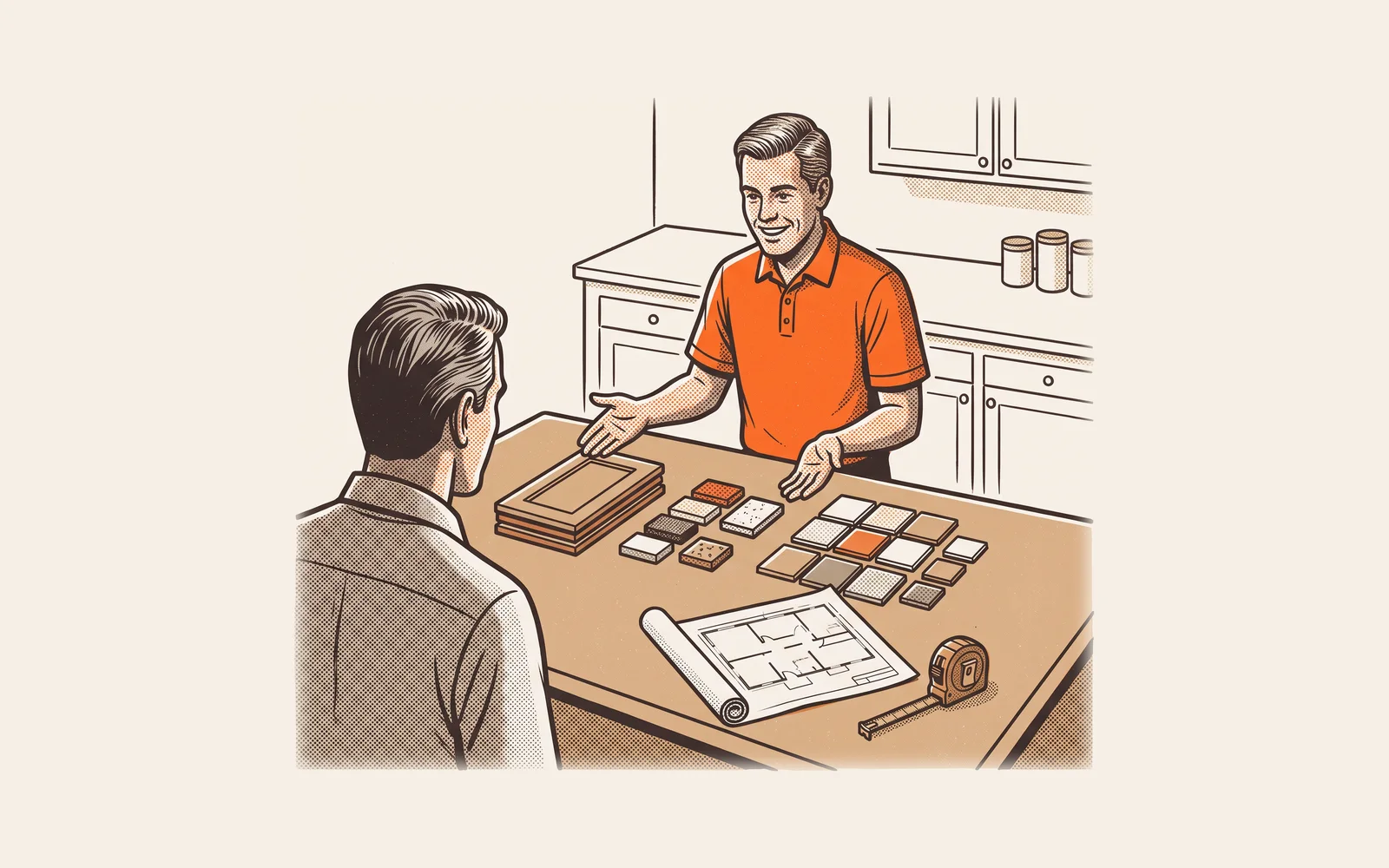
You walked the house, measured, talked through three options at the kitchen table, and left a price. The homeowner said they needed to think about it. Now it is day four and nobody has called. This is the most common way a well-run sales visit turns into a lost job, and it has almost nothing to do with your price or your pitch. It is a follow-up problem.
Most contractors know they should follow up. The problem is that nobody owns it, so the quote sits in a folder until it is too late. The fix is a written cadence: a fixed set of touches on fixed days, with the words already chosen, so following up is a routine instead of a judgment call.
This guide is about quoted but unsold jobs: the homeowner has seen your price. If you are chasing leads who never booked an appointment in the first place, start with the 5 follow-up texts that turn cold leads into booked jobs instead. That is a different conversation.
Why same-day follow-up matters
Speed is where most shops lose. ServiceTitan's 2026 Roofing and Exterior Market Report, a survey of more than 1,000 roofing-focused companies, found that "only 16% of contractors follow up with homeowners the same day for unsold estimates." That leaves a wide opening for the contractor who does.
16%
of roofing and exterior contractors surveyed follow up the same day on unsold estimates
1,000+
roofing-focused companies in the survey
The same-day touch works for a simple reason. On the evening after your visit, the homeowner is talking it over and trying to remember which warranty came with which option. If a clear recap from you lands right then, you are part of that conversation. If it lands a week later, the decision may already be made.
Why homeowners go quiet after an estimate
Silence rarely means no. It usually means one of a handful of things, and each one has a different fix. Knowing the likely reason tells you what to say on the next touch.
| What is really going on | What it sounds like | What your follow-up should do |
|---|---|---|
| A second decision maker has not seen it | "I need to talk to my husband." | Offer a short call or a clean summary they can share with the other person. |
| They have an unanswered question | Nothing. They just stop replying. | Ask directly: is there anything I can clear up about the options? |
| Price or budget | "It is more than we expected." | Point back to the lower option, or explain what changes to reach their number. |
| Timing | "We are thinking about spring." | Agree, pencil a date, and ask when to check back. |
| Comparing bids | "We are getting a couple more quotes." | Help them compare fairly: scope, materials, warranty, not just the total. |
The 14-day follow-up cadence
Here is a cadence you can adopt as written. Day 0 is the day you deliver the estimate. Each touch has one goal, and each one gives the homeowner an easy way to reply. If the homeowner answers at any point, stop the sequence and have a real conversation.
| Day | Channel | Message goal | Example message |
|---|---|---|---|
| Day 0, same evening | Text | Recap the options and open the door to questions | "Thanks for having me out today. Here is the link to your three options again. Happy to answer anything that comes up tonight." |
| Day 1 | Phone call | Answer questions while the visit is fresh | "I wanted to check if anything came up after I left, and whether your wife had a chance to look at the options." |
| Day 3 | Text | Remove the most likely objection | "One thing people often ask about is the difference between the middle and top option. Want me to send a quick side-by-side?" |
| Day 5 | Give them something to share with the other decision maker | A short summary: what you found, the three options, warranty terms, and how to approve. | |
| Day 7 | Phone call | Find out where the decision stands | "Where are you at on the project? Is it timing, budget, or still comparing?" |
| Day 10 | Text | Share real scheduling information | "I have install openings in the next few weeks if you want to lock in a spot. No pressure either way." |
| Day 14 | Text | Close the loop politely | "I will stop checking in for now so I am not a bother. If anything changes, just reply here and I will pick it right back up." |
How the cadence changes by trade
- Roofing and exteriors. Decisions often involve a spouse and a second bid. Make the Day 5 email a clear comparison sheet: shingle line, underlayment, ventilation, warranty. Photos from your inspection are the strongest thing you can resend.
- HVAC replacement. If the system is still running, urgency is low and the homeowner may wait for a failure. Keep touches helpful, and on Day 7 ask whether they want a repair option in the meantime.
- Plumbing and electrical. Many quotes are smaller and decided faster. Compress the cadence to about a week: same day, Day 1, Day 3, Day 7 close-out.
- Remodeling. Cycles are longer and involve design choices. Stretch the cadence to three or four weeks, and use each touch to answer a specific design or scheduling question.
How to run the cadence, step by step
Leave the table with a next step
Before you leave, ask when they expect to decide and who else needs to see it. Write both down on the job. "I will text you tonight and call Thursday" sets up every touch that follows.
Put every open estimate in one pipeline
An unsold estimate should sit in a stage called something like Quoted, not in a rep's truck or inbox. If it is not in the pipeline, nobody owns the follow-up. A contractor CRM is built for exactly this.
Assign one owner per estimate
Usually the rep who ran the appointment. The office can send the templated texts, but one named person makes the calls and decides when the job is lost.
Send the same-day recap before bed
Text the link to the estimate with a one-line summary. This single habit puts you ahead of most of the market.
Log what you learn on every touch
Budget, timing, the competing bid, the spouse's concern. The next touch should build on the last one, not start over.
Close the loop on day 14 and move to long-term
Send the polite close-out, mark the reason if you know it, and set check-ins at 30, 60 and 90 days, or at the start of the next season for the trade.
Review lost reasons monthly
Group lost estimates by reason. If "price" dominates, look at your options. If "never heard back" dominates, look at your follow-up.
Copy-ready follow-up templates
Swap in your own details where you see curly braces. Keep texts short, sign them with a real name, and send them from a number the homeowner can reply to.
If someone replies asking you to stop texting, stop, and note it on the customer record so nobody on your team texts them again.
How to handle "we went with someone else"
This reply stings, but it is a gift. You now know the job is not stalled, and you have one chance to learn something and leave a good impression. Do not argue, do not undercut, and do not go silent.
- Ask one question, then stop. The answer is worth more than a second pitch. Log it as the lost reason.
- Do not drop your price after the fact. It tells the homeowner your first number was not real, and it trains your market to wait you out.
- Keep them in long-term follow-up. Contracts fall through, other crews do not show up, and the next project comes along. A check-in a few months later is fair, and a thank-you now makes it welcome.
When to stop following up
Stop the active cadence when any of these happens: the homeowner says they hired someone else, they ask you to stop, or you reach day 14 with no reply. The close-out text is the end of active selling, not the end of the relationship.
After that, move the estimate to a long-term stage with two or three spaced check-ins: around 30, 60 and 90 days, or tied to the season. A roofing quote from October is worth one message in early spring. An AC replacement quote from a mild spring is worth one message before the first heat wave. Each check-in should be short and offer something real, such as an updated quote if your prices changed.
What to automate and what to keep human
Automate the parts that must happen every time, so your people spend their energy on the calls that need a person.
| Automate | Keep human |
|---|---|
| The day 0 recap text with the estimate link | The day 1 and day 7 phone calls |
| Templated texts on day 3, 10 and 14 | Any reply from the homeowner, which should stop the sequence |
| Tasks that remind the rep to call | Handling objections and price questions |
| Moving the estimate to long-term after day 14 | Deciding a job is truly lost and why |
| The 30, 60 and 90 day check-in reminders | The "we went with someone else" reply |
Two rules keep automation from backfiring. First, a reply must stop the sequence, so nobody gets a cheerful "just checking in" after they already said yes or no. Second, templated texts should still read like one person wrote them to one homeowner. If it reads like a blast, it gets ignored.
Follow-up starts at the kitchen table
The easiest follow-up is the one you never need. The more decisions you can help the homeowner make during the visit, the fewer quotes go quiet. Three clear options make the choice easier, as covered in good, better, best pricing. Presenting and signing in the home, rather than emailing a PDF and hoping, is the argument in stop emailing quotes and close at the kitchen table.
Frequently asked questions
How long should I wait to follow up on a quote?
Do not wait. Send a short recap text the same day you deliver the estimate, then call the next day. ServiceTitan's 2026 roofing and exterior report found only 16% of surveyed contractors follow up the same day on unsold estimates, so a same-day touch sets you apart.
How many times should I follow up on an estimate?
Plan about six or seven touches over 14 days, mixing texts, calls and one email, then send a polite close-out. After that, move the job to two or three spaced check-ins over the next few months. Stop right away if the homeowner asks you to.
What should the first text after an estimate say?
Thank them for their time, resend the link to the options, name the option you would recommend in one sentence, and invite questions. Keep it under 50 words and sign it with your name so it reads like a person, not a system.
When should I stop following up?
Stop the active cadence when the homeowner hires someone else, asks you to stop, or you reach about day 14 with no reply. Send a friendly close-out message, record the reason if you know it, and set a long-term check-in for the next season.
Should follow-up be a call or a text?
Use both. Texts are easy to answer and good for recaps, links and scheduling. Calls are better for uncovering the real objection, such as budget, timing or a second bid. A mix of roughly four texts, two calls and one email over two weeks covers both.
Further reading: for leads who never got as far as an estimate, see the 5 follow-up texts that turn cold leads into booked jobs. For collecting the deposit once they say yes, see deposits, draws and stage payments.
Written by the Revcore team. Reviewed by Hayden Mitchell, founder of Revcore Pro, who closed $3.5M of home improvement door to door and helped scale a contractor from $1M to $10M.