How to close more jobs as a contractor: stop emailing quotes and close at the kitchen table
The quote you email gets compared on price, forwarded, and forgotten. The quote you present in person gets questions, answers and a decision. Here is why emailed quotes stall, the close rate math, how to move a team from emailing to presenting, when an emailed quote still makes sense, and how to take the signature and deposit at the table.

By The Revcore team
Reviewed by Hayden Mitchell, founder
Updated 12 min read
Quick answer
How can a contractor close more jobs?
Stop emailing quotes after the visit. Build the estimate on site, present it in person with clear options, answer questions while you are still in the room, and let the homeowner sign and pay the deposit before you leave. Follow up the same day with anyone who needs more time. The gap between visit and quote loses jobs.
You have probably lived this. You do a thorough walkthrough, the homeowner likes you, and at the door they say, "Just send the quote over." You email a careful estimate that evening, and then nothing. By the following week they went with someone else, or decided to wait until spring.
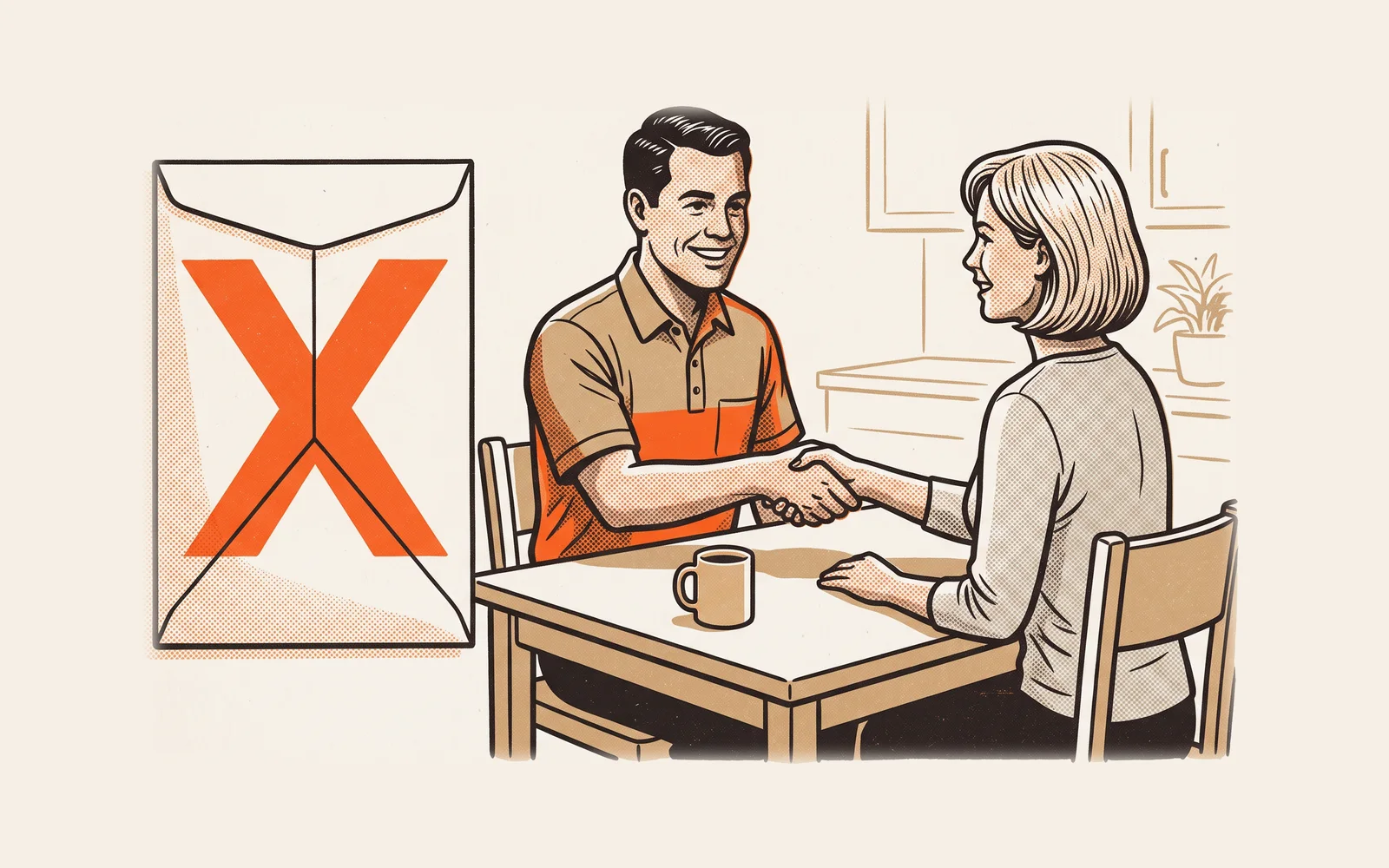
The problem is rarely your price or your work. It is the gap. The moment you leave to build the quote, you give the homeowner time to cool off, collect other bids, and talk themselves out of spending the money. The contractors who close the most work have closed that gap. They build and present the quote while they are still sitting at the kitchen table.
Why emailed quotes stall
An emailed quote has to sell itself. It arrives after your visit, sits in an inbox next to the other bids, and when the homeowner opens it, you are not there to explain anything.
- It gets judged on the number alone. Your inspection photos, the extra care you described and the warranty you explained are gone. What is left is a total at the bottom of a page, lined up against a cheaper total from someone who did a ten minute visit.
- Deciding later always feels safer. A homeowner looking at a large number alone at night has no reason to decide today and several reasons to wait. "Let me think about it" is the default answer to a document.
- Questions go unanswered. Why is this roof $3,000 more than the other bid? Do we really need a new coil? What happens if the walls are wet behind the tile? If nobody answers, the homeowner fills in the blank, and usually not in your favor.
- The other decision maker never heard you. The spouse or partner who missed the visit sees only a PDF and a price. You never got to make your case to them.
- It invites a chase. Once the quote is sent, your only move is follow-up. That can work, but you are now working to get back into a conversation you were already in.
What changes when you present in person
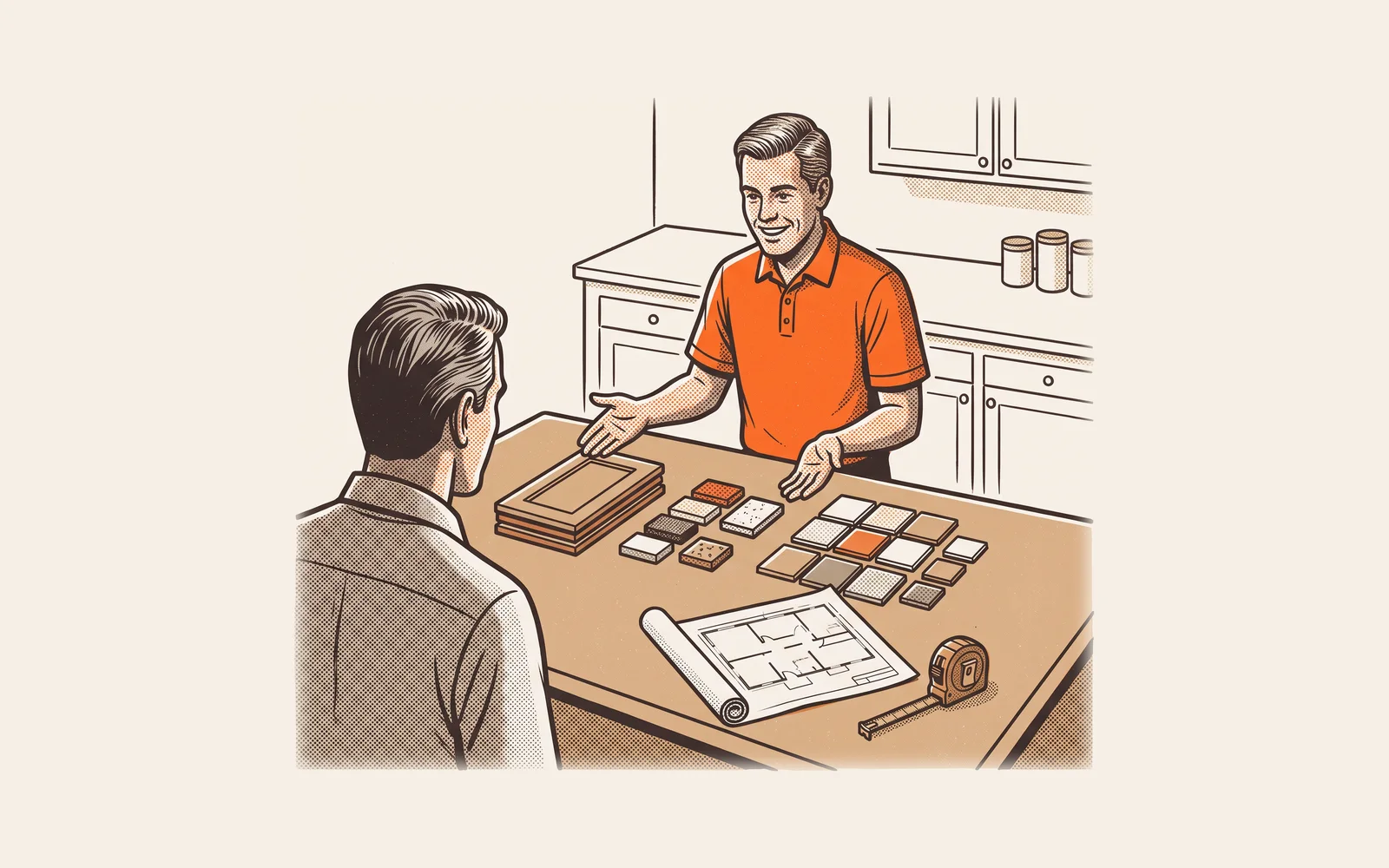
Presenting in person turns the quote from a document into a conversation. You show the homeowner what you found, walk through the options, and handle the questions as they come up. The full structure, screen by screen, is covered in what an in-home sales presentation is. Here is what it changes compared with the emailed quote.
| Emailed quote | Presented at the table | |
|---|---|---|
| Timing | Hours or days after the visit, after interest has cooled. | Minutes after the inspection, while the problem is fresh. |
| What the homeowner sees | A total and a list of line items. | Photos of their house, the options, and what each one includes. |
| Questions and objections | Answered by guesswork, or not at all. | Answered in the room, by the person who inspected the job. |
| Decision makers | One person forwards a PDF to the other. | You can ask that both be present and speak to both. |
| Comparison | Your price against other prices. | Your scope, proof and options against a number on paper. |
| Next step | Wait, then chase. | Choose an option, sign and pay the deposit, or agree on a specific follow-up. |
Two things do most of the work. First, you present options instead of one number. A single price is a yes or no decision, while good, better, best options turn it into a which one decision, which is easier to make in the room. Second, you stay long enough to hear the real objection. "It's more than we expected" might mean the price is too high, or it might mean they want to know why. You can only find out if you are there.
What it looks like by trade
- Roofing. Show your inspection photos of the damaged shingles and soft decking on the tablet, explain how extra decking is priced, then present a standard, upgraded and premium shingle system. More in presenting roofing options at the kitchen table.
- HVAC. Walk through the age and condition of the current system, the load and sizing notes, and three replacement systems with their efficiency, warranty and monthly running cost differences. See the HVAC install sales process.
- Plumbing. For a failing water heater, show repair, repair plus prevention, and replace, with the photo of the corroded fitting that started the call.
- Electrical. For a panel upgrade, show the photos of the existing panel, explain what the upgrade makes possible (a car charger, a heat pump, a finished basement) and price the options.
- Remodeling and exteriors. For a bathroom, windows or siding, show material selections side by side, how change orders work, and the payment schedule, so nothing is a surprise later.
The close rate math, with an illustrative example
Close rate is signed jobs divided by presentations actually run. There is no reliable industry-wide benchmark, because trade, ticket size and lead source all move it, which is covered in detail in what a good close rate is for in-home sales. What matters here is how much a few points of close rate are worth to your business.
| Mostly emailed quotes | Presented at the table | |
|---|---|---|
| Presentations run | 40 | 40 |
| Close rate | 25% | 35% |
| Signed jobs | 10 | 14 |
| Monthly sold revenue | $140,000 | $196,000 |
| Difference over 12 months | $672,000 |
The point of the example is the shape, not the numbers. Your lead cost, rep time and overhead are the same whether a presentation closes or not, so every extra job from the same appointments is revenue with no extra marketing spend behind it.
There is a time effect too. A rep who emails every quote spends evenings building estimates at home, time that could go to another appointment. Also track net close rate: signatures that did not cancel during the cancellation window.
How to switch a team from emailing to presenting
Most reps email quotes because building one on site is slow, they are unsure of the price, or they do not want to feel pushy. Remove those reasons one at a time.
Build a catalog so pricing is fast and consistent
Put your materials, labor and packages into a catalog with your markup built in, so a rep can assemble an estimate in minutes and never has to guess a price. If pricing lives in the owner's head or a spreadsheet, reps will always want to go home and check. The markup and margin calculator helps if you are starting from scratch.
Package the common jobs as three options
Create good, better and best templates for the jobs you sell most: a standard reroof, a split system replacement, a tank water heater, a 200 amp panel, a tub to shower conversion. Reps adjust quantities on site instead of building from zero.
Script the presentation, not the words
Agree on the order: recap what the homeowner told you, show what you found with photos, explain the options, reveal price, answer questions, and ask for a decision. Reps can use their own words. The sequence is what keeps quality consistent.
Make signing and paying the deposit one motion
If the homeowner chooses, they should be able to sign on the screen and pay the deposit by card or bank transfer right then. Every extra step, like a contract emailed later or a check mailed in, is a chance for the yes to cool off.
Measure close rate by rep and by lead source
Track presentations run, signed jobs and cancellations for each rep every month. Without the numbers you cannot tell whether the change is working or who needs help.
Ride along and coach from real visits
Sit in on presentations for the first few weeks. Most coaching is small: photos before price, pausing instead of discounting, asking for the decision out loud.
Follow up fast on the ones that do not close
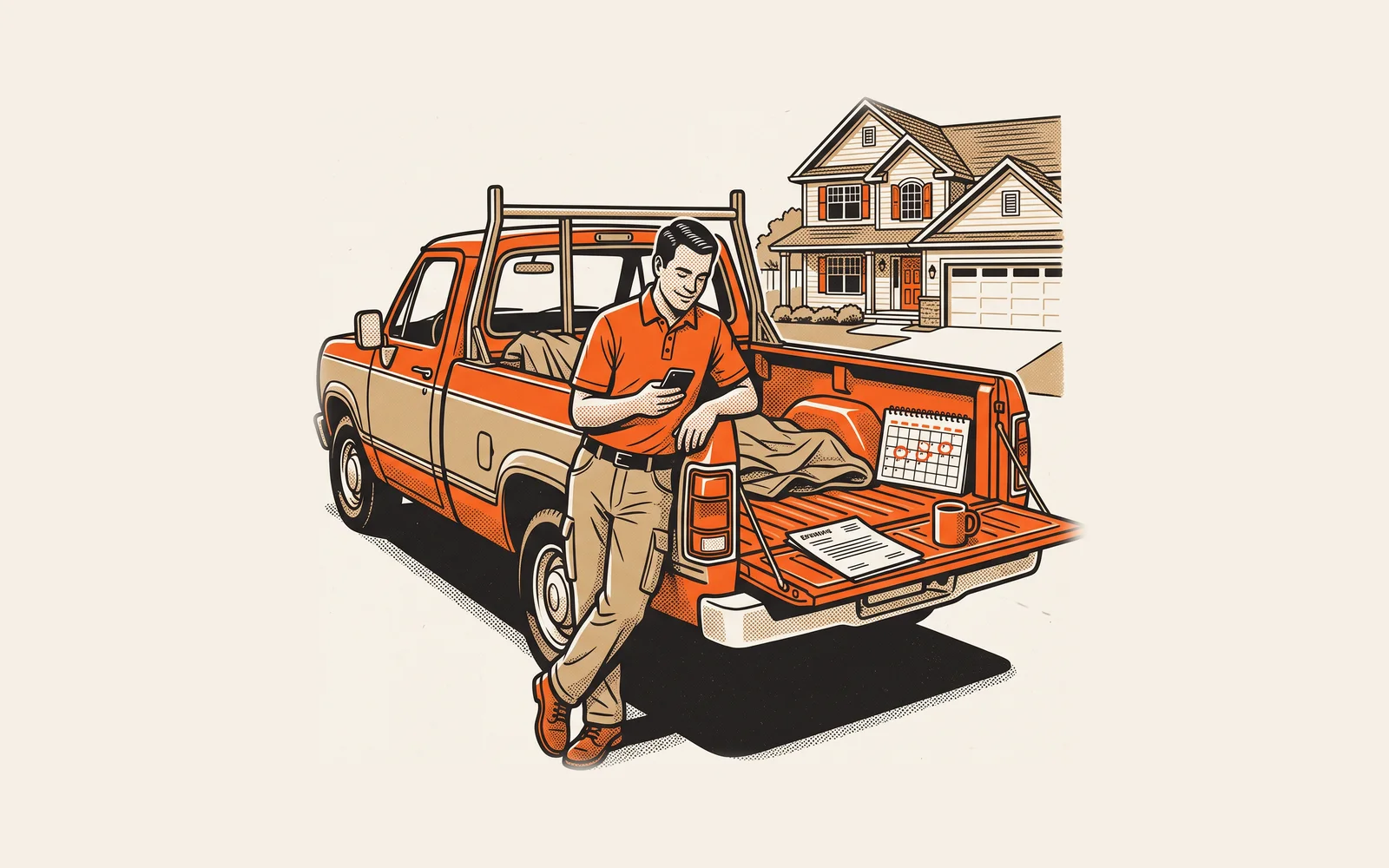
Some homeowners will need time, and that is fine. Agree on a specific next step before you leave and follow up the same day. The full cadence is in how to follow up on an unsold estimate.
When a remote or emailed quote still makes sense
Not every job needs a sit-down. An emailed or texted quote is fine, and often better, in these cases:
- Small repairs and service work. A drain clearing, a breaker replacement or a minor roof repair usually does not justify a 45 minute presentation. Quote on site or text it, and collect when the work is done.
- Repeat customers. A homeowner who already trusts you often just wants the price and a link to approve it.
- Commercial and property management buyers. Many require written bids through a set process and will not sign in the room. Send a clean, detailed proposal and follow up on their timeline.
- The decision maker truly is not available. If the other owner is out of town, present to the person who is home, then offer a short video call to walk the other through the same options rather than just forwarding a PDF.
- The homeowner asks for it and means it. Some people will not decide in the room no matter what. Respect that, send the quote the same day, and book a specific time to talk it through.
Even then, send it the same day with photos, options and a link to choose, sign and pay. A remote quote that looks like your presentation beats a bare number.
Signature and deposit at the table
When the homeowner chooses an option, do not stand up and promise to email the contract tonight. Walk through the agreement on screen: the chosen option, what is included, how unknowns like rotted decking or hidden water damage are priced, the start window, the payment schedule and the warranty. Then take the signature and the deposit while you are both still at the table. For how much to collect and how to structure progress payments, see deposits, draws and stage payments.
Sales made in the home come with rules. Under the FTC's Cooling-Off Rule, many sales of $25 or more made at the buyer's home can be cancelled until midnight of the third business day after the sale, and Saturdays count as business days. The seller has to give the buyer a copy of the contract or receipt and two copies of a cancellation form, and if the buyer cancels, the seller has 10 days to refund their money.
$25
Minimum sale at the buyer's home covered by the federal Cooling-Off Rule
3 business days
Time the buyer has to cancel, until midnight, with Saturdays counted
10 days
Time the seller has to refund after a valid cancellation
Many states add their own rules for home improvement contracts, including longer cancellation periods, required contract language, and limits on how large a deposit can be collected up front. Check your state's contractor licensing board or attorney general, and build the required notices into your contract template so every rep gives them every time. Treat the cancellation window as part of the sale: explain it plainly, and do not order materials or schedule crews in a way that assumes the window has already passed.
Frequently asked questions
Why do emailed quotes lose jobs?
An emailed quote arrives after the homeowner's interest has cooled, gets compared with other bids on price alone, and leaves every question unanswered. Nobody is there to explain the difference in scope or to speak to the decision maker who missed the visit. Presenting in person keeps those answers in the room.
Is closing at the kitchen table pushy?
It does not have to be. A good presentation shows what you found, explains honest options and answers questions, then asks for a decision without pressure. Homeowners who need more time can say so. What makes it work is removing the delay and the guesswork, not pushing harder.
How much can presenting in person raise my close rate?
There is no reliable industry number, because trade, lead source and ticket size all matter. Measure your own close rate as signed jobs divided by presentations run, by rep, for a few months before and after the change. That comparison tells you what presenting is worth to your team.
Can I take a deposit at the table?
In most cases, yes, once the contract is signed. Many in-home sales carry a federal three business day right to cancel under the FTC Cooling-Off Rule, with a full refund owed if the buyer cancels, and some states limit deposit size. Check your state's rules and have an attorney review your terms.
When should I still email a quote?
Email or text quotes for small repairs, repeat customers who already trust you, and commercial buyers who require written bids. Send it the same day, include photos and options, and give the homeowner a link to choose, sign and pay so the remote quote works like a presentation.
Further reading: the Federal Trade Commission's guide to the Cooling-Off Rule explains cancellation rights for sales made in the home. For the presentation itself, see what an in-home sales presentation is, and for the homeowners who need more time, see 5 follow-up texts that turn cold leads into jobs.
Written by the Revcore team. Reviewed by Hayden Mitchell, founder of Revcore Pro, who closed $3.5M of home improvement door to door and helped scale a contractor from $1M to $10M.