The one-call close without the pressure: how to sell on the first visit and keep the homeowner's trust
A one-call close means the homeowner decides on the first visit. Done badly it is fake deadlines and invented discounts. Done well it is simply being ready: the right people in the room, clear options, pricing authority, e-sign and a deposit. Here is how to run it honestly, how to handle "I need to think about it," and what the FTC Cooling-Off Rule means for your contracts.

By The Revcore team
Reviewed by Hayden Mitchell, founder
10 min read

Quick answer
What is a one-call close?
A one-call close is an in-home sale where the homeowner decides on the first visit instead of after a second appointment or an emailed quote. It works without pressure when you come prepared: every decision maker present, three clear options, the authority to price on the spot, and a way to sign and pay the deposit before you leave.
The phrase "one-call close" has a bad reputation, and some of it is earned. Plenty of homeowners have sat through a three-hour pitch that ended with a manager on speakerphone and a price that was only good tonight.
But the idea underneath is sound. The homeowner took time off, cleared the kitchen table and let you into their house. If they are ready to decide, making them wait for an emailed PDF and a second visit helps nobody. The honest version of the one-call close is simply this: be ready to finish the sale on the first visit if the homeowner is ready too.
Do homeowners still buy on the first visit?
Yes, when the conditions are right. A homeowner with a leaking roof, a dead furnace in January or a water heater on the garage floor usually wants the problem solved, not a research project. Planned projects like a kitchen remodel, new windows or a full exterior are different. Those buyers often want to compare, check financing on their own and talk it over, and some of them will never buy on the first visit no matter how good you are.
What changes the odds most is not your closing line. It is whether the visit removed every reason to wait. A homeowner who has seen the problem in photos, understands three priced options, has the other decision maker sitting next to them and can sign on a screen has very few reasons left to delay. A homeowner who is missing any one of those has a perfectly good reason to say "let us think about it," and they are right to say it.
If you want to measure how often your team actually closes on the first visit, track it separately from your overall close rate. Our guide to what a good close rate is for in-home sales covers how to calculate both and what to compare them against.
Pressure tactics to avoid
High-pressure closing works just often enough to survive. The cost shows up later in cancellations, bad reviews and reps who burn out. These are the tactics worth dropping.
| Tactic | Why it backfires | What to do instead |
|---|---|---|
| Fake deadline: "This price is only good tonight" | Homeowners have heard it before. If the price is still available tomorrow, you were not telling the truth, and they know it. | Give a real quote expiry, such as 30 days, tied to something real like material pricing. Say what it is and why. |
| Invented discount: a list price nobody pays, then a "special" markdown | It makes every number you say suspect, including the honest ones. | Quote the real price the first time. If a genuine promotion exists, show it in writing with its actual terms. |
| The manager call from the kitchen | It is theater, and the homeowner can feel it. | Give reps real pricing authority within set limits, so no one needs to call anyone to approve a number. |
| Staying until they give in | A signature won by fatigue is the one most likely to be cancelled. | Set a visit length up front and keep to it. Leave when the homeowner asks you to. |
| Fear stretched past the facts | Exaggerating damage or risk is dishonest, and a second opinion will expose it. | Show photos and readings. Say what is urgent, what can wait, and how long it can wait. |
| Hiding the cancellation rights | It can break federal and state rules, and it turns a sale into a dispute. | Explain the cancellation right plainly when you sign, and hand over the required forms. |
What you need at the table to close on the first visit
Pressure is what salespeople reach for when the visit is missing something. Fix what is missing and there is little left to push. Before your team runs one-call appointments, make sure each of these is true.
Every decision maker is present
If one spouse or co-owner is not there, the other one cannot decide, and asking them to is exactly the kind of pressure that sours a sale. Confirm who makes the decision when you book the visit, and offer a time when everyone can be home. If someone cannot make it, a video call beats a retelling after you leave.
Three priced options, not one number
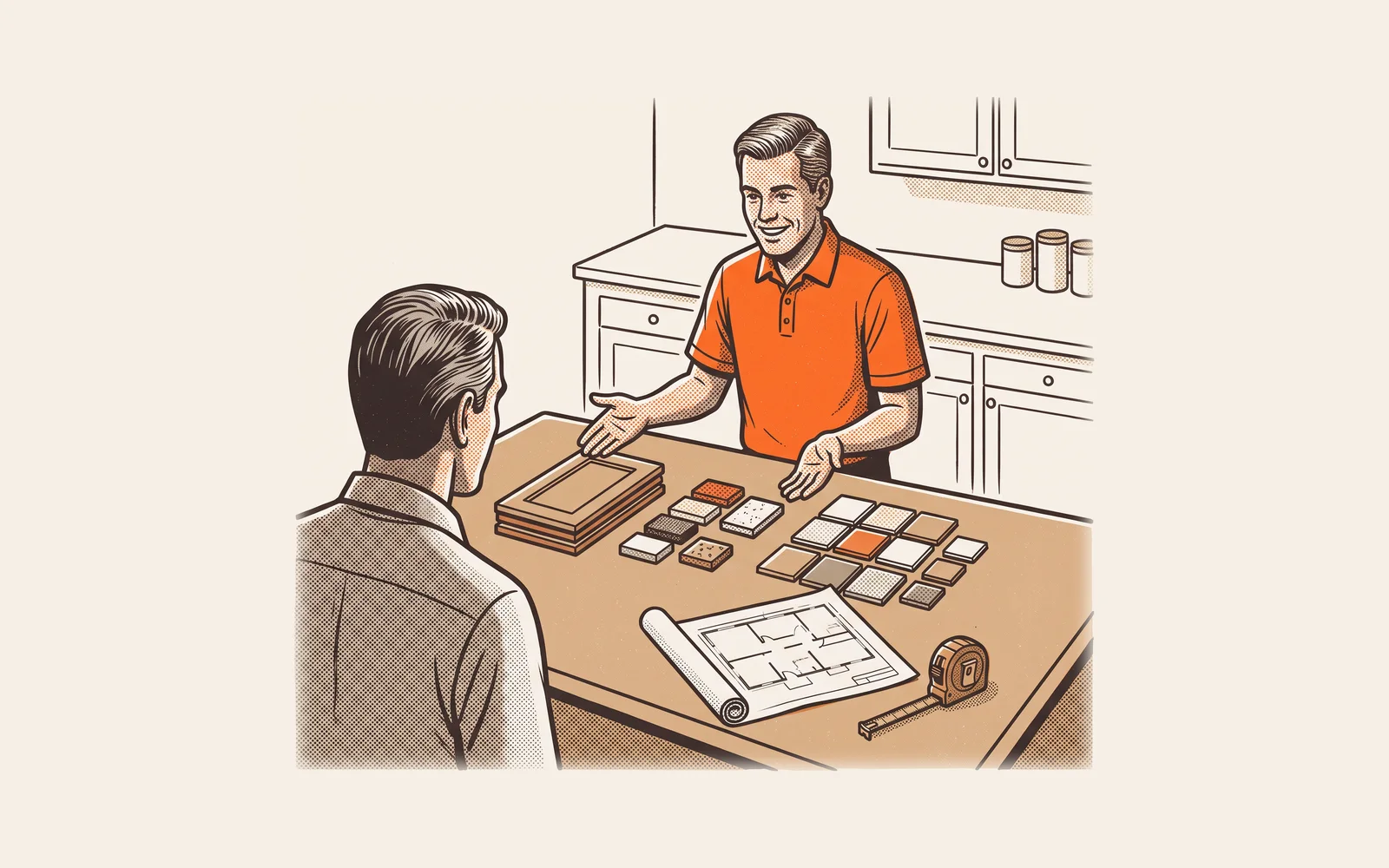
A single price turns the visit into a yes or no decision, and "not yet" is an easy way to say no. Three complete options change the question to which one fits. The full method is in good, better, best pricing. The tiers need to be built before the visit from a catalog, so the rep is presenting, not building an estimate on a calculator in front of the homeowner.
Pricing authority the rep can actually use
If the rep cannot answer "can you do anything on the price?" without a phone call, the homeowner learns that the first number was not the real one. Decide ahead of time what the rep can change: removing scope, switching a material, or a set amount of flexibility they can use without asking. Then make sure no change drops the job below your margin floor. A markup and margin calculator helps you set that floor before anyone is in a kitchen.
A presentation that shows, not tells
Walk back through the photos and notes from the inspection before you show a price. The homeowner should agree on the problem before they see the solution. Our guide to what an in-home sales presentation is covers the structure, from the opening to the options to the ask.
E-sign and a deposit on the same device
The moment a homeowner chooses an option, the paperwork should take minutes, not a second appointment. That means a contract they can read and sign on the screen, the cancellation notice included, and a way to pay the deposit by card or bank transfer right there. Deposit rules vary by state, so check yours before you set an amount.
How to run a first-visit close without pressure
Here is the shape of a visit that gives the homeowner every chance to decide today, and every chance to say not yet without a fight.
Set expectations at the door
Tell the homeowner how long you will be and what will happen. For example: "I'll look at everything, show you what I found, and give you three options with prices. If one makes sense, we can get you on the schedule today. If not, that's fine too." Saying out loud that no is allowed is what lowers their guard.
Inspect with them, not for them
Take photos and show them as you go. On a roof, show the damaged shingles on the screen. On an HVAC call, show the readings and the age on the data plate. The homeowner should see what you see.
Recap the problem before any prices
Sit down and walk back through what you found. Ask whether anything surprised them and whether you missed anything they care about. Get agreement on the problem first.
Present three options, recommendation first
Lead with the option you would choose for this house and say why. Then show the trimmed version and the premium version. Keep each explanation in plain words the homeowner uses.
Ask one clear question
"Which of these makes the most sense for you?" Then stop talking. Silence is not pressure. It is room to think.
Sign, explain cancellation, collect the deposit
If they choose, sign on the screen, explain their cancellation right in plain words, hand over the required forms, and take the deposit. Tell them exactly what happens next and when.
Handling "I need to think about it" respectfully
"I need to think about it" is not an objection to beat. It is usually a polite cover for something specific the homeowner has not said yet. Your job is to find out what that is, answer it if you can, and accept the answer if the honest answer is that they need time.
| What they may mean | A question to ask | A respectful next step |
|---|---|---|
| "It's more than we expected" | "Is it the total, or how it compares to what you had in mind?" | Walk through the Good option or what could come out of scope. |
| "I need to talk to my partner" | "Would it help to get them on a quick video call now?" | If not, book a short follow-up when both can be there. |
| "We're getting other quotes" | "What will you be comparing between the quotes?" | Explain what is in your scope so they compare like for like. |
| "I don't trust this yet" | "What would you want to see before you felt comfortable?" | Offer references, license and insurance details, photos of past jobs. |
| "Now isn't the right time" | "When would be the right time?" | Leave the quote with a real expiry and follow up then. |
If they still want time, give it to them. A homeowner who felt respected on the first visit takes your follow-up call. Our 14-day follow-up cadence for unsold estimates lays out exactly what to send and say after you leave, so a "not today" does not turn into a lost job by default.
The FTC Cooling-Off Rule and the one-call close
If you sell in the home, the federal Cooling-Off Rule is part of every first-visit close. According to the FTC's consumer guide, Buyer's Remorse: The FTC's Cooling-Off Rule May Help, the rule gives buyers three days to cancel certain sales made at their home, and it also applies when the homeowner invited the salesperson to present in the home. Here is what the FTC guide says matters most for contractors.
- The window. The buyer can cancel for a full refund until midnight of the third business day after the sale. Saturday counts as a business day. Sundays and federal holidays do not.
- What you must provide. At the time of sale you must tell the buyer about their right to cancel and give them two copies of a cancellation form, plus a dated contract or receipt with your name and address that explains the right to cancel, in the same language used in the presentation.
- What happens if they cancel. The FTC guide says the seller has 10 days to refund all the money, which includes the deposit you collected at the table.
- What it does not cover. The FTC lists exclusions, including sales under $25 made at the home, sales needed to meet an emergency, and repair or maintenance the homeowner asked you to come and do. Anything sold beyond that requested repair is covered.
- State rules can add more. The FTC notes that some state laws give buyers more rights than the federal rule.
The Cooling-Off Rule is the strongest argument against pressure. A homeowner pushed into signing tonight can cancel by Thursday and get the deposit back. Only the closes the homeowner still agrees with three days later stick. Two habits follow. Explain the right to cancel out loud when you sign, so it never feels like a trap. And for custom or special-order materials, many contractors wait until the cancellation window has passed before placing the order.
Examples by trade
The one-call close looks a little different in each trade. These are illustrative examples of what first-visit readiness means, not scripts.
- Roofing. The homeowner sees photos from the roof showing the actual damage on the screen, chooses between three shingle systems, and signs with a deposit. You explain that material orders go in after the cancellation window. More detail is in roofing sales at the kitchen table.
- HVAC. A no-heat call on a 20-year-old furnace turns into a replacement conversation. The tech shows repair, repair plus prevention and replace as three priced options, and the homeowner decides. If they called you out for a repair, the FTC exclusion for requested repairs applies only to that repair, not to everything else you sell on the visit.
- Remodeling. A bathroom remodel rarely closes on a true first visit, and forcing it backfires. A better goal is a paid design deposit on the first visit and the contract at the second.
Frequently asked questions
What is a one-call close?
A one-call close is when the homeowner decides and signs on the first in-home visit instead of after a second appointment or an emailed quote. It works best when every decision maker is present, the rep shows clear options with real prices, and the contract and deposit can be handled at the table.
Is the one-call close pushy?
It does not have to be. It becomes pushy when a rep uses fake deadlines, invented discounts or stays until the homeowner gives in. Run honestly, it just means you are ready to finish the sale on the first visit if the homeowner is ready too, and you leave cleanly if they are not.
Do homeowners still buy on the first visit?
Many do, especially when something is broken and they want it fixed. Planned projects like remodels and windows more often take a second visit. The biggest factor is whether the visit removed the reasons to wait: missing decision makers, unclear options, and no way to sign or pay.
How do I respond to "I need to think about it"?
Ask what specifically they want to think about, since it is usually price, timing, trust or an absent partner. Answer that concern if you can. If they still want time, leave the options with them, agree on a follow-up date, and keep to it.
Can a homeowner cancel a contract signed at the kitchen table?
Often, yes. The FTC Cooling-Off Rule gives buyers until midnight of the third business day to cancel many sales made in the home, with some exclusions, and some states add more rights. You must tell them about the right and give cancellation forms. This is not legal advice, so check your state's rules.
Further reading: the Federal Trade Commission's Cooling-Off Rule guide is the source for the cancellation rules above. For building the options you present, see good, better, best pricing, and for why presenting in person beats emailing a PDF, see stop emailing quotes and close at the kitchen table.
Written by the Revcore team. Reviewed by Hayden Mitchell, founder of Revcore Pro, who closed $3.5M of home improvement door to door and helped scale a contractor from $1M to $10M.