Is Angi worth it for contractors? Do the cost per booked job math first
Whether Angi or HomeAdvisor pays off depends on your trade, your ticket size and how fast you answer, not on anyone's opinion. Here is how lead marketplaces charge, what Angi and HomeAdvisor publish about their pro offerings, the cost per booked and sold job math, a 60 to 90 day test plan, and the alternatives worth building alongside.

By The Revcore team
Reviewed by Hayden Mitchell, founder
11 min read

Quick answer
Is Angi worth it for contractors?
Angi is worth it only if your cost per sold job from its leads stays well under the gross profit on an average job. That depends on your lead fees, how fast you respond, your booking and close rates, and your ticket size. Run a tracked 60 to 90 day test and judge it on cost per sold job, not cost per lead.
Ask ten contractors whether Angi is worth it and you will get ten confident answers in both directions. Some built their first year on marketplace leads. Others swear they never closed one. Both can be telling the truth, because the answer depends on things that differ from shop to shop: what you sell, what each lead costs you, how fast you call back, and how well you sell once you are in the house.
So this post will not tell you yes or no. It will show you how lead marketplaces generally work, what Angi and HomeAdvisor actually say about their pro offerings on their own pages, and the math that gives you your own answer. Then it covers how to test a marketplace without betting the year on it, how to work those leads so the test is fair, and what to build alongside so you are never dependent on rented leads.
How lead marketplaces generally work
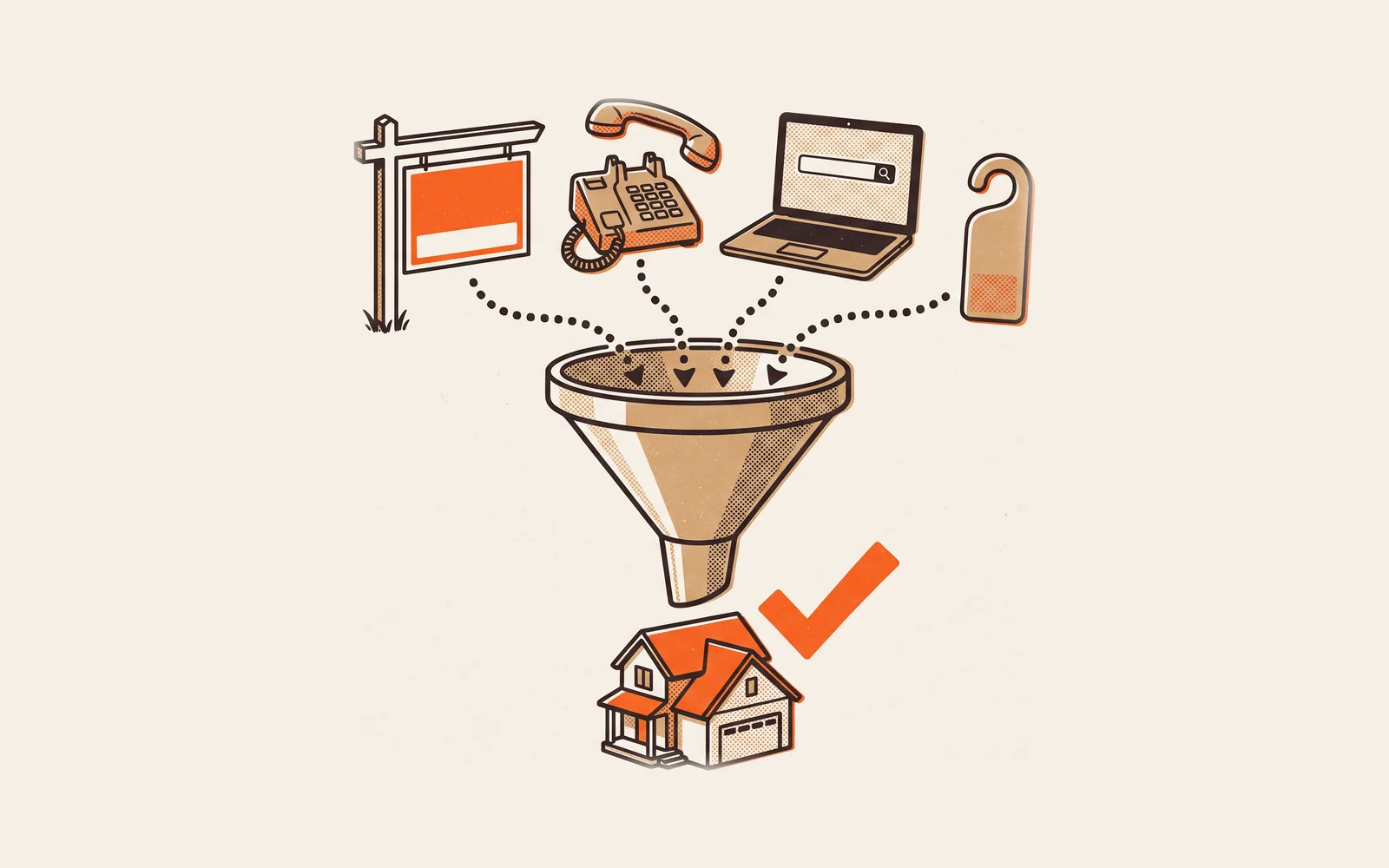
A lead marketplace collects homeowner requests for projects and sells the contact details to contractors who serve that job type and area. The details differ by platform and change over time, but most offerings fall along two lines: who else gets the lead, and how you pay for it.
| Model | How it works | What it means for you |
|---|---|---|
| Shared lead | The same homeowner request can be sent to more than one contractor. | Lower price per lead, but you are racing other pros. Speed and follow-up decide who wins. |
| Exclusive lead | The request goes to one contractor only. | Higher price per lead, less competition for the first call. Still no guarantee the homeowner is ready to buy. |
| Pay per lead | You are charged for each lead delivered, whether or not you win the job. | Your cost per sold job rises fast if leads go uncalled or your close rate is low. |
| Subscription or membership | A recurring fee for a listing, profile, or advertising placement, sometimes on top of lead fees. | A fixed cost you pay even in slow months. Count it in your spend, not just the lead fees. |
| Booked appointment | The homeowner books a time directly on your calendar through the platform. | Closer to a booked job, often priced higher. Check how it is charged and whether it counts toward any budget. |
Before you sign up anywhere, get answers in writing to five questions: Is this lead shared or exclusive, and with how many pros? What does a lead cost for my job types in my zip codes? Is there a membership or subscription fee on top? What is the process for disputing a bad lead? How do I pause or cancel?
What Angi and HomeAdvisor say about their pro offerings
Angi and HomeAdvisor are part of the same company, and HomeAdvisor's pro pages now describe the service as Angi Leads. Here is what their official pages said when we opened them on September 27, 2026. Offerings and terms change, so check the current pages and your own contract before you rely on any of this.
- Pay per lead. The Angi Leads FAQ says you pay a fee for each lead you match to, and that different sized jobs have different lead fees. It lists no fee amounts.
- Charged whether or not you win. HomeAdvisor's how it works page says you are charged for each lead you receive whether or not you ultimately win the job, and that lead prices vary by type of work and region.
- A spend target, not a cap. The same page describes a spend target, an estimated 28 day dollar amount, and says it is not a hard cap, so spend can exceed it. It also says Instant Booking leads and Job Opportunity leads are charged outside the spend target.
- On and off control. The Angi Leads FAQ says you can turn the service on or off by adjusting your profile.
- Angi advertising and Angi Approved. Angi's FAQ says pros who meet a minimum average rating can pay to advertise, and that to be Angi Approved the owner or a principal must pass a criminal background check and attest to holding required state and local licenses.
- No published pricing on the signup page. The Angi pro signup page asks you to pick a service and get started. It does not publish lead prices, membership fees, or whether leads are shared or exclusive.
In short, the pricing you need for the math below is not public. You will get it from a sales call or from inside your account, and you should write down the quoted lead fee for each job type before you start a test.
The math: cost per booked job and cost per sold job
Cost per lead is the number marketplaces talk about, and it is the least useful one. A cheap lead that never answers the phone costs you more than an expensive lead that books. Use the same two numbers you would use for any source, as covered in our guide to marketing attribution and cost per booked job.
- Total spend = lead fees + any membership, subscription or advertising fees for the period.
- Cost per booked job = total spend divided by leads that became an appointment on your calendar (an estimate visit or a scheduled service call).
- Cost per sold job = total spend divided by signed jobs from that source.
- Marketing cost as a share of revenue = total spend divided by revenue from those sold jobs.
The table below is an illustrative example. The lead fees, rates and tickets are invented to show the math, not real Angi prices or industry benchmarks. Put your own quoted fees and your own tracked rates in their place.
| Roof replacement | HVAC system replacement | Plumbing repair | |
|---|---|---|---|
| Leads received | 40 | 30 | 60 |
| Example fee per lead | $70 | $60 | $30 |
| Total spend | $2,800 | $1,800 | $1,800 |
| Reached by phone or text | 28 | 21 | 42 |
| Booked (appointment set) | 12 | 9 | 24 |
| Sold | 3 | 3 | 18 |
| Cost per booked job | $233 | $200 | $75 |
| Cost per sold job | $933 | $600 | $100 |
| Average ticket | $15,000 | $11,000 | $450 |
| Revenue | $45,000 | $33,000 | $8,100 |
| Spend as share of revenue | 6.2% | 5.5% | 22.2% |
Look at the last row. The plumbing shop has by far the cheapest cost per sold job, and it is still the worst deal of the three, because a $100 cost on a $450 ticket eats a large slice of the gross profit. The roofer pays nine times more per sold job and keeps a much healthier margin. Ticket size, not lead price, often decides whether a marketplace works.
Your ceiling: the most you can pay for a sold job
Work out your ceiling before the test starts, so the result is a yes or no rather than a feeling. Take your average ticket, multiply by your gross margin to get gross profit per job, then decide what share of that profit you are willing to spend to win the job. Example, illustrative: a $15,000 roof at a 35 percent gross margin is $5,250 of gross profit. If you are willing to spend 20 percent of gross profit on acquisition, your ceiling is $1,050 per sold job. At $933, the roofer in the table is under it, barely. A drop in close rate from 25 to 20 percent would push them over.
That sensitivity is the real lesson. On pay per lead platforms, small changes in contact rate and close rate swing your cost per sold job far more than the lead fee does. If you want to know where your close rate sits, see what a good close rate for in-home sales is.
How to test a marketplace for 60 to 90 days
One month is too short to judge a source for replacement work, because a roof or HVAC estimate can take weeks to close. Six months without a plan is too long. A structured 60 to 90 day test gives you enough sold jobs to decide, with a cap on what you can lose.
Write down the terms before you start
Record the quoted fee per lead for each job type, any membership or subscription fee, whether leads are shared or exclusive, the bad lead dispute process, and how to pause. Save the email or screenshot.
Narrow the targeting
Start with the job types you sell best and the zip codes you can reach quickly. Leave out small tickets and far-off towns until the core numbers prove out.
Set a hard budget and your ceiling
Pick a total test budget you can afford to lose, and calculate your cost per sold job ceiling from the section above. Check spend weekly, since a spend target may not be a hard cap.
Tag every lead with its source
Every marketplace lead goes into your CRM tagged with the platform name, and the tag stays on the record through booked appointment, signed job and paid invoice. No tag, no test.
Work every lead the same way
Same response time rule, same follow-up cadence, same salesperson standard as your best leads. A test where leads sat for hours measures your process, not the platform.
Log bad leads and dispute them
Wrong number, wrong service, outside your area, duplicate: note the reason on the record and use the platform's dispute process. Count only the credits you actually receive.
Decide on the numbers at day 60 to 90
Compare cost per booked job, cost per sold job and spend as a share of revenue against your ceiling and against your other sources. Keep open estimates in view, since some will still close.
At decision time you have three honest options: keep going at the same level, narrow the job types and zip codes to the ones that worked and retest, or stop. Narrowing is often the right answer. Many shops find one or two job types pay off and the rest do not.
How to respond fast to marketplace leads
If a lead can be shared, the first contractor to reach the homeowner has a real edge, and the homeowner may stop answering once they have talked to someone. Your response time is not a detail in the test, it is most of the test. Our post on speed to lead for home services goes deeper. The short version for marketplace leads:
- Route leads to a person, not an inbox. Marketplace notifications should land on a phone that someone is watching during business hours, with a named owner for each shift.
- Call first, text right after. If the call goes unanswered, send a short text with your name, your company and a way to book, so you are the name in their messages.
- Offer a specific time. "I can be there Thursday at 10 or Friday at 2" books more appointments than "when works for you?"
- Have an after-hours rule. An automatic text that confirms you received the request and says when you will call is better than silence until morning.
- Follow up on a schedule. Several attempts across the first few days, by call and text, then a longer-term cadence. See five follow-up texts that turn cold leads into jobs.
- Follow up after the estimate too. Marketplace homeowners often collect several quotes. A clear, polite follow-up plan wins jobs others let go. See how to follow up on an unsold estimate.
Alternatives that get cheaper over time
Marketplace leads are rented. The day you stop paying, they stop. That can be fine as one channel among several, but the shops that stay profitable on marketplace leads usually also build channels they own. These take longer to start and cost less each year they run.
| Channel | What it takes | Why it helps |
|---|---|---|
| Lead marketplace | Lead fees and possibly a subscription, plus fast response. | Volume you can switch on quickly. Stops when you stop paying. |
| Your website and local SEO | A fast site, service and town pages, a complete Google Business Profile. | Homeowners who find you directly are not shared with other pros. Rankings build over time. |
| Reviews | A routine to ask every happy customer, and replies to every review. | Reviews help your map ranking and your close rate on every other channel. |
| Referrals and repeat work | A reason to refer, a thank-you, and staying in touch after the job. | Often the lowest cost per sold job you have, and the warmest homeowners. |
For the website and map side, our guide to local SEO for contractors shows how to rank above the directories in your own zip codes. For reviews, the best system is boring: ask on the last day of the job while the homeowner is happy, send the link by text the same day, and reply to every review, good or bad. For referrals, make it easy and specific. Tell past customers which kind of job you want more of, thank every referrer, and track referrals as their own source so you can see what they are worth.
A reasonable plan for many $2M to $30M shops: use a marketplace to fill specific gaps, such as a new service area or a slow season, while putting steady effort into owned channels. Then let your cost per sold job by source decide how much each one gets next quarter.
Frequently asked questions
How much do Angi leads cost?
As of September 27, 2026, the Angi and HomeAdvisor pro pages we checked do not publish lead prices. HomeAdvisor says fees vary by the type of work and by region, and different sized jobs have different lead fees. Get a written quote for each job type and zip code before you start, and use it in your cost per sold job math.
What is the difference between Angi and HomeAdvisor for contractors?
They are part of the same company, and HomeAdvisor's pro pages now describe the lead service as Angi Leads. Angi also offers paid advertising for pros who meet its rating standard. Because products and terms change, ask the sales rep which program you are buying, how it is charged, and whether leads are shared or exclusive.
Are shared leads worth it?
They can be if you respond within minutes, follow up consistently, and sell jobs with enough gross profit to absorb the lead cost. Shared leads usually cost less per lead but convert at lower rates because you are competing with other contractors. Track cost per sold job for shared leads separately before deciding.
How long should I test Angi before deciding?
Plan on 60 to 90 days with a fixed budget, tracked lead sources and a strict response time rule. That is usually long enough to see replacement estimates close. Judge the result on cost per sold job and spend as a share of revenue, and consider narrowing job types before stopping entirely.
What are the best alternatives to Angi for contractors?
The strongest long-term alternatives are channels you own: a fast website with local SEO, a complete Google Business Profile, a steady stream of reviews, and referrals from past customers. They take longer to build, but their cost per sold job tends to fall over time, and those leads are not shared.
Further reading: the pro pages we cite are HomeAdvisor's how it works for pros, the Angi Leads FAQ and Angi's FAQ. The FTC's HomeAdvisor case page has the full record. For the tracking side, see marketing attribution for contractors.
Written by the Revcore team. Reviewed by Hayden Mitchell, founder of Revcore Pro, who closed $3.5M of home improvement door to door and helped scale a contractor from $1M to $10M.