What is a dealer fee? Home improvement financing fees, who pays them and how to price for them
A dealer fee is the percentage a lender keeps from your funding on a financed job. Here are published ranges by program type, who really pays, the rules on passing it on, and worked margin math.

By The Revcore team
Reviewed by Hayden Mitchell, founder
11 min read
Quick answer
What is a dealer fee on home improvement financing?
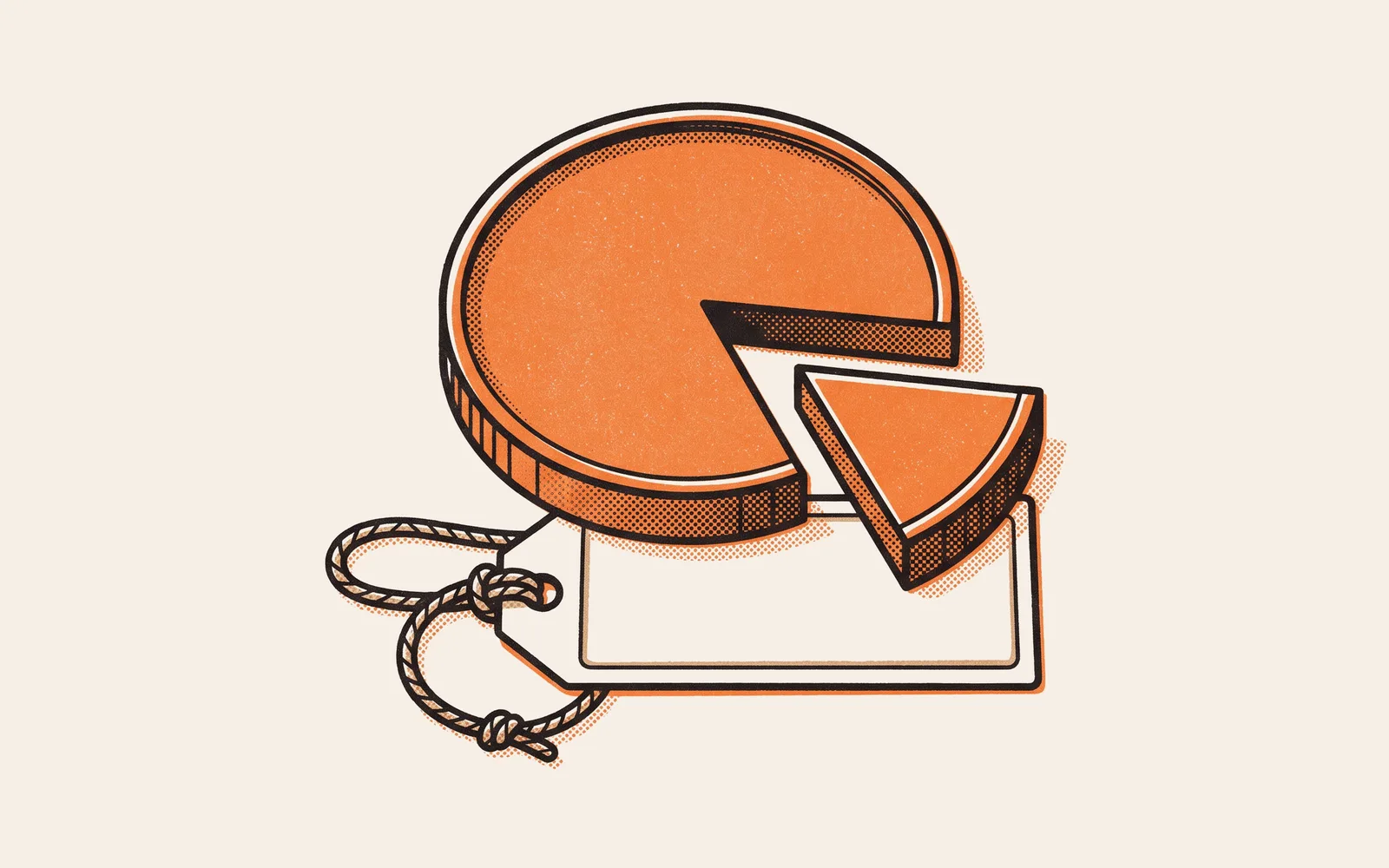
A dealer fee (also called a merchant fee) is a percentage of the financed amount that the lender deducts before it pays you. The homeowner borrows the full job price, and you receive the price minus the fee. Published fees run from about 3.9% on standard plans to 10% to 17.5% on long 0% promotions, and the longer and cheaper the promotion for the homeowner, the higher the fee for you.
Most contractors sign up for a financing program, see "0% for 18 months" on the homeowner side, and never look hard at the other side of the deal. Then a $30,000 roof funds at $27,075 and the job that looked like a 30% margin comes in closer to 20%.
Dealer fees are how a lender pays for the low or zero rate the homeowner sees. The question is whether you know your number and have priced for it.
What is a dealer fee, in plain terms?
When a homeowner finances a job through your lender, the lender pays you and the homeowner repays the lender. If the loan carries a promotional rate, such as 0% for 12 months, the lender earns little or nothing from the homeowner during that time. The dealer fee makes up the difference. It is a percentage of the financed amount, deducted from what the lender sends you.
You will see the same thing called a dealer fee, merchant fee, contractor fee, buy-down, discount or program fee. Federal lending rules call charges a lender places on the seller "seller's points." Different words, same effect: you get less than the price on the contract.
How much are dealer fees? Typical ranges by program type
Most lenders do not publish fee schedules. The table collects the numbers that are public.
Swipe the table to see every column.
| Program type | Published fee to the contractor | Source |
|---|---|---|
| Standard installment plan, rate set by the homeowner's credit (Wisetack in Jobber and JobNimbus) | 3.9% flat | Jobber and JobNimbus help centers |
| Wisetack 0% APR add-ons in Housecall Pro | 4.9% (6 months) up to 9.9% (24 months) | Housecall Pro help center |
| Deferred interest, no payments (6, 12, 18 months) | 4.55%, 6.80%, 9.75% | GreenSky rate sheet via EGIA, effective September 2020 |
| Deferred interest with payments (6 to 24 months) | 3.00% up to 11.75% | Same GreenSky sheet |
| True 0% interest over 24 to 60 months | 11.00% up to 17.50% | Same GreenSky sheet |
| Reduced fixed rate over 60 to 144 months | 0.50% up to 12.00%, lower rate means higher fee | Same GreenSky sheet |
| Solar-specific loans | Hidden fees of 10% to 30% of the cash price, sometimes over 50% | CFPB Issue Spotlight, August 2024 |
| Subscription marketplace (Hearth) | No dealer fees; the contractor pays a subscription | Hearth pricing page |
Three patterns hold across every program we could find published:
- Longer promotions cost more. On the GreenSky sheet, the no-interest, no-payment plan goes from 4.55% at 6 months to 9.75% at 18 months.
- A lower homeowner rate costs more. On the same sheet, a 120 month loan at 9.99% carries a 0.50% fee on the standard plan, while the same term at 5.99% carries 12.00%. You are paying to buy the rate down.
- Standard plans are cheap. When the homeowner pays a rate based on their credit, fees drop to the low single digits, similar to what you already pay on a card payment.
3.9%
Flat Wisetack merchant fee in Jobber and JobNimbus
9.75%
18 month no-interest plan on a 2020 GreenSky rate sheet
17.5%
Highest fee on that sheet (60 month 0% and some promos)
10% to 30%
Typical hidden fees on solar loans, per the CFPB
Who pays the dealer fee, the contractor or the homeowner?
The contractor pays it. The lender deducts it from your funding, and the homeowner's loan is for the full contract price. Jobber's help article puts it simply: the fee comes off each financed amount, and the net is what lands in your bank. Housecall Pro's article explains that your merchant fee changes with the 0% option your customer picks, which means the homeowner's choice sets your cost.
Is a dealer fee the same as a card processing fee?
Same mechanics, different size and variability. A card payment through Revcore costs 3.65% plus 30 cents (standard 2.9% plus 30 cents processing plus a 0.75% platform fee), and Margin Protection prices that into the estimate lines automatically. A dealer fee might be 3.9% on one job and 11% on the next, depending on the plan the homeowner picks. For a full comparison of card and bank payments, see card vs ACH for contractors.
Is it legal to pass the dealer fee on to the customer?
This is where contractors get into trouble, so here is the landscape in general terms. It is not legal advice.
- Federal lending rules look at the cash price. The official interpretation of Regulation Z says charges imposed the same way in cash and credit transactions are not finance charges, and that when the charge in a credit transaction exceeds the charge in a comparable cash transaction, the difference is a finance charge. The same interpretation also says seller's points are excluded from the finance charge even when passed on in a higher sales price.
- Regulators are watching hidden markups. The CFPB's 2024 solar financing report described lenders building dealer fees into loan principal without showing that the loan was bigger than the cash price, and noted that salespeople often did not explain the difference. It cited a Minnesota Attorney General lawsuit against several solar lenders over the practice.
- Your lender agreement has its own rules. Many dealer agreements address whether you may charge financed customers a different price or add a financing line. Read yours before you do anything else.
- State law varies on home improvement contracts and consumer protection.
The practical takeaway: a separate "financing fee" line, or a higher price that only financed customers pay, is the path that invites problems. One price for the job, whatever way the homeowner pays, is the path that does not.
Worked margin examples: what a dealer fee does to a job
Take a $20,000 HVAC replacement with $13,000 in job costs (equipment, labor, materials, permit). That is a $7,000 gross profit, or a 35% gross margin, before any payment costs. This is an illustrative example using published fee levels from the table above.
Swipe the table to see every column.
| How the homeowner pays | Fee | You receive | Gross profit | Gross margin |
|---|---|---|---|---|
| Check or cash | $0 | $20,000 | $7,000 | 35.0% |
| Card at 3.65% + 30¢ | $730.30 | $19,269.70 | $6,269.70 | 31.3% |
| Standard plan at 3.9% | $780 | $19,220 | $6,220 | 31.1% |
| 12 month no-interest at 6.8% | $1,360 | $18,640 | $5,640 | 28.2% |
| 18 month no-interest at 9.75% | $1,950 | $18,050 | $5,050 | 25.3% |
| 60 month 0% at 17.5% | $3,500 | $16,500 | $3,500 | 17.5% |
Now look at net profit. If your overhead runs about 25% of revenue, this job clears roughly $2,000, or 10% net, when paid in cash. The 18 month plan's $1,950 fee takes almost all of it. The 60 month 0% plan turns it into a loss. The plan picked at the table decided whether you made money.
A $30,000 roof
Same idea on a bigger ticket. A $30,000 asphalt roof with $21,000 in costs has a $9,000 gross profit (30%). On an 18 month no-interest plan at 9.75%, the fee is $2,925. Gross profit falls to $6,075, a 20.3% margin, and you have given up about a third of your gross profit on that job. For context, the national average for an asphalt shingle roof replacement was $31,871 in the 2025 Cost vs Value report.
How to price for dealer fees in your estimate
You have four honest options. Most shops end up combining the second and fourth.
Option 1: Absorb it
Treat the fee as a sales cost. This works when fees are low and financing is a small share of jobs, and stops working when much of your revenue funds through long promotions.
Option 2: Blend it into every price
Work out your expected financing cost across all revenue and raise pricing just enough to cover it. Every customer sees one price, however they pay.
Option 3: A separate financed price
Quoting financed customers more is the option most likely to conflict with your lender agreement and the rules above. Do not do it without your lender's written approval and your attorney's review.
Option 4: Control the plan menu
Decide which programs you offer. Lead with a low-fee standard plan and one short promotion, and offer the expensive long 0% plans only on jobs whose margin can carry them, or not at all.
How to calculate a blended financing cost
Here is the math for Option 2, as an illustrative example. Say 30% of your revenue is financed and your average dealer fee across the plans homeowners pick is 7%. Your blended financing cost is 0.30 times 7% = 2.1% of all revenue. On $5 million in sales, that is $105,000 a year.
To recover 2.1%, divide, do not multiply: new price = old price divided by (1 minus 0.021). A job you used to price at $30,000 becomes $30,643.51. Multiplying by 1.021 falls short, because the fee applies to the higher price too. The same trap catches contractors who gross up a single job: $30,000 times 1.0975 is $32,925, but after a 9.75% fee you receive $29,714.81, not $30,000. Our markup and margin calculator handles the division for you.
- Use real data. Pull 12 months of funded jobs and the fee deducted on each from your lender portal.
- Recheck quarterly. If homeowners start choosing longer promotions, your blended cost rises even though nothing on your price sheet changed.
- Build it into each tier. If you quote Good/Better/Best options in your estimates, include the blended cost in every tier once, so reps never have to think about it at the table.
How to lower the dealer fees you pay
- Make the standard plan the default. Show the lowest-fee plan first and let the homeowner ask about longer promotions.
- Offer short promotions, not long ones. A 12 month promotion is often enough to bridge a homeowner to a tax refund, bonus or insurance check, at a fraction of the 60 month fee.
- Compare lenders and structures. Some platforms route one application to several lenders. Subscription models like Hearth charge no per-job dealer fee. See our financing programs comparison.
- Ask about your rate sheet. Volume and trade association programs, like the EGIA sheet above, can change your fees.
- Know the promo types. Deferred interest, same-as-cash and true 0% carry different fees and different risks for the homeowner. Read same as cash vs 0% APR vs deferred interest.
Offering financing usually still pays for itself when priced right. In ServiceTitan's 2025 Consumer Trends report, a vendor study with Synchrony and Visa, contractors offering financing saw 12% higher close rates and 13% higher average tickets. See does offering financing increase close rates for what the data does and does not show.
How Revcore will handle financing
Homeowner financing in Revcore is coming soon and will be included on every plan when it launches. The plan: monthly payments in the in-home presentation and on every estimate package, applications from the estimate on the homeowner's phone, 0% promotional plans (12, 18 and 24 months) plus longer fixed-rate terms, and funding status on the job. Fees and terms will be announced at launch. Good/Better/Best estimates, the iPad presentation and Margin Protection for card payments are live today.
Frequently asked questions
What is a dealer fee on a home improvement loan?
It is a percentage of the financed amount that the lender deducts from the contractor's funding, usually to pay for a low or 0% promotional rate for the homeowner. Published fees range from about 3.9% on standard plans to 10% to 17.5% on long 0% promotions.
Who pays the dealer fee, the contractor or the customer?
The contractor. The homeowner borrows the full contract price and the lender pays the contractor that price minus the fee. The homeowner pays indirectly only if the contractor's prices include the cost.
Can a contractor charge more for financed customers?
It is risky. Under Regulation Z, when a credit customer pays more than a comparable cash customer, the difference can be treated as a finance charge, and many lender agreements restrict different pricing. Regulators have criticized hidden markups on financed jobs. Check with your lender and counsel. Blending the cost into one price for everyone is the safer default.
Why are 0% financing dealer fees so high?
Because the lender earns nothing from the homeowner during a 0% period, the contractor's fee has to cover the lender's cost of money and risk. Longer 0% periods cost more: on one published rate sheet, 24 months was 11% and 60 months was 17.5%.
How do I add dealer fees into my pricing?
Calculate your blended cost: the share of revenue that is financed times your average fee. Then divide your prices by one minus that rate. With 30% of revenue financed at an average 7% fee, the blended cost is 2.1%, and a $30,000 job becomes $30,643.51.
Does Revcore charge dealer fees?
Revcore's homeowner financing is not live yet. It is coming soon and will be included on every Revcore plan at launch, and fees and terms will be announced then. You can see the planned experience on the financing preview page.
Further reading: the CFPB's solar financing report is the clearest public explanation of how hidden dealer fees reach homeowners. For the full picture on setting up financing, start with how to offer financing to customers.
Written by the Revcore team. Reviewed by Hayden Mitchell, founder of Revcore Pro, who closed $3.5M of home improvement at kitchen tables and helped scale a contractor from $1M to $10M.