The HVAC sales process: how to sell system replacements from first call to signed job
A step-by-step HVAC replacement sales process for owners and sales managers: the in-home assessment, the load and home check, the repair or replace conversation, good, better, best system options, presenting on an iPad, price objections, deposits, follow-up and the numbers to track.

By The Revcore team
Reviewed by Hayden Mitchell, founder
Updated 12 min read
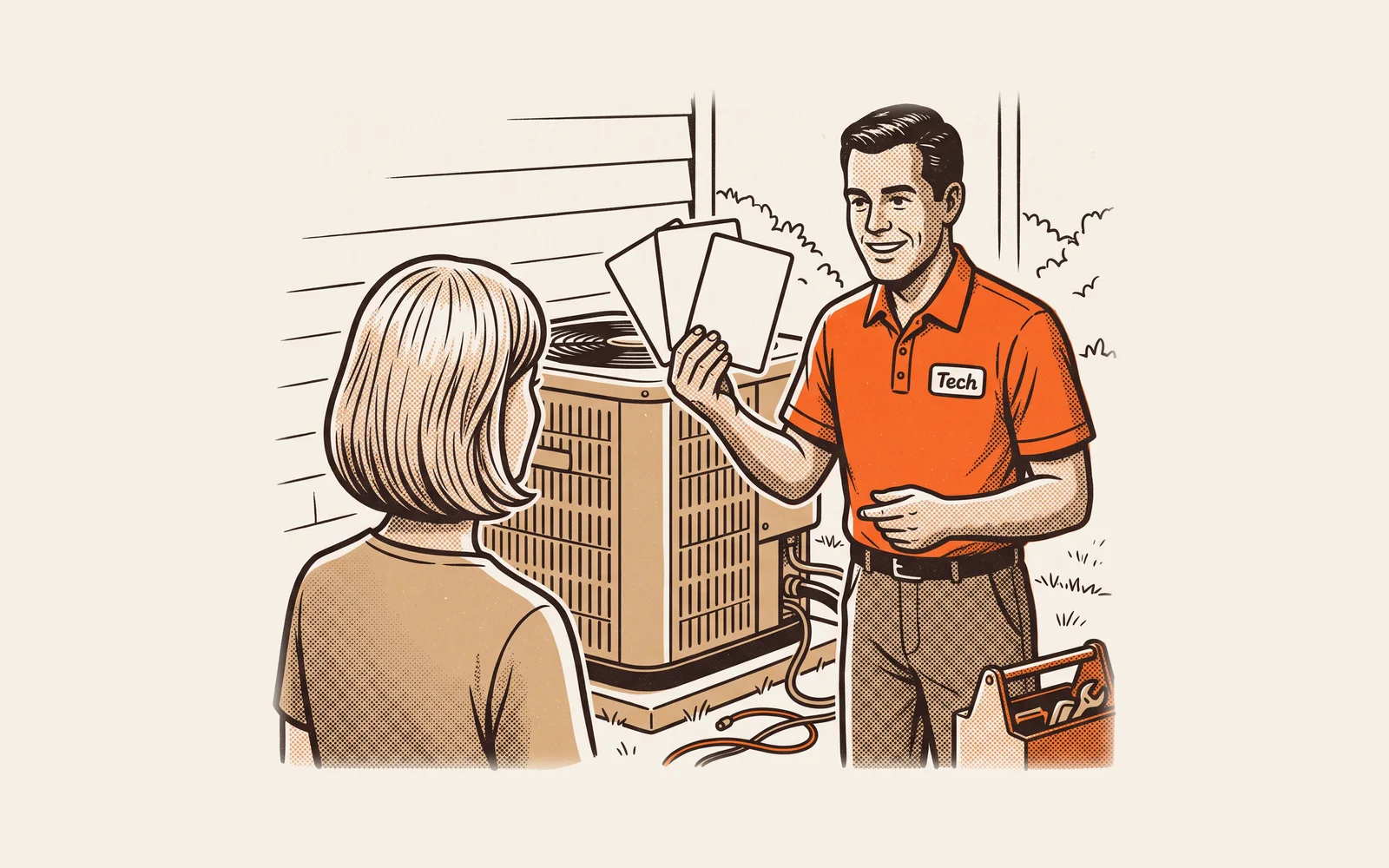
Quick answer
What is a good HVAC sales process for system replacements?
A strong HVAC replacement sales process runs the same way on every call: confirm the appointment, assess the home and the existing system, check the load, have an honest repair or replace conversation, present three system options on a tablet, answer price concerns, then take the signature and deposit at the table. Unsold jobs get a planned follow-up.
A system replacement is one of the largest purchases most homeowners make for their house, and they make it only a few times in their life, often under stress. The job rarely goes to the cheapest quote. It goes to the company whose salesperson explains the problem plainly, recommends a system that fits the house, and makes it easy to say yes.
The trouble in most HVAC companies is that the process lives in one person's head. The owner closes well and everyone else improvises. This guide lays out a process you can write down, train and measure, from lead to signed job.
Before the visit: set the appointment up to be sold
Half of a good sales call happens before the salesperson leaves the shop. Capture every replacement lead, whether from a web form, a call or a tech who flagged an aging system, in one place so you can later see which sources produce signed jobs.
- Ask for all decision makers. If two people will make the call, book the visit when both can be home. A presentation to one spouse often ends in "we need to talk about it."
- Pull the history. If your techs have been to the house, read their notes and photos. Knowing the last repair and the age of the unit changes the whole conversation.
- Confirm by text. A short confirmation the day before and an on-the-way text cut no-shows and show the homeowner you run a tidy operation.
The in-home assessment
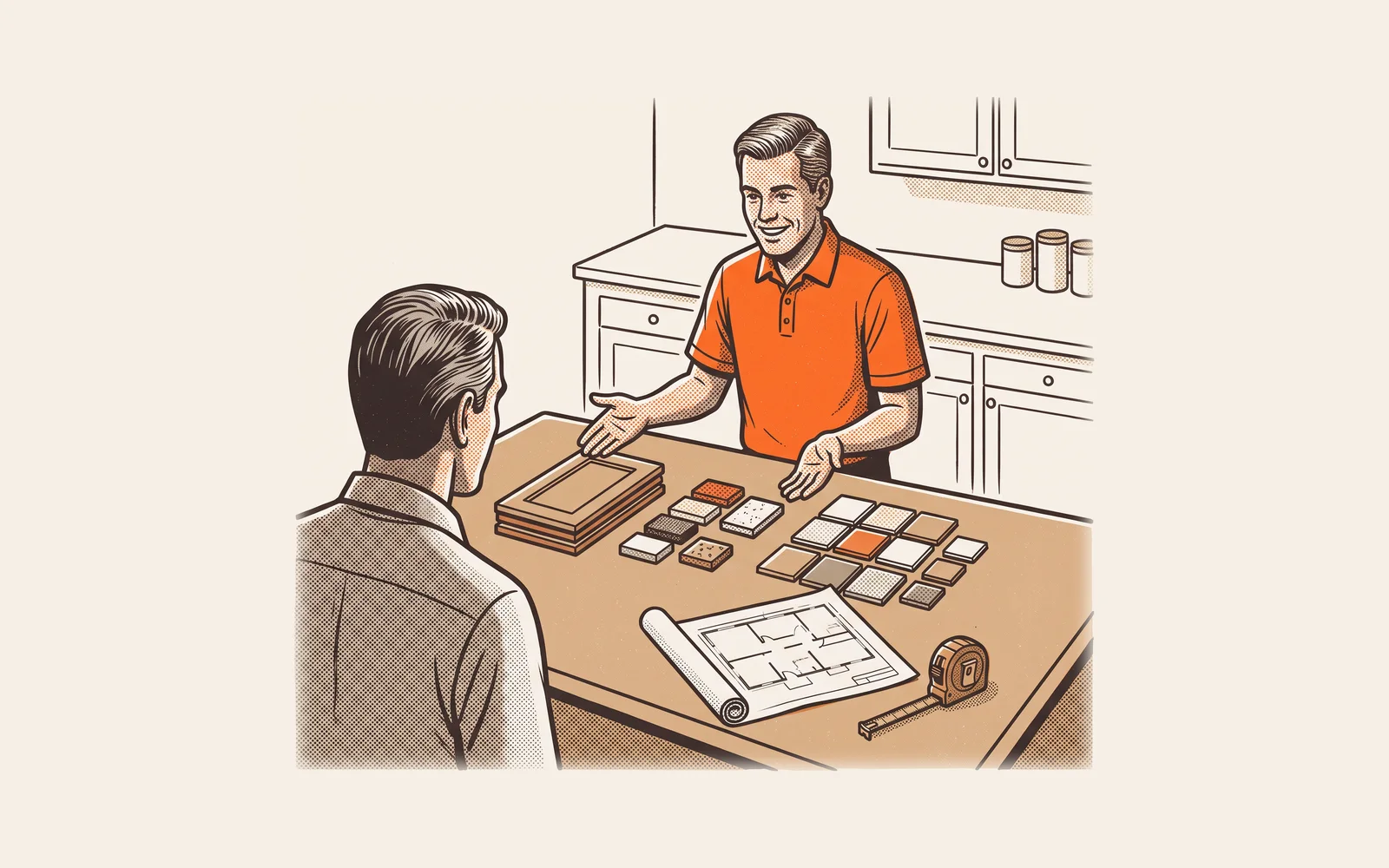
Start with the homeowner, not the equipment. Sit down for a few minutes and ask what is going on: rooms that never get comfortable, noise, dust, high bills, allergies, how long they plan to stay in the house. Their answers tell you which options will matter to them.
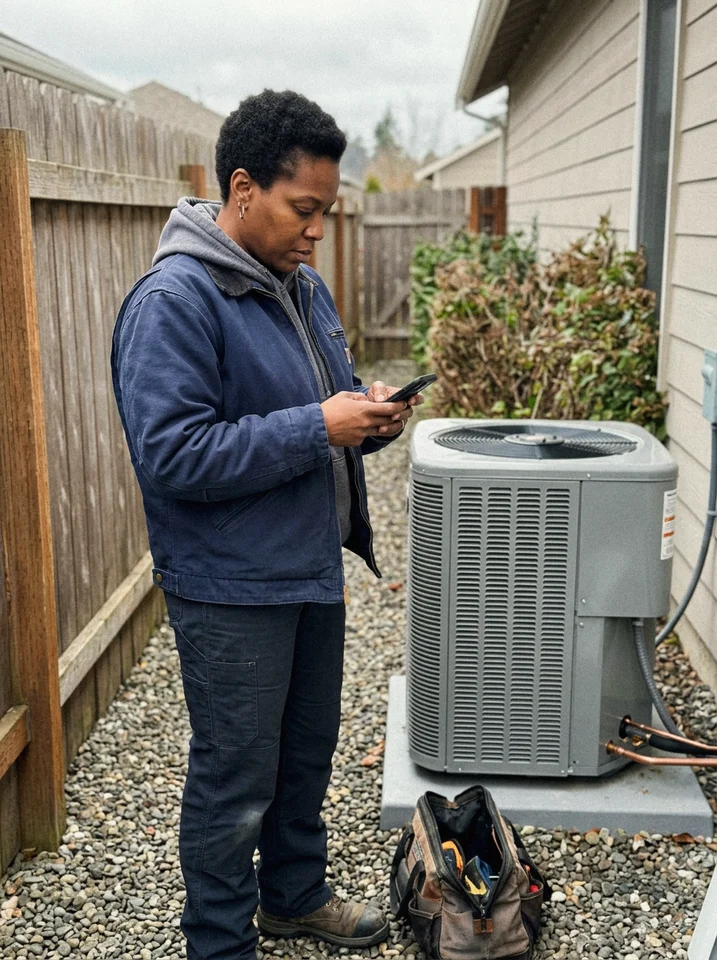
Then walk the house together where it makes sense. Look at the indoor and outdoor equipment, the ductwork you can reach, return and supply registers, the thermostat, the filter and the condensate setup. Take photos as you go. A photo of a rusted drain pan or a crushed duct explains the problem better than any sentence.
The load and home check
One of the most common mistakes in HVAC replacement is sizing the new system to match the old one. The old unit may have been oversized from the start, or the house may have changed since: new windows, added insulation, a finished basement, an addition. An oversized system tends to short cycle and leave the house clammy, and an undersized one struggles on the hottest and coldest days.
The industry method for sizing is a room-by-room load calculation, commonly done with ACCA Manual J. It looks at the house's square footage, insulation, windows, orientation, air leakage and local climate. Gather the inputs on site and tell the homeowner what you are doing and why. It separates you from the company that glanced at the nameplate. Check the ductwork too, because a new system connected to undersized or leaky ducts will not deliver what the homeowner is paying for.
Repair or replace: have the conversation honestly
Many replacement calls begin as a repair. The homeowner has a failed part and a decision to make. Your job is to lay out both paths so they can choose with full information. Pushing a replacement on a system with years left in it is the quickest way to lose a customer for life.
| Signal | Leans toward repair | Leans toward replace |
|---|---|---|
| Age of the system | Well within its expected service life | Near or past the end of its expected service life |
| Repair history | First significant repair | Several repairs in recent years, with more likely |
| Size of this repair | Small relative to the value left in the system | Large relative to the value left in the system |
| Comfort | The house is comfortable when the system runs | Hot or cold rooms, humidity or noise complaints |
Build good, better, best system options
A single replacement quote is a yes or no decision, and "let me think about it" is an easy answer to a yes or no question. Three complete options change the question to which system fits this house and this budget. Our guide to good, better, best pricing covers how to build and space the tiers. Here is what the structure looks like for a typical split system replacement.
| Good | Better | Best | |
|---|---|---|---|
| Equipment | Single-stage system that meets the federal minimum for your region | Two-stage system, quieter with more even temperatures | Variable-speed system with the best comfort and humidity control |
| Sizing and ducts | Load check, connect to existing ducts with sealing at the equipment | Load check plus repair of problem duct runs | Load check plus duct corrections for airflow |
| Thermostat | Standard programmable | Smart thermostat | Communicating thermostat matched to the system |
| Maintenance and warranty | Manufacturer warranty | Manufacturer warranty plus first year of tune-ups | Extended labor warranty plus a multi-year service agreement |
| Example price | $9,800 | $12,900 | $16,500 |
Every line must be something you would actually install. A service agreement in the top tiers keeps the new system maintained and the homeowner in touch with you for years.
Explaining the rule changes without the jargon
Homeowners may ask about new equipment rules. Know the basics. On efficiency, the Department of Energy's federal standards in 10 CFR 430.32 are now stated in SEER2 and HSPF2, with higher minimums for split air conditioners installed in the Southeast and Southwest than in the North.
13.4 SEER2
Federal minimum for split system air conditioners manufactured on or after January 1, 2023
14.3 SEER2
Minimum for split air conditioners under 45,000 Btu/hr installed in the Southeast or Southwest on or after January 1, 2023
14.3 SEER2, 7.5 HSPF2
Federal minimum for split system heat pumps manufactured on or after January 1, 2023
On refrigerants, the EPA's Technology Transitions table sets a global warming potential limit of 700 for new residential and light commercial air conditioning and heat pump systems, with a January 1, 2025 compliance date. The same table notes there is no installation compliance date for systems whose specified components were all manufactured or imported before January 1, 2025, and that components used to repair existing systems are not covered. EPA says the table is for information only, so check 40 CFR Part 84 and your distributor for what applies to a given job. At the table, keep it short: new systems use newer refrigerants that meet current federal rules.
Present on an iPad in landscape
How you present matters as much as what you present. A structured presentation on a tablet, held in landscape so the homeowner can see it next to you, keeps the whole team on the same flow and puts the photos, options and price in one place. For more on the format, see what an in-home sales presentation is.
Recap what you found
Walk back through the photos and notes from the assessment. Get agreement on the problem before any price appears.
Lead with Better
Present the system you recommend and explain why it fits this house and what the homeowner told you they care about.
Show Good and Best
Good is the trimmed version that still does the job right. Best is the no-compromise version. Name the real differences.
Ask which one fits
Stop talking and ask. Let the homeowner tap through the options and choose.
With Revcore, the in-home sales presentation runs on an iPad, pulls in the good, better and best options from your estimates, and ends with the e-signature and deposit on the same screen, so the process is the same no matter who runs the call.
Handling price objections
Most price objections are really about uncertainty: the right system, the right company, the right time. Ask a question before you answer. "What part of it feels high to you?" often tells you exactly what to address.
| What they say | What it often means | How to respond |
|---|---|---|
| "That's more than I expected." | They have no reference point for a full system | Walk through what is included and point to Good as a lower cost option that still does the job right. |
| "We want to get other quotes." | They are not sure you are the right company | Welcome it. Leave the options in writing and point out what to compare: sizing, ductwork, warranty, what is included. |
| "Can you do better on price?" | They like the job and want to feel they got a fair deal | Move to a different option rather than cutting price on the same one. A discount on request tells them your first number was not real. |
Take the signature and deposit at the table
When the homeowner chooses an option, finish the job while you are both still at the table. Collect the signature, take the deposit, and book the install date before you leave. Every day between "yes" and a signed agreement is a day a competitor's quote can arrive. Take the card or bank payment on the spot with payments. For how much to collect and when, see our guide to deposits, draws and stage payments.
Sales made in the home often carry cancellation rights. The FTC's Cooling-Off Rule generally gives buyers until midnight of the third business day after a covered in-home sale to cancel, and requires the seller to provide cancellation forms and explain that right in writing. Many states add their own rules on deposits and home improvement contracts.
Follow up if the job is not sold today
What loses an unsold job is silence. The company that follows up clearly and politely is often the one that gets the call when the homeowner is ready.
- Same day: send the three options in writing with a short thank you and a direct way to ask questions.
- Within two days: a text asking whether any questions came up, from the salesperson who was in the house.
- Two to three weeks later: a final check in. If they chose someone else, thank them and ask what tipped the decision.
- Seasonally: a check in before the next cooling or heating season for homeowners who decided to repair.
Write these once and let automations send them on schedule, so follow-up does not depend on a busy salesperson remembering. For wording, see five follow-up texts that turn cold leads into jobs.
What to measure
You cannot improve a sales process you do not measure. A handful of numbers, tracked monthly by salesperson and by lead source, tells you where the process is working and where it breaks.
| Metric | How to calculate it | What it tells you |
|---|---|---|
| Close rate | Signed jobs divided by presentations run | How well the in-home process converts |
| Average ticket | Total sold revenue divided by signed jobs | Whether homeowners are choosing the options you recommend |
| Option mix | Share of jobs sold at Good, Better and Best | Whether your tiers are built and presented well |
| Revenue per presentation | Total sold revenue divided by presentations run | Close rate and ticket combined into one number |
Here is an illustrative example. A salesperson runs 20 presentations in a month and signs 8, a 40 percent close rate, at an average ticket of $12,000. That is $96,000 sold, or $4,800 per presentation. A second salesperson signs 6 of 20 at $14,000, which is $84,000, or $4,200 per presentation. The second rep has the bigger ticket but produces less per visit, so coach closing, not upselling.
When one salesperson's numbers fall well below the rest of the team, ride along. Most gaps come from skipped steps. Reporting and marketing attribution tie each signed job to its rep and lead source, so the comparison takes minutes.
Frequently asked questions
How long should an HVAC replacement sales call take?
Plan for about an hour to ninety minutes. That covers a conversation about comfort problems, the walk through, the load and duct check, and a presentation with three options. Rushing the assessment to save time usually costs the sale, because the homeowner never sees why your recommendation fits their house.
Should HVAC salespeople give prices over the phone?
A general range can help qualify a lead, but a firm price for a replacement needs a visit. Sizing, ductwork, electrical and access all change the job. Giving a firm number without seeing the house either loses money or loses trust when the real price is different.
How many options should I present for an HVAC replacement?
Three complete system options work best for most homeowners: good, better and best. Fewer turns the visit into a yes or no decision, and more than three slows the decision down. Lead with the option you recommend, usually the middle one, and explain the real differences between them.
What is a good close rate for HVAC replacement sales?
It depends on your lead sources, market and how you count presentations, so compare against your own history rather than a number from the internet. Track signed jobs divided by presentations run, by salesperson and lead source, every month. A rising trend matters more than any single benchmark.
How do I sell HVAC replacements without being pushy?
Diagnose before you price, show the homeowner what you found with photos, offer the repair as a real option when it is reasonable, and present three systems you would actually install. Then ask which one fits and stop talking. The structure does the persuading, so you never need pressure.
Further reading: the EPA's Technology Transitions restrictions by sector and the Department of Energy standards in 10 CFR 430.32 are the primary sources for refrigerant and efficiency rules. See also why to close at the kitchen table and the best HVAC software roundup.
Written by the Revcore team. Reviewed by Hayden Mitchell, founder of Revcore Pro, who closed $3.5M of home improvement door to door and helped scale a contractor from $1M to $10M.