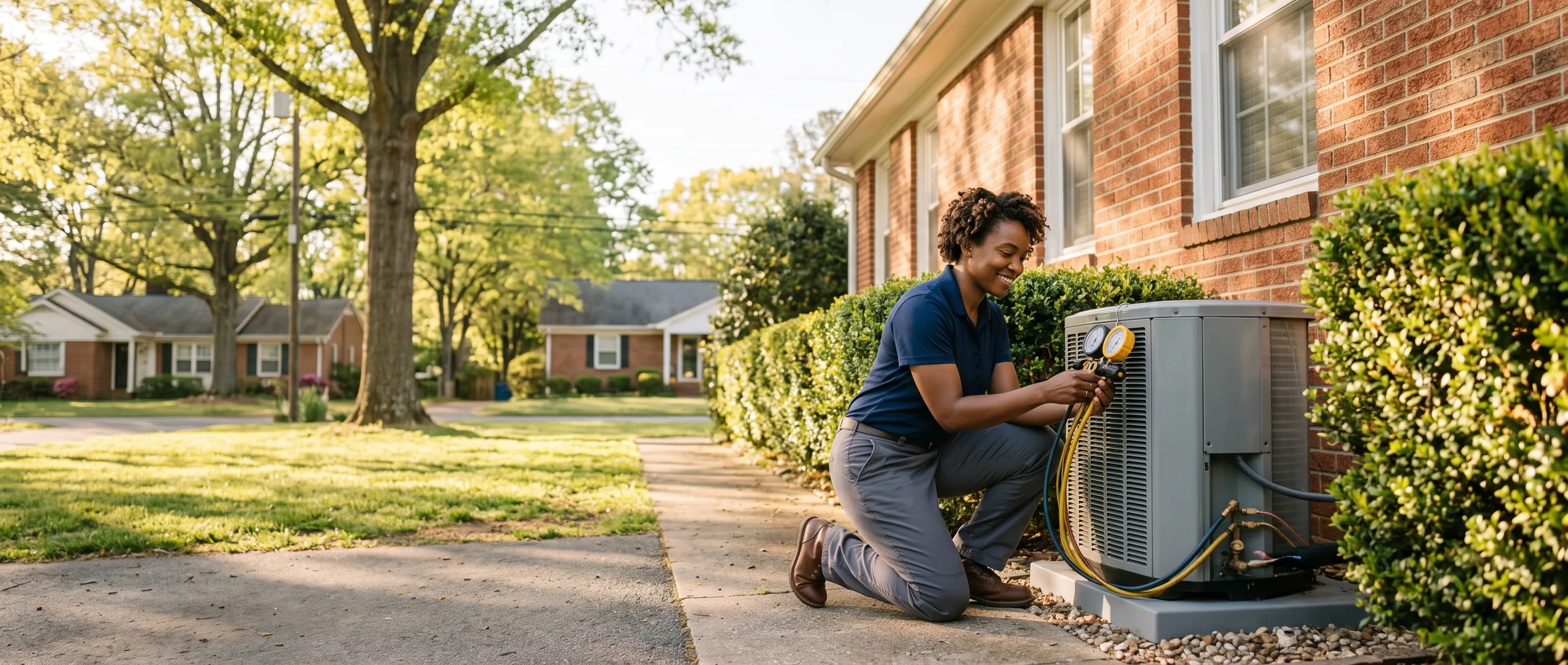
Why heat pumps make sense in Charlotte
A heat pump moves heat instead of making it. In summer it pulls heat out of your house, and in winter it pulls heat in from the outside air. Charlotte averages winter lows in the low 30s, which is well within the range where heat pumps work at their best.
Today's cold-climate heat pumps keep producing useful heat into the single digits, so the old worry about heat pumps blowing lukewarm air is mostly outdated. For all-electric homes, a properly sized heat pump often cuts winter heating costs compared with older electric furnaces and strip heat.
Dual fuel: the best of both
If you already have gas, a dual-fuel system pairs a heat pump with a gas furnace. The heat pump handles most of the year, and the furnace takes over automatically when it gets cold enough that gas is cheaper or more comfortable. The thermostat makes the switch for you.
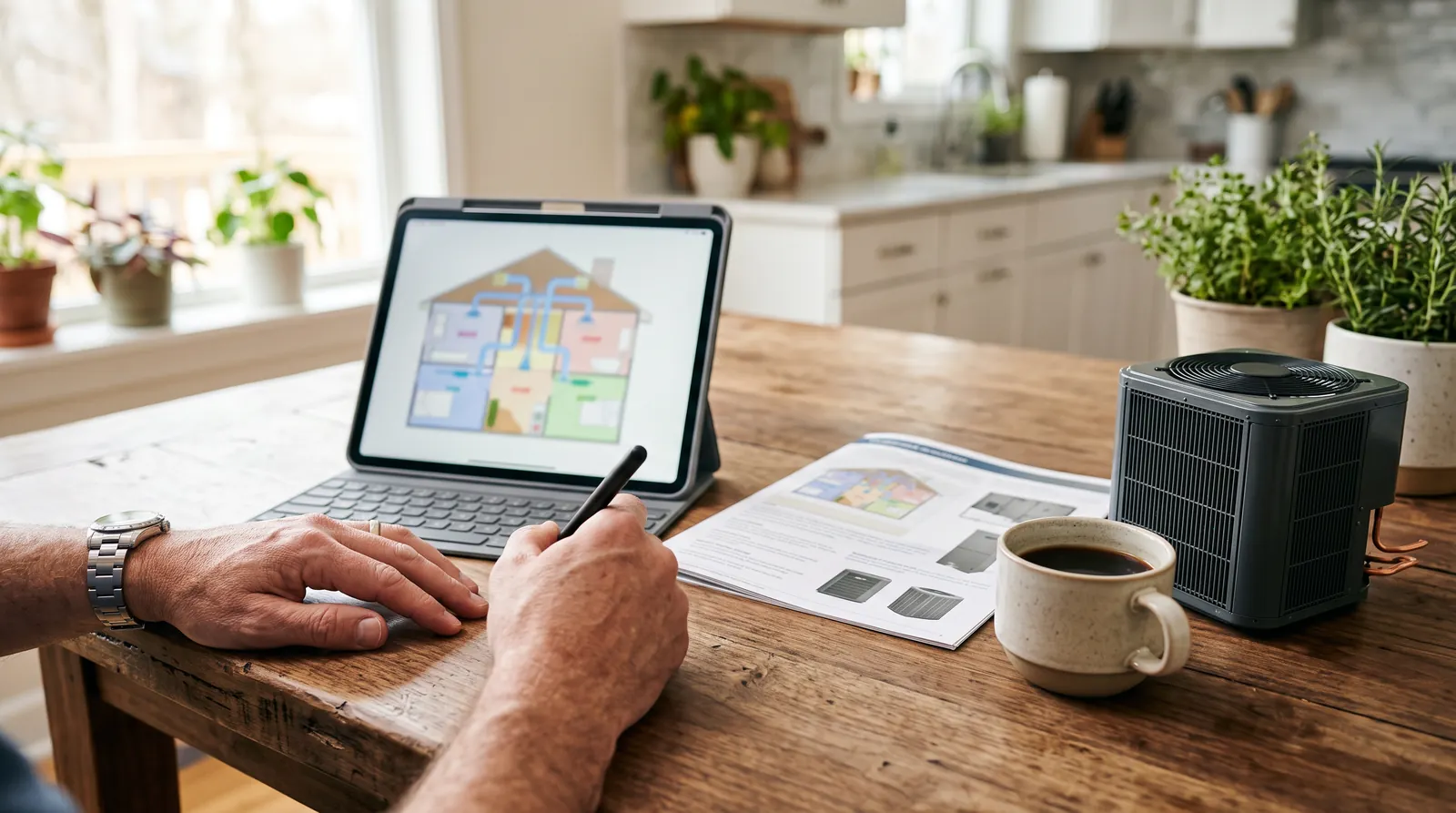
This setup is popular in south Charlotte, Matthews and Fort Mill, where many homes were built with gas furnaces and electric air conditioners. When the AC wears out, swapping it for a heat pump is often a small step up in cost for a real gain in efficiency.
Keeping a heat pump happy through winter
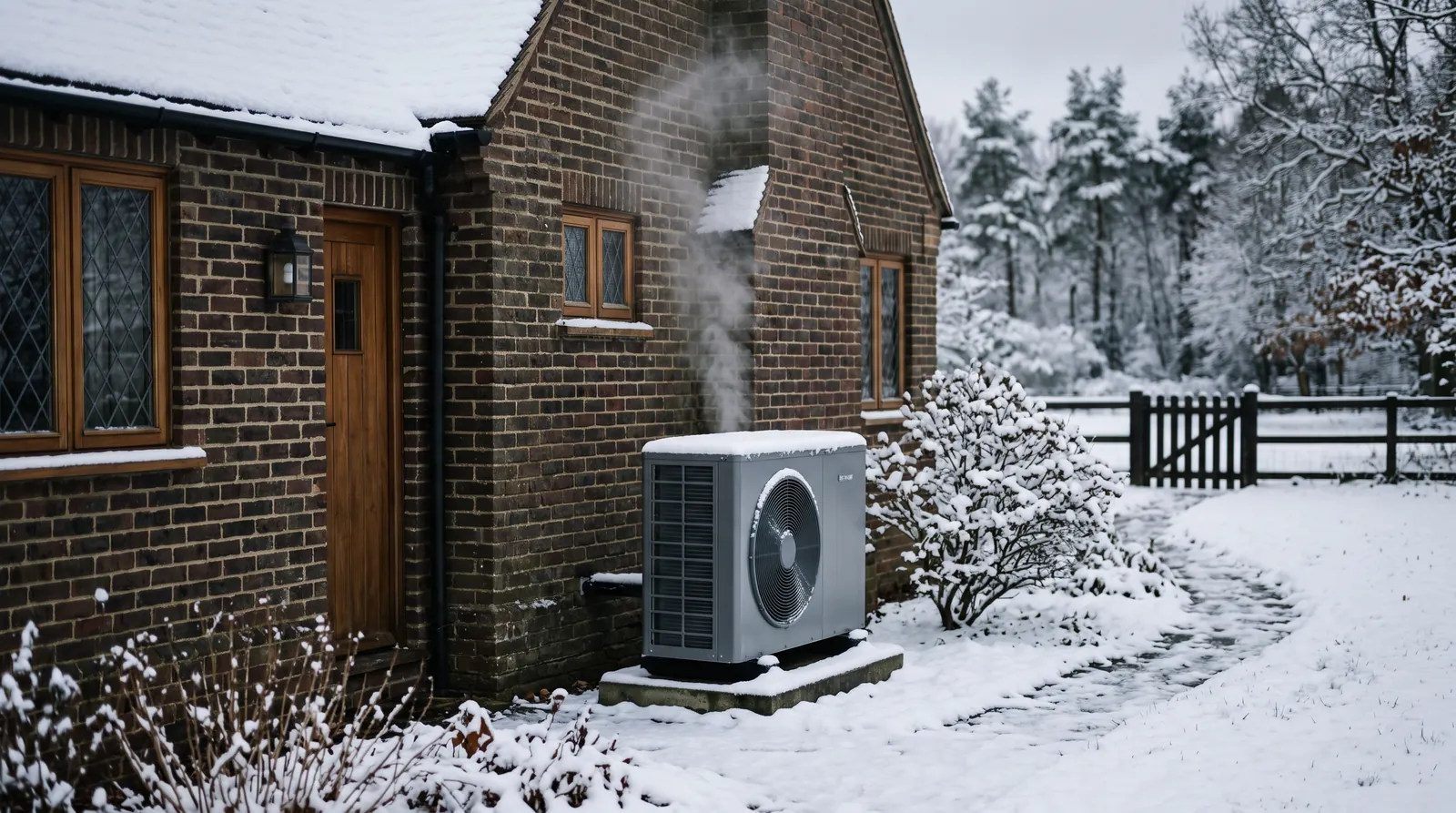
Heat pumps run a defrost cycle in cold, damp weather. You might see steam rise from the outdoor unit for a minute or two. That is normal. What is not normal is a unit coated in solid ice for hours, which usually points to a defrost control, sensor or refrigerant problem.
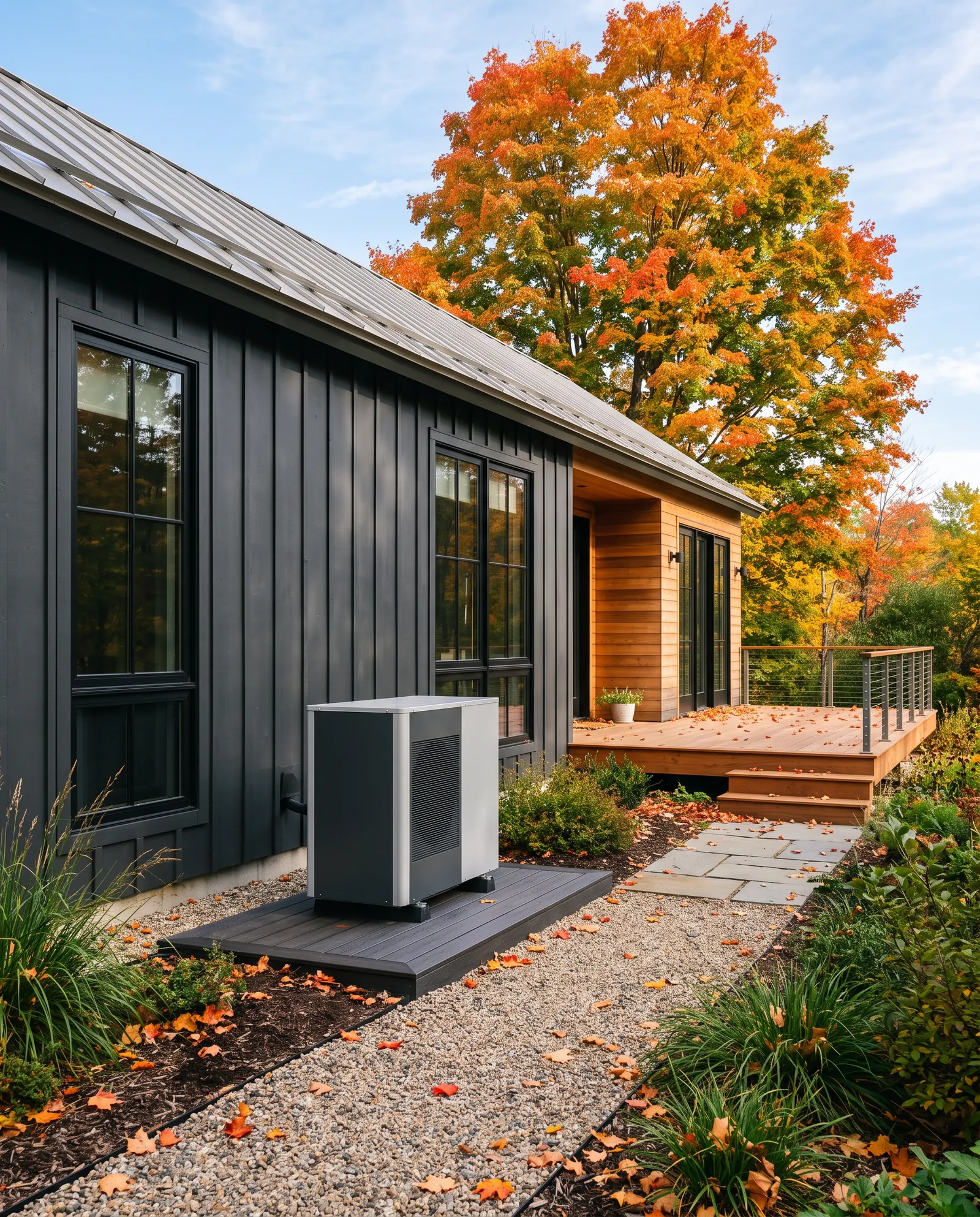
Keep two feet of clearance around the outdoor unit, keep leaves and pine straw off it, and change your filter often, since heat pumps run year round. Two tune-ups a year, one before summer and one before winter, is what we recommend for every heat pump.