Why Charlotte air conditioners work harder than most
Charlotte summers are long, hot and wet. From late May through September your system is fighting heat and humidity at the same time, and humidity is the harder job. An AC that runs nearly nonstop for four months wears capacitors, contactors and fan motors faster than one in a dry climate, and a clogged condensate line can back up in a single afternoon.
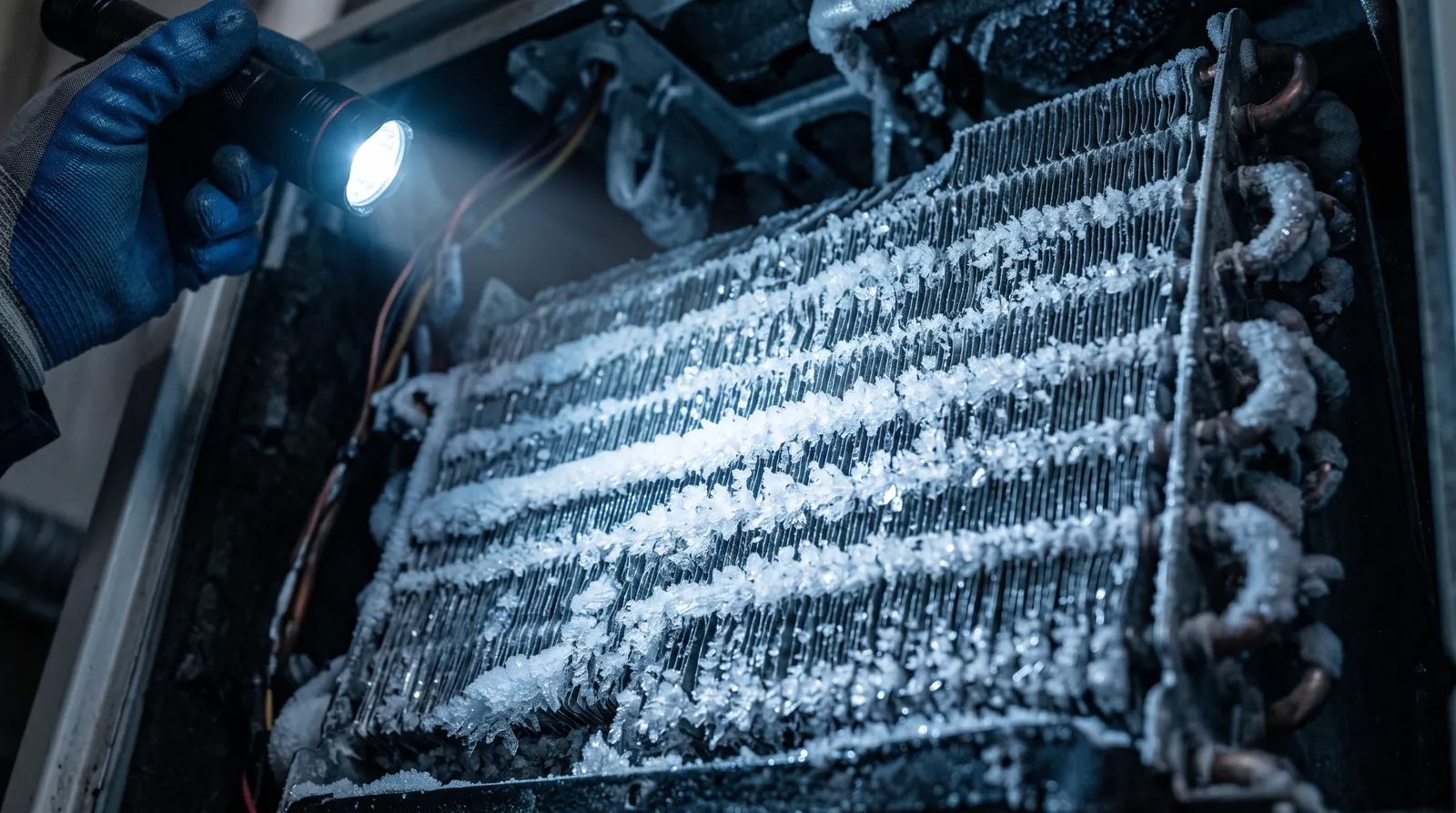
Most of the calls we answer in July come down to a handful of parts: a failed capacitor, a tripped float switch on a full drain pan, a dirty outdoor coil choked with pollen and cottonwood, or low refrigerant from a slow leak. Our vans carry those parts, so most repairs finish in one visit.
What happens when you call us
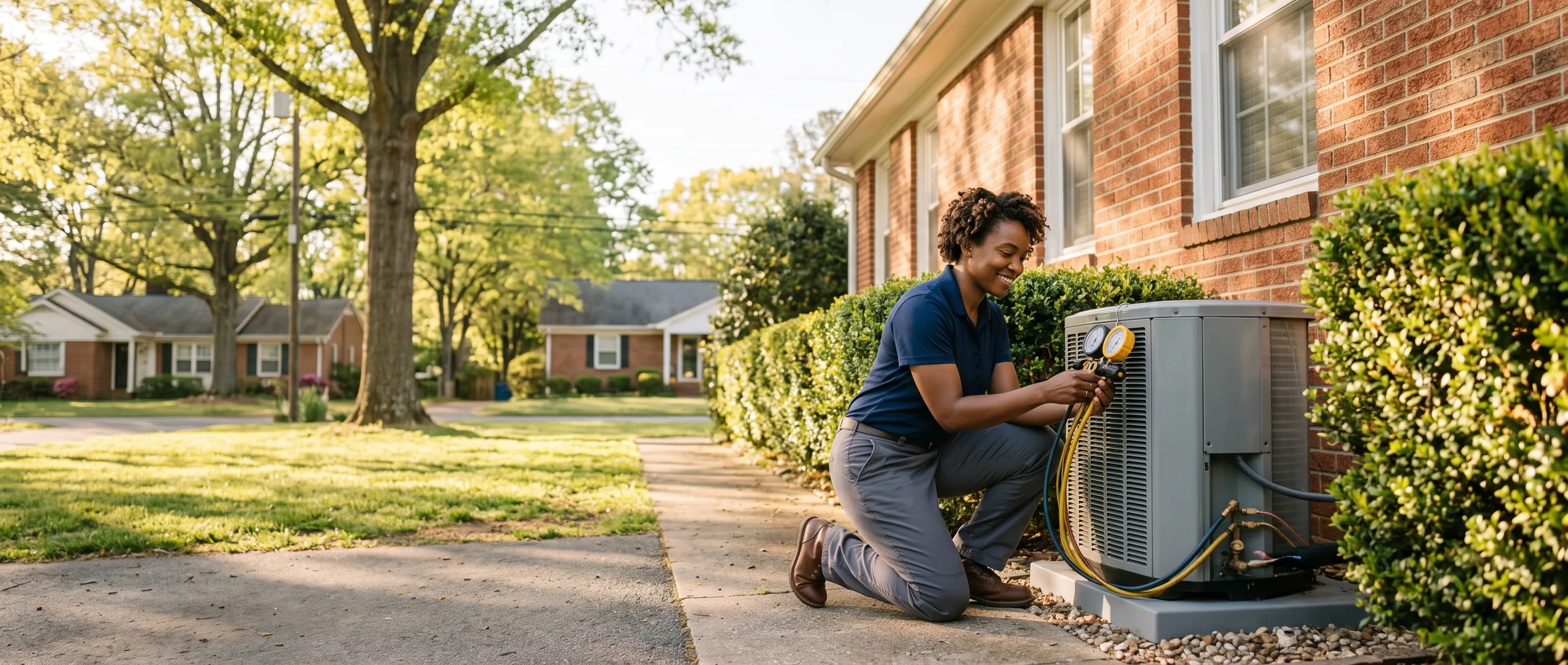
You talk to a Charlotte dispatcher, not a phone tree. We give you a two-hour arrival window and a text when your technician is on the way, with their name and photo. The technician tests the whole system, not just the part that failed, and shows you what they found on a tablet with photos.
Then you get a flat price for the repair. That price does not change if the job takes longer than expected. If you would rather not repair an older system, we will say so plainly and walk you through the numbers, with no pressure to decide on the spot.
Repair or replace: an honest rule of thumb
If your system is under 10 years old and the repair is a common part, repairing almost always makes sense. If it is 12 to 15 years old, uses R-22 refrigerant, and the repair is a compressor or a major leak, it is usually time to look at replacement.
A simple check we share with homeowners: multiply the system's age by the repair cost. If that number is over $5,000, a new system is often the better long-term value. It is a starting point, not a rule, and your technician will give you both options in writing.