An AC freezes up when the indoor coil gets too cold, usually from low airflow or low refrigerant. A dirty filter, closed vents or a failing blower are the most common causes. Turn the system off, switch the fan to on, and let the ice melt completely before running it again.
Key takeaways
- Ice on your AC is a symptom of low airflow or low refrigerant, not a cooling problem you can fix by lowering the thermostat.
- Turn the cooling off right away to protect the compressor, and let the ice melt fully.
- Never chip or scrape ice off the coil or lines. You can puncture the coil.
- If it freezes again after a new filter and a full thaw, call a technician.
Why does an air conditioner freeze up?
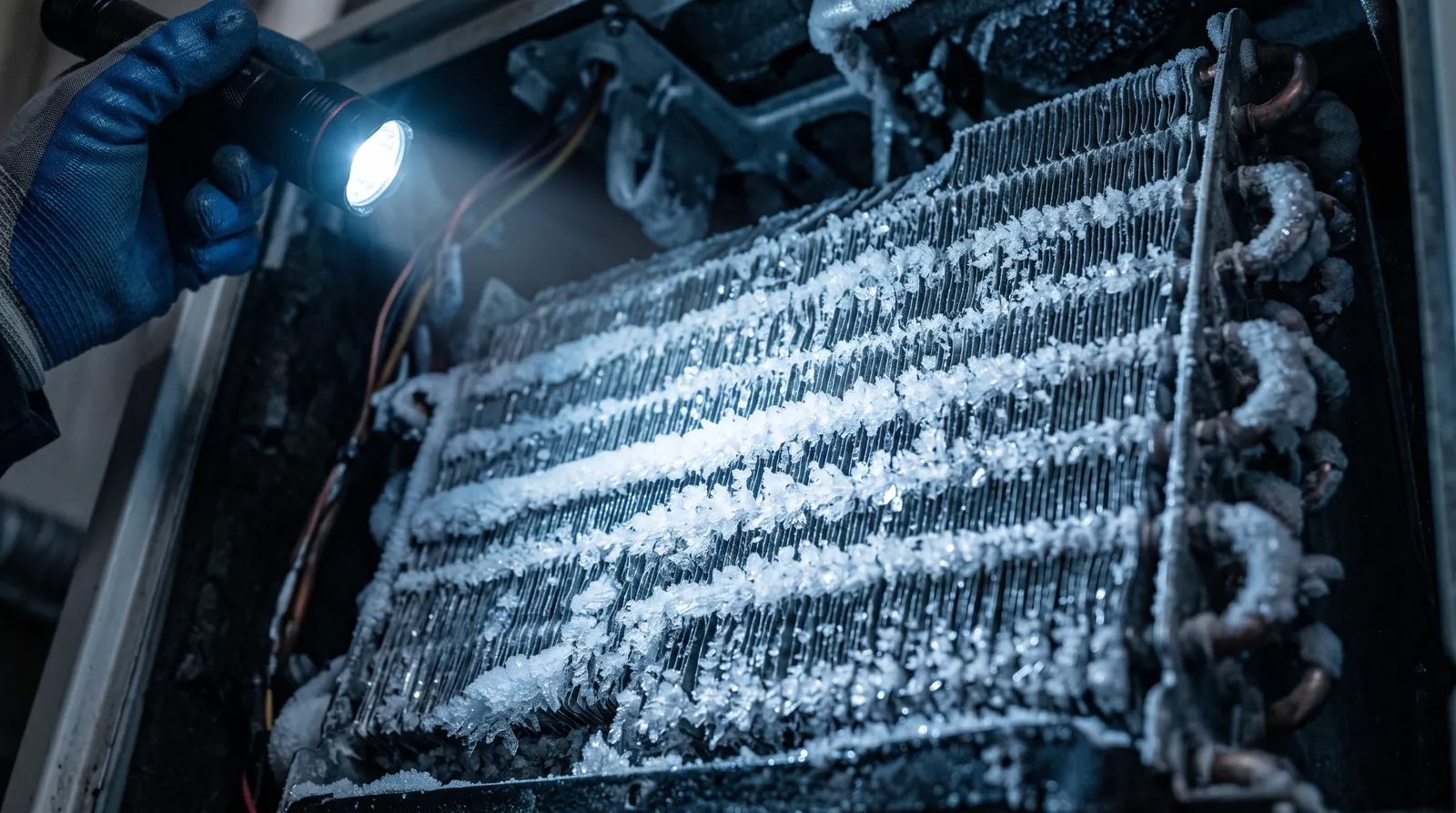
Your indoor coil is supposed to be cold, usually around 40 degrees, and warm air from your home keeps it from getting colder than that. When not enough warm air flows across the coil, or the refrigerant pressure drops too low, the coil falls below 32 degrees. The moisture it pulls out of the air freezes instead of dripping into the drain pan, and the ice keeps building.
In Charlotte this happens more than people expect. Our summers are so humid that the coil is pulling a lot of water out of the air every hour, so a small airflow problem can turn into a block of ice in an afternoon.
What are the most common causes of a frozen AC?
In our experience, most frozen systems come down to one of these, roughly in order of how often we see them.
- A dirty or clogged air filter, especially after spring pollen season
- Closed or blocked supply vents and return grilles
- A dirty indoor coil that restricts airflow
- Low refrigerant from a leak somewhere in the system
- A failing blower motor or capacitor that slows the indoor fan
- Crushed, disconnected or undersized ductwork
- Running the AC on very cool nights, below about 60 degrees outside
What should I do if my AC is frozen?
The steps below are safe for any homeowner. They do not require tools or opening any panels, and they will not void a warranty. Work through them in order.
- Turn cooling off at the thermostat right away. Running a frozen system can damage the compressor, which is the most expensive part.
- Switch the fan setting to On, not Auto. Moving warm air across the coil speeds up thawing.
- Let the ice melt completely. This usually takes 2 to 6 hours, and sometimes up to 24 in a humid attic or closet.
- Put towels around the indoor unit and check the drain pan. Melting ice makes a lot of water, and a full pan can trip the float switch or overflow.
- Never chip, scrape or pour hot water on the ice. The coil fins and copper lines are thin and easy to puncture, which turns an airflow problem into a refrigerant leak.
- Check your air filter while it thaws. If it is gray or you cannot see light through it, replace it.
- Walk the house and open any closed supply vents. Make sure furniture, rugs or curtains are not blocking returns.
- Once everything is dry, turn cooling back on and check the air from a vent after 15 minutes. It should feel noticeably cool.
How long does it take a frozen AC to thaw?
Most systems thaw in 2 to 6 hours with the fan running. A heavily frozen coil, or one in a closet or attic without much air movement, can take up to a day. Do not rush it. If you turn cooling back on while ice is still hidden inside the coil, it will refreeze faster the second time.
A good sign that it is fully thawed: the copper line going into the indoor unit is dry, there is no ice on the coil if you can see it through an access window, and water has stopped dripping into the pan.
When should I call an HVAC technician?
A new filter and a full thaw fix a lot of frozen systems. But ice is often a sign of something a homeowner cannot safely fix. Call us if any of these apply.
- It freezes again within a day or two after a new filter and a full thaw
- You hear hissing or bubbling near the indoor or outdoor unit, which can mean a refrigerant leak
- The outdoor unit is running but the indoor fan is not, or it sounds weak
- Water is leaking through a ceiling or floor
- The system is over 10 years old and this is not the first time
How do you prevent an AC from freezing again?
Prevention is mostly about airflow. Change one-inch filters every month during pollen season and summer, and every two to three months otherwise. Keep supply vents open, even in rooms you do not use; closing too many vents chokes airflow across the coil.
A spring tune-up catches the rest. We clean the coil, test the blower and capacitor, and check refrigerant pressure. If the charge is low, we look for the leak instead of just topping it off, because refrigerant does not get used up. It only goes missing through a leak. Comfort Club members get this visit every spring, before the first heat wave.
Frequently asked
Can I run the fan while my AC is frozen?
Yes, and you should. Set the thermostat to Off for cooling and the fan to On. Moving warm indoor air across the frozen coil helps it thaw faster. Just make sure the drain pan and condensate line can handle the extra water as the ice melts.
Is a frozen AC an emergency?
It is not usually dangerous, but it can become expensive if you keep running it. Turn cooling off to protect the compressor. If there is water coming through a ceiling, or you have young children, older adults or medical needs in the home during a heat wave, call our 24/7 line.
Does low refrigerant cause an AC to freeze?
Yes. Low refrigerant lowers the pressure in the coil, which drops its temperature below freezing. Refrigerant is a sealed system, so low charge means there is a leak. A technician should find and repair the leak rather than just adding more refrigerant.
How much does it cost to fix a frozen AC in Charlotte?
If the cause is a filter or blocked vent, it may cost nothing. Common repairs like a blower capacitor run about $150 to $400. Leak repairs and recharges vary widely, from a few hundred dollars to more for coil replacement. We give a flat price before any work.
Written by the people who fix and install Charlotte HVAC systems every day.