
What's included
- Drone measured, formed-to-length panels
- High-temperature underlayment rated for metal
- Clip system that allows thermal movement
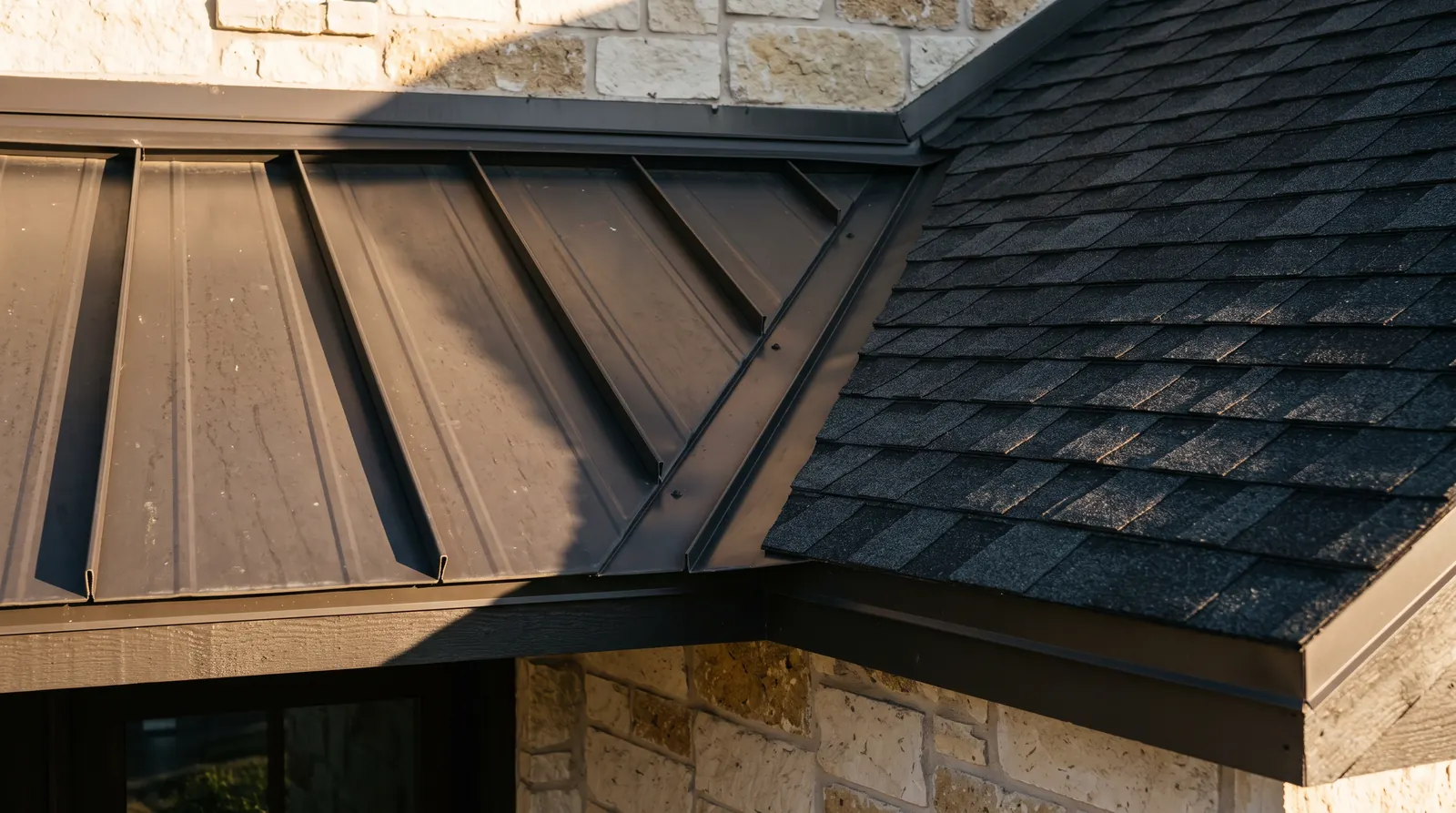
- Matching trim, flashing and gutter apron
- Engineered boots at every penetration
- Up to 50-year manufacturer system warranty
Why metal performs so well in Central Texas
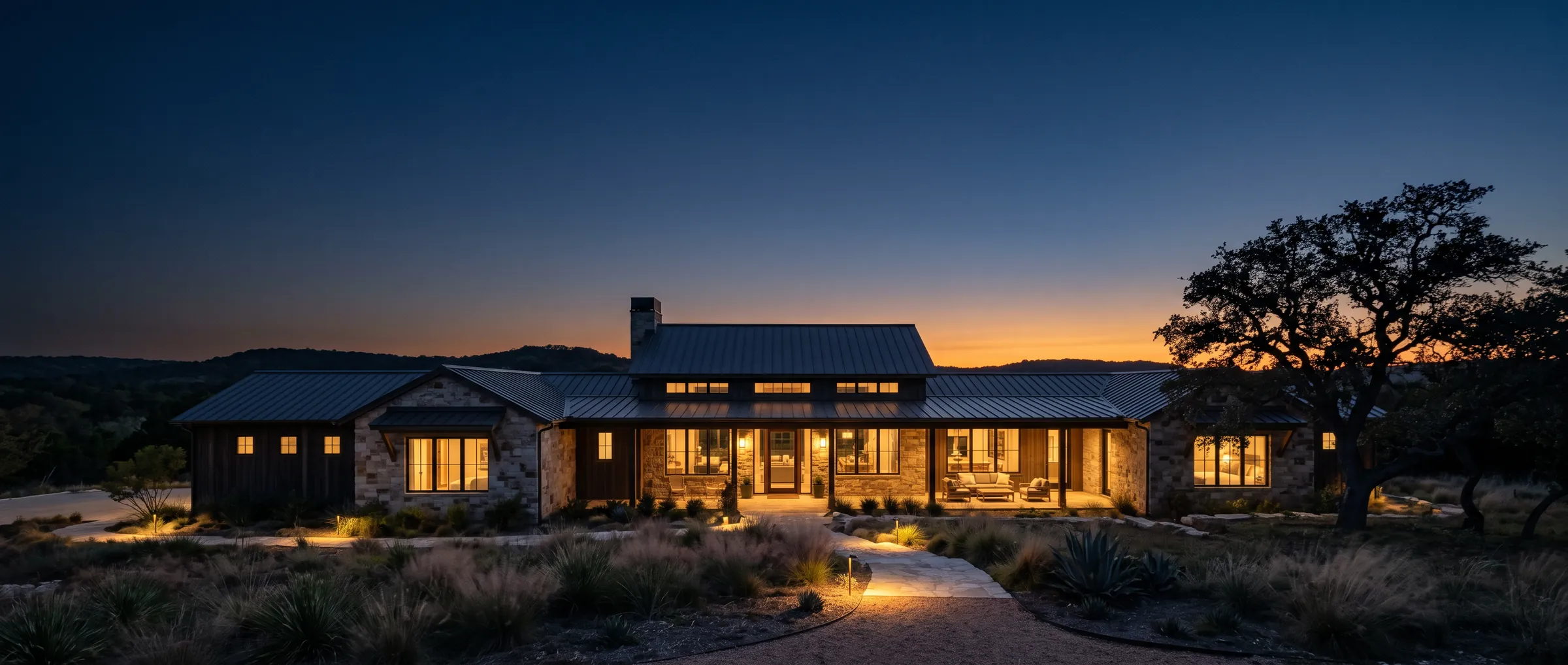
Metal reflects a large share of the summer sun, especially in lighter or cool-rated finishes, which can lower attic temperatures and cooling load through long August afternoons. It does not dry out and crack the way asphalt does, it holds up to wind when properly fastened, and it suits the limestone, board and batten and modern farmhouse homes common from Westlake to Dripping Springs.
Metal is also noncombustible, which matters on wooded Hill Country lots where wildfire risk is real. Many insurers view a properly installed metal roof favorably, though discounts vary by carrier and policy.
Standing seam, metal shingles and what hail does to each
Standing-seam panels run from ridge to eave with raised seams and hidden fasteners. They give the cleanest lines and the fewest possible leak points. Heavier gauges resist hail better, but large hail can still leave cosmetic dents on any metal roof. Dents rarely affect performance, so ask your agent whether your policy excludes cosmetic damage before you decide.
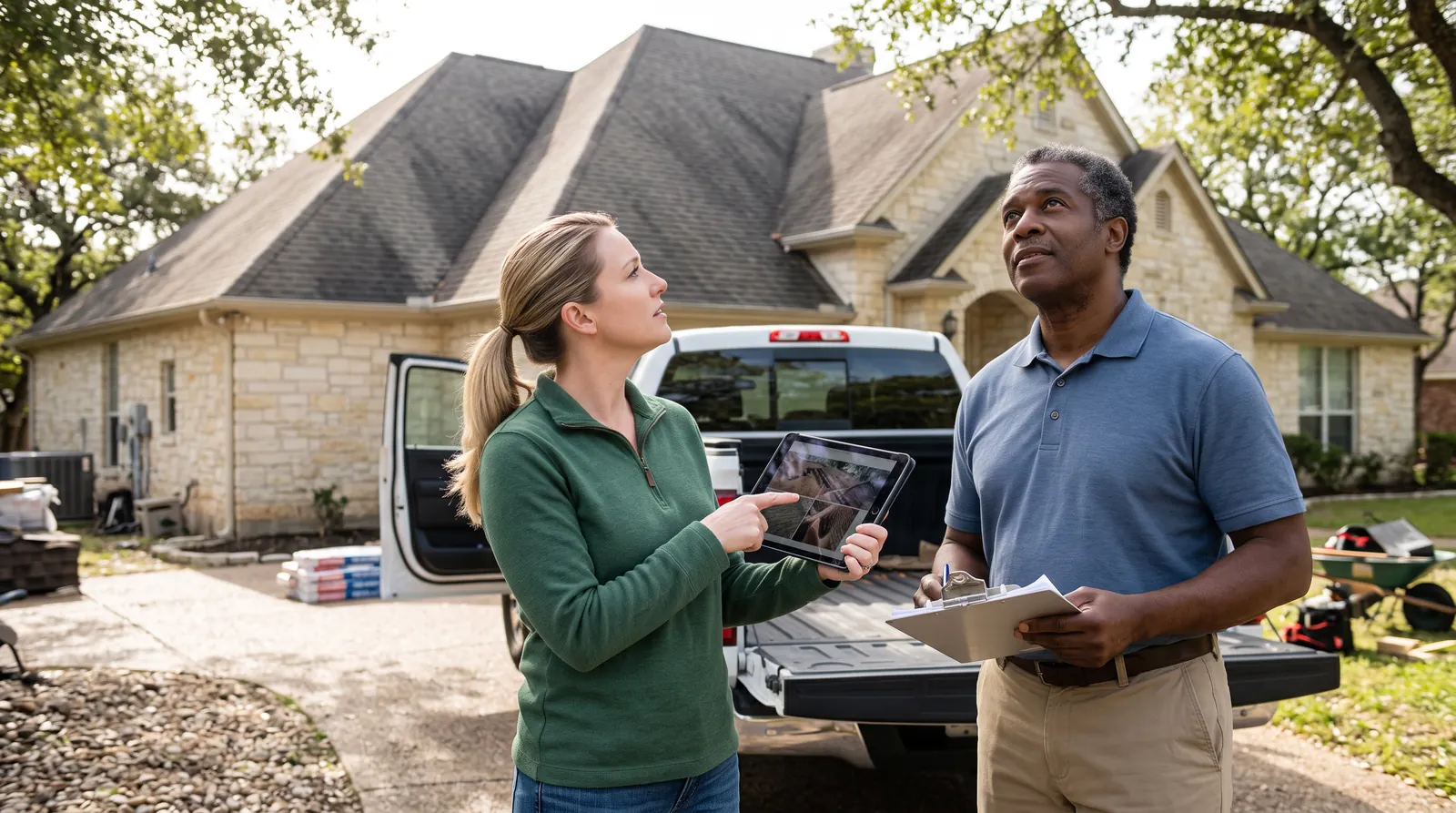
Stone-coated metal shingles take the look of shake or tile, hide small dents well and often carry the highest impact rating. They suit HOAs that do not favor the look of standing seam. During your options meeting we show both on your own home using the drone photos from your inspection.
The details that make a metal roof last
Most metal roof problems come from details, not panels. We use a high-temperature underlayment rated for metal, attach panels with clips that let them expand and contract through Texas temperature swings, and fabricate trim and flashing in matching finishes. Every penetration gets an engineered boot, and transitions where metal meets stone chimneys or stucco parapets are flashed and sealed by hand.
Panels are measured from the drone survey and formed to length, so each one runs the full slope without a splice. The result is fewer seams, straighter lines and a roof that looks like it was drawn on the original plans.