
Quick answer
Hail damage on a shingle roof shows up as dark bruises where granules are knocked loose, cracked or split shingles, and dents on vents and gutters. In Texas, have the roof inspected, document the damage, check your policy's deductible and filing deadline, then file and meet the adjuster.
Key takeaways
- Check soft metals like vents and gutters first, since dents show hail size.
- Texas deductibles are often a percentage of dwelling coverage, not a flat amount.
- Know whether your policy pays replacement cost or actual cash value.
- Filing deadlines vary by policy, so check yours soon after the storm.
How can you tell if hail damaged your roof?
Start on the ground. Look for dents in gutters, downspouts, window screens, AC fins and patio furniture. Soft metals dent easily, and the size and spacing of dents give a good idea of what the roof took. Granules washing out of downspouts after a storm are another clue.
On the roof, hail damage on shingles looks like random dark spots where granules have been knocked away. Press gently and the spot may feel soft, like a bruise on fruit. Larger hail can crack shingles or split them along the edges. Unlike wear, hail marks are scattered and do not follow a pattern. Stay off the roof yourself, especially a steep one. A roofer can safely photograph each slope and use a chalk circle to show scale.
- Dents on metal vents, flashing and gutters
- Dark, soft spots with missing granules
- Cracked or split shingles, especially on slopes facing the storm
- Granules piled at downspout outlets
- Damaged window screens or siding on the same side of the house
What size hail damages a roof?
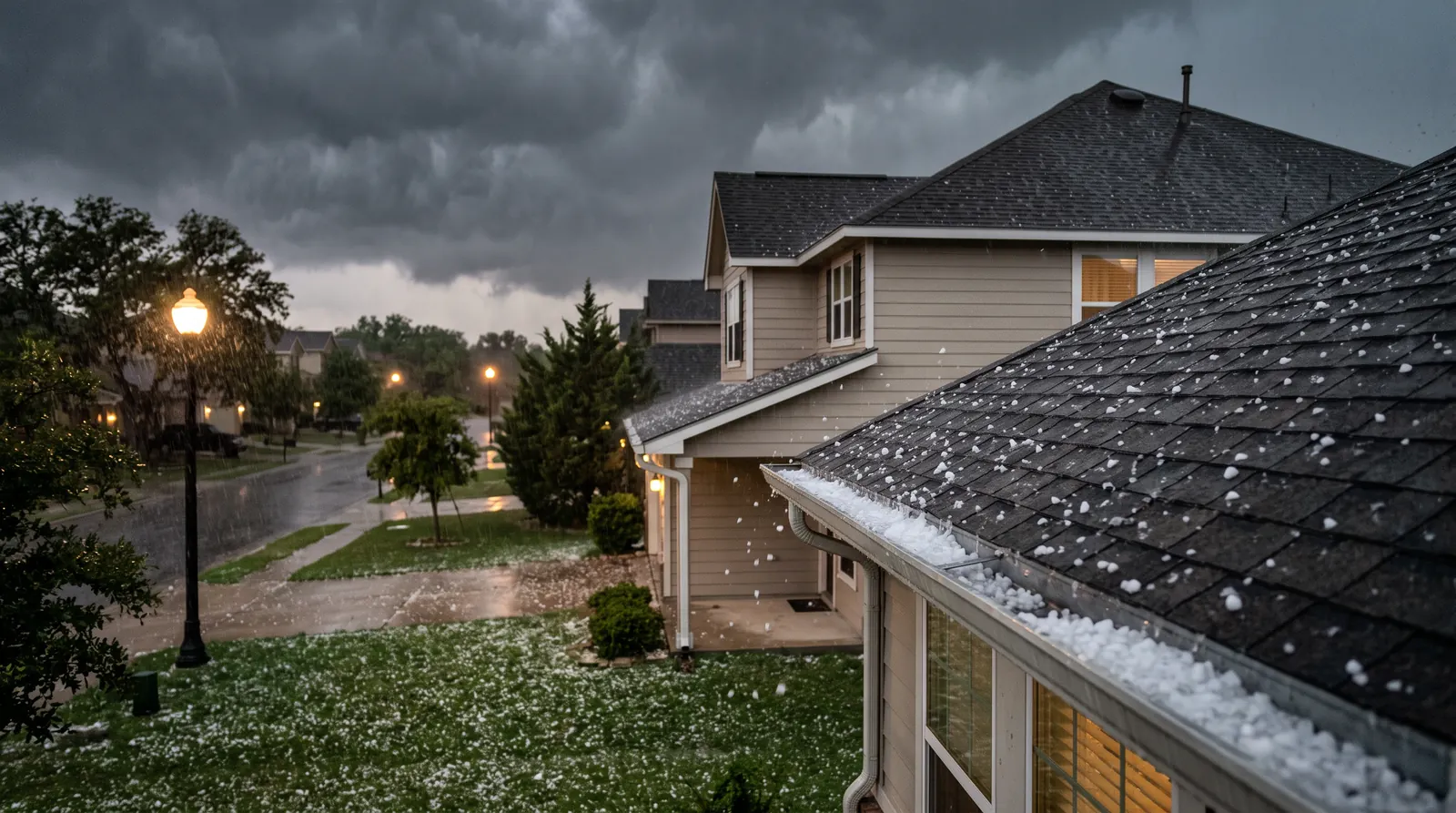
Hail around one inch in diameter, about the size of a quarter, can damage older or standard shingles. Hail of one and a half inches or more, golf ball size, often damages even newer roofs. Wind matters as much as size, because wind-driven hail hits at an angle and with more force.
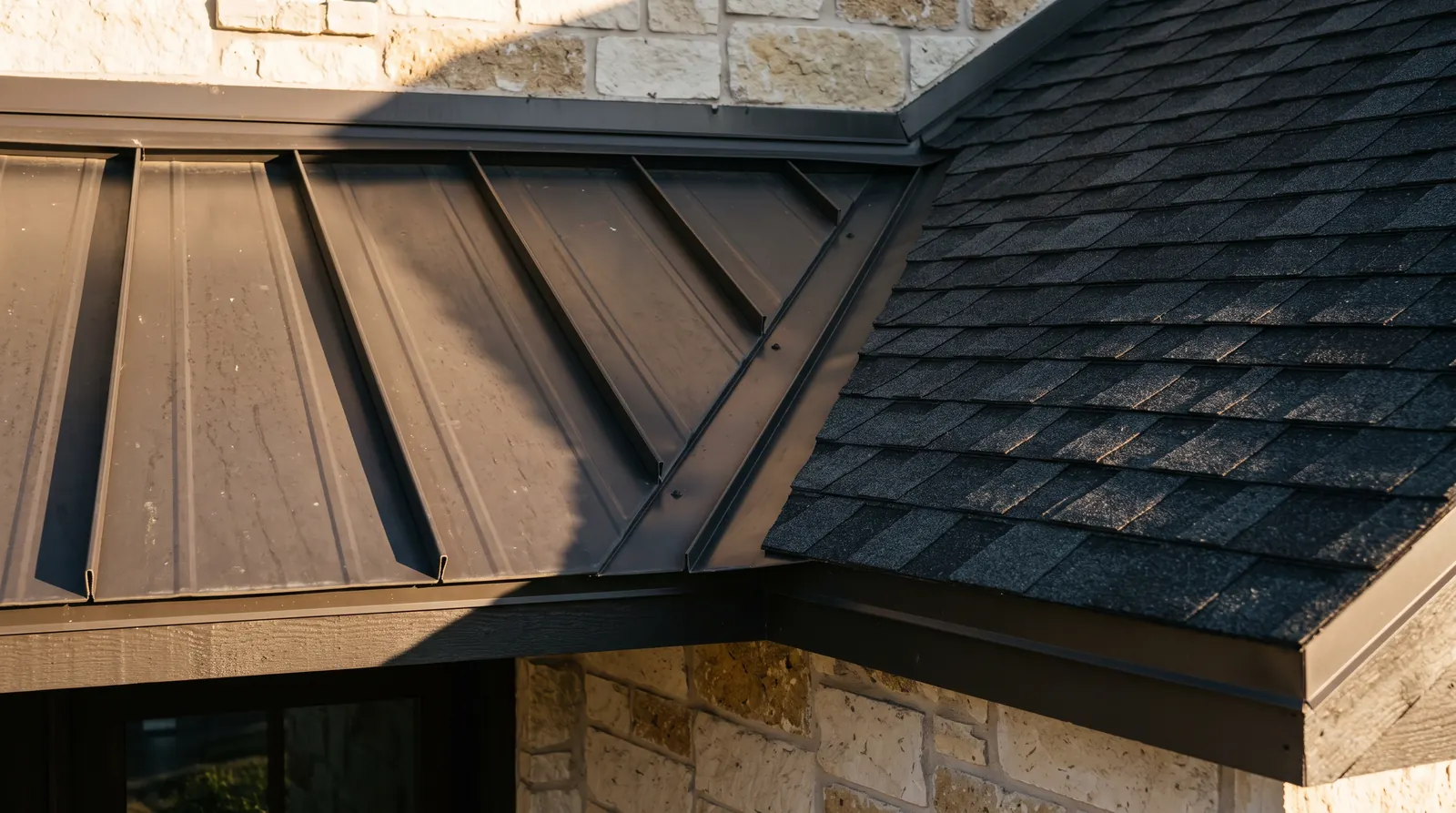
Roof age and material also matter. A 15-year-old shingle roof that has baked through many Texas summers is more brittle than a new one. Class 4 impact-rated shingles and metal hold up better, although very large hail can damage any roof.
What should you do in the first days after a hailstorm?
The hours after a storm are when evidence is easiest to collect. Photograph hailstones on the ground next to a coin or ruler, and note the date and time. Take pictures of dented gutters, cars, mailboxes and patio furniture. Save any local weather alerts or news reports that mention hail size in your area.
Next, check inside. Look at ceilings, especially in upstairs rooms and closets, and take a flashlight into the attic if you can do so safely. Fresh stains or damp insulation mean water is getting in, and a tarp should go on quickly to prevent further damage.
Be cautious with door knockers. After every major Central Texas hailstorm, crews from other states arrive, sign contracts quickly and leave once the season ends. Ask for a local office address, proof of insurance and a written inspection report before signing anything. Never sign a contract that gives someone control over your claim just to get an inspection.
Should you call your insurer or a roofer first?
In most cases, call a trusted local roofer for an inspection first. A claim may be recorded even if nothing is paid, so it helps to know whether there is real damage before filing. A good inspection includes photos of every slope, the attic and soft metals, plus a written summary.
If there is damage, contact your insurer promptly. Many Texas policies expect claims within about one year of the storm, but deadlines and notice requirements vary, so check your policy. If water is coming in, take reasonable steps to prevent more damage, such as a tarp, and keep receipts.
How does a Texas homeowners insurance claim work?
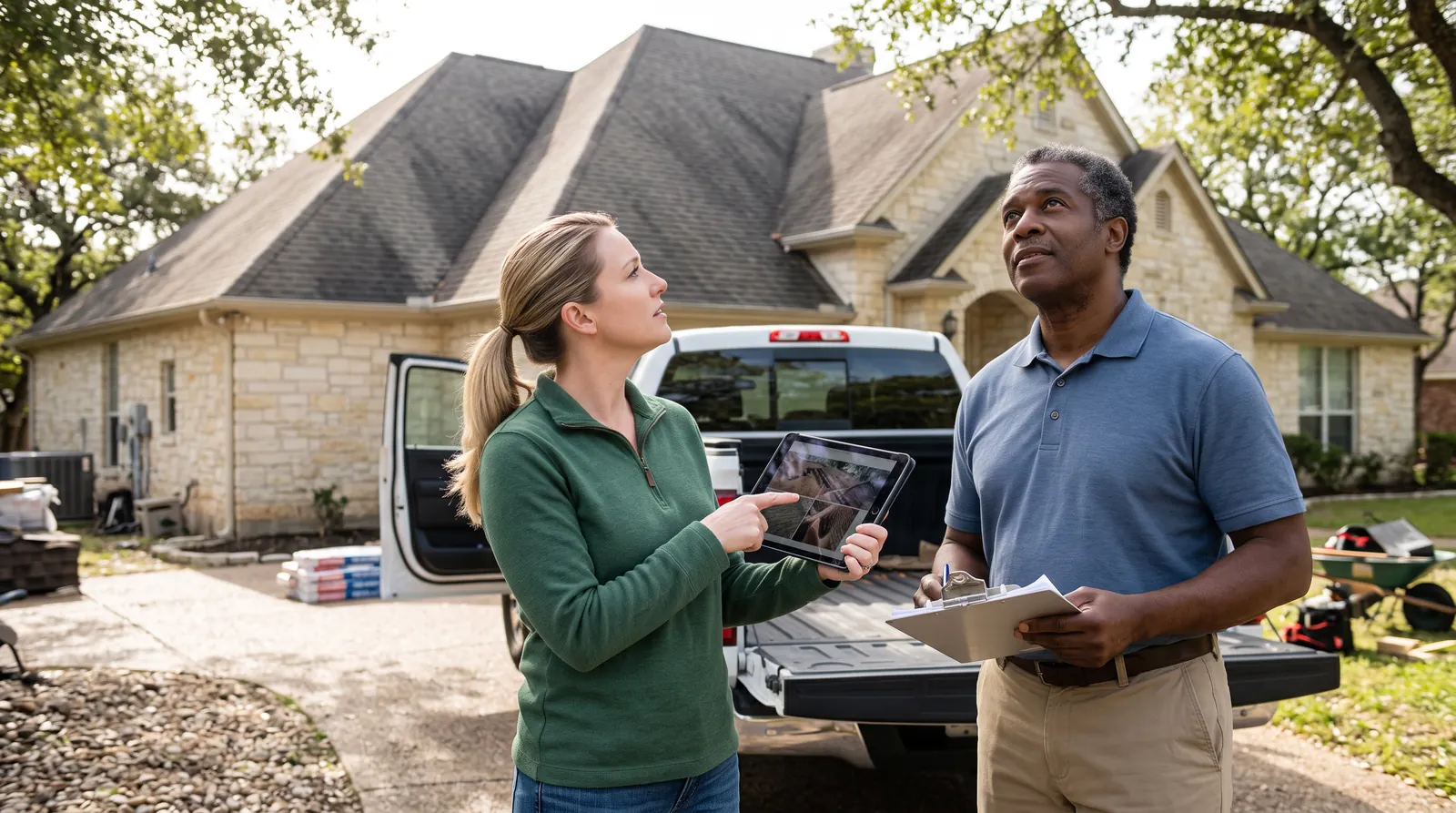
After you file, the insurer assigns an adjuster who inspects the roof, often within a few days to a few weeks depending on storm volume. You can ask your roofer to attend, which helps make sure damage on every slope is seen. The adjuster writes an estimate listing the work and materials covered.
You then receive a payment based on that estimate, minus your deductible. If the roofer finds items the estimate missed, such as decking or code-required parts, the roofer can document them and you can ask the insurer to review a supplement. Keep copies of everything, including photos, estimates and letters.
What do ACV, RCV and depreciation mean on your roof claim?
Replacement cost value, or RCV, is what it costs to replace your roof with similar materials today. Actual cash value, or ACV, is replacement cost minus depreciation for age and wear. Which one your policy pays makes a large difference on an older roof.
With an RCV policy, insurers often pay the ACV amount first and release the withheld depreciation after the work is completed and invoiced. With an ACV-only policy, the depreciation is not recovered, so an older roof may pay out far less than a new roof costs. Some Texas policies also pay roofs on a schedule based on age. Your declarations page and policy wording will tell you which applies.
How do deductibles work for hail in Texas?
Many Texas homeowners policies use a percentage deductible for wind and hail, commonly 1 to 2 percent of dwelling coverage. If your home is insured for $450,000 with a 2 percent deductible, you pay the first $9,000 of a covered roof claim. Know this number before you file, because it shapes whether a claim makes sense.
Texas law prohibits contractors from waiving, paying or rebating your deductible, including through fake discounts or inflated invoices. Offers like that put the homeowner at risk. A reputable roofer will tell you plainly what you owe.
This article is general guidance, not legal or insurance advice. Your policy language controls your coverage, so speak with your agent, insurer or a Texas attorney about your situation.
Frequently asked questions
Will filing a hail claim raise my premium in Texas?
It can, although hail is usually treated as a weather event rather than a fault claim. Carriers set rates using many factors, including regional storm losses, so premiums across an area can rise after a bad season regardless of individual claims. Ask your agent how your carrier handles weather claims before filing.
Can my insurer deny a hail claim because my roof is old?
An insurer may deny or limit a claim if it decides damage came from wear rather than hail, or if your policy pays older roofs on a depreciated or scheduled basis. Clear, dated photos of fresh hail damage help. If you disagree with a decision, ask for the reasoning in writing and review your options with your agent.
Do I have to use the roofer my insurance company recommends?
Generally no. In Texas you can choose your own contractor. The insurer pays according to its estimate and your policy, and you hire whoever you trust to do the work. Choose a local company with its own crews, a written warranty and proof of insurance.
What if a storm chaser already signed me up?
Read what you signed carefully. Some contracts include cancellation rights, and Texas law gives homeowners certain protections in insurance-funded repairs. If you are unsure, talk with your agent or an attorney before work begins. Avoid anyone who offers to cover your deductible or asks for full payment up front.
Related services