Why tile roofs in Arizona fail from underneath
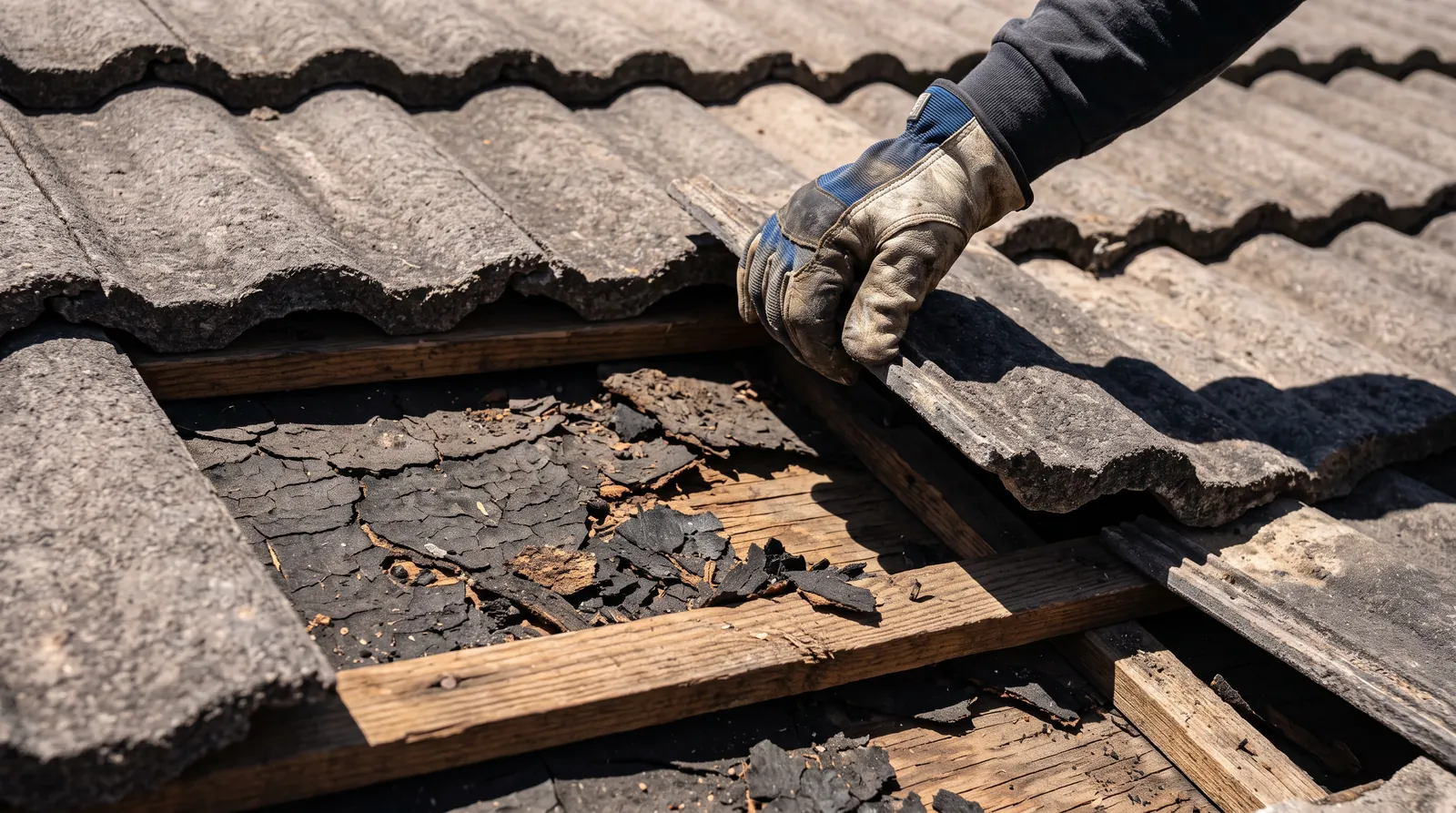
Concrete and clay tile can last 50 years or more. The felt underlayment below it usually cannot. Attic temperatures here pass 150 degrees in July, and the roof deck sees even more. Over 20 to 25 years that heat dries out older felt until it turns brittle, tears at the nail holes and stops shedding the water that slips past the tile.
The first sign is often a stain on a bedroom ceiling after the first big monsoon, even though every tile looks fine from the street. By then water has been reaching the deck for a while. That is why we look under the tile on every inspection instead of judging the roof from a ladder.
Relay or full replacement: how we decide
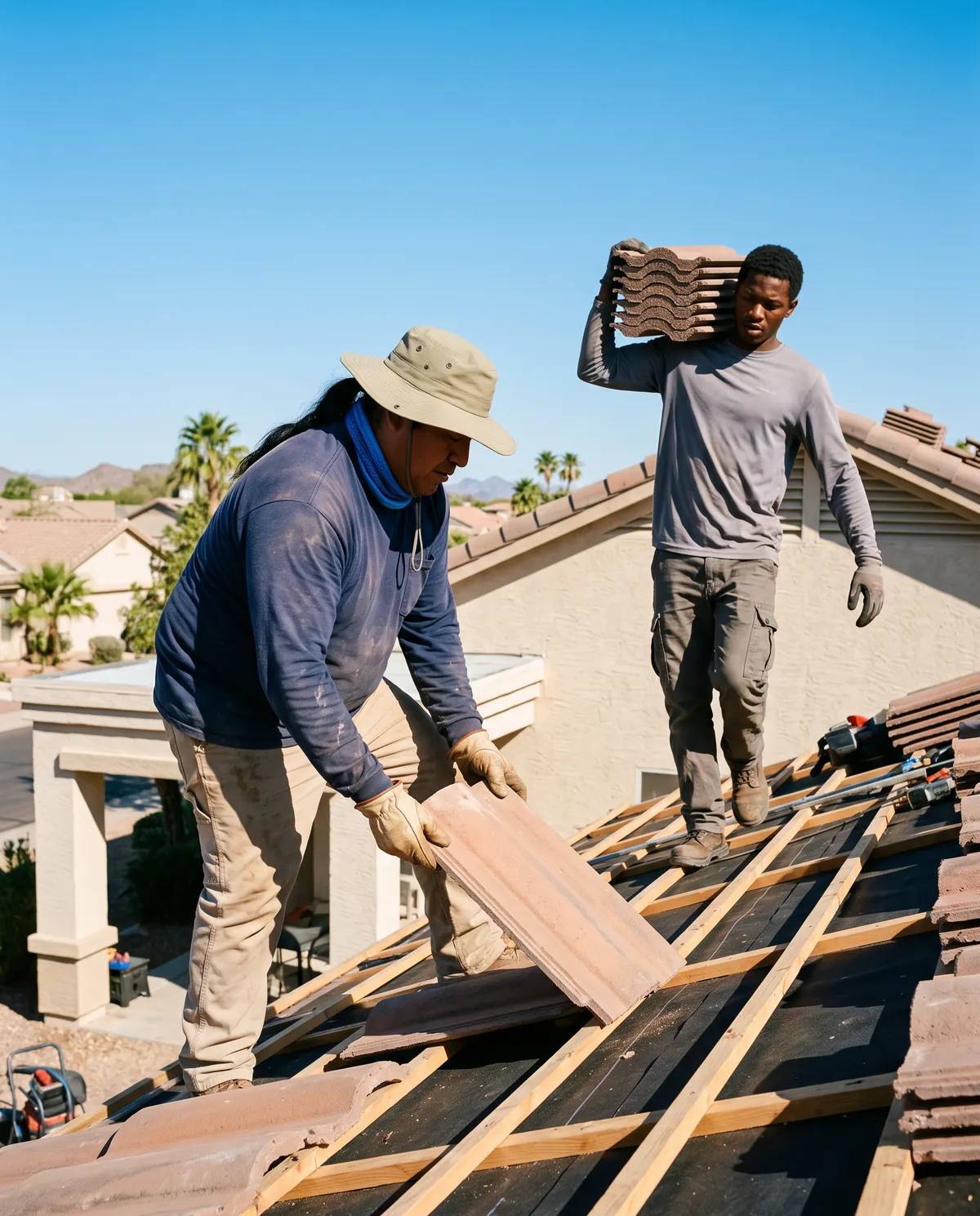
If your tile is sound, a relay is usually the smartest money. We remove the tile, stack it on the roof, tear off the old underlayment, repair any soft decking, install new high-temperature underlayment and new flashings, then reset your original tile. You keep the look your HOA already approved and pay far less than new tile.
Full replacement makes sense when the tile itself is failing: widespread cracking, a discontinued profile you cannot match, or an older lightweight tile that has worn thin. We show you drone photos and a count of broken pieces so the choice is based on what is actually up there.
HOA approvals and color matching, handled
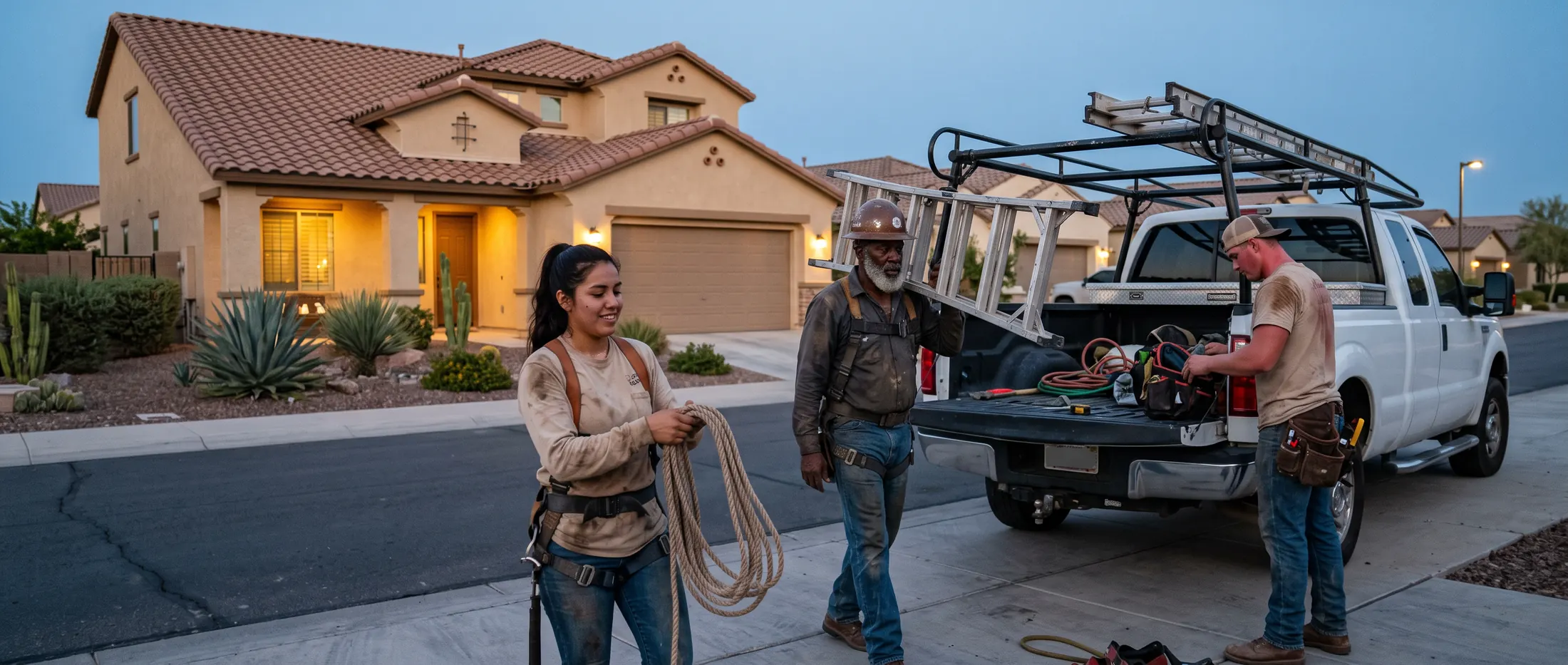
Nearly every master-planned community in the East Valley has rules about tile profile and color. Some keep an approved palette, some want a sample board, and a few want the submittal signed by the contractor. We prepare the paperwork, pull samples and submit it for you, then schedule the job once the letter comes back.
On relays we salvage and sort your existing tile and blend in matching replacements where pieces break, placing any slightly different tiles on the back slopes. Most homeowners cannot tell which tiles are new once the job is done.