How a foam roof works in the desert
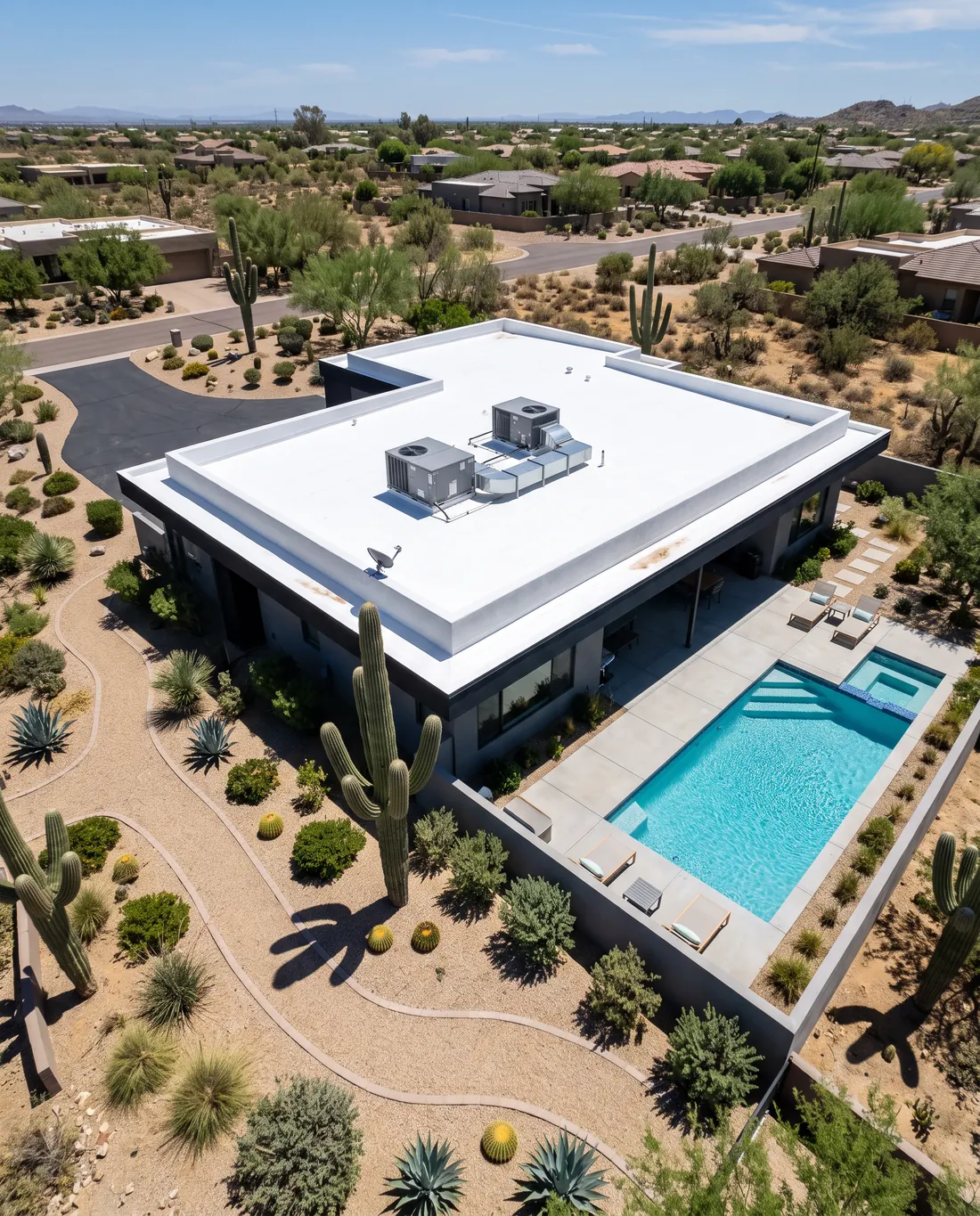
Spray polyurethane foam goes on as a liquid and expands into a solid, seamless layer that bonds to the roof below it. There are no seams to split, and it can be sloped toward scuppers to cut down on ponding. Each inch adds insulation, which matters when a dark flat roof can pass 170 degrees in July.
Foam cannot handle UV on its own, so it is always covered with an elastomeric coating, usually white. That coating reflects most of the sun back up and protects the foam underneath. The coating is the part that wears, and keeping it maintained is what lets a foam roof last 30 years or more.
Recoating: the maintenance that matters
Plan on a recoat every 5 to 10 years, depending on coating thickness and how much foot traffic the roof sees from AC service. When the coating wears thin you will see the tan or orange foam showing through, chalky spots or small pitting from hail and birds.
A recoat is a fraction of the cost of new foam. We clean the roof, repair any damaged foam, reseal around penetrations and AC stands, and apply fresh coating at a measured thickness. Skip it too long and UV starts eating the foam itself, which turns a routine recoat into a much bigger repair.
Parapets, scuppers and ponding water
Most leaks on Valley flat roofs start at the edges. Parapet walls crack where they meet the roof, stucco caps split, and scuppers clog with dust and leaves until water backs up behind them. Older roofs often have low spots where water sits for days after every storm.
When we foam a roof we carry the foam up the parapet walls, rebuild scupper outlets and build in extra slope where water has been ponding. That detailing is where a good flat roof and a bad one differ, and it is where we spend the most time.