Tile roof underlayment in Arizona typically lasts 20 to 25 years, while the concrete or clay tile on top can last 50 years or more. Heat and UV dry out the felt until it cracks and stops shedding water. Replacing it while reusing your tile, called a relay, typically costs $13,000 to $24,000 for an average East Valley home.
Key takeaways
- Tile is the costume, underlayment is the raincoat. The underlayment is what actually keeps water out.
- Most original felt underlayment in the Valley fails at 20 to 25 years, sooner on south and west slopes.
- A relay reuses your tile and typically costs 40 to 60 percent of a full tile replacement.
- Book inspections and relays in spring or fall, before monsoon season fills up crew schedules.
In this article
Why does tile roof underlayment wear out before the tile?
Concrete and clay tile are close to indestructible in our climate. They do not rot, they barely fade, and the sun does not bother them much. But tile is not a waterproof layer. Water gets between tiles during every hard rain, especially when monsoon wind pushes it sideways. The underlayment below is what carries that water down and off the roof.
On most homes built in the Valley from the 1980s through the late 2000s, that underlayment is asphalt felt. Attic and deck temperatures here can pass 150 degrees in summer. Year after year, that heat bakes the oils out of the felt. It shrinks, gets brittle and eventually tears at the nail holes, laps and valleys. Once that happens, water that gets past the tile goes straight to the wood deck.
How long does underlayment last in Mesa and the East Valley?
In my experience across more than 20 years of tearing off Valley roofs, standard felt underlayment usually gives out somewhere between 20 and 25 years. Some last longer on shaded north slopes. Some fail at 15 on steep south and west slopes that take the full afternoon sun.
Newer synthetic and high-temperature underlayments hold up much better in heat, and that is what we install on every relay today. Here is how the common materials typically compare in our climate.
| Underlayment type | Typical life in the Valley | Where you find it |
|---|---|---|
| Single layer 30 lb felt | 15 to 20 years | Many 1990s and 2000s tract homes |
| Double layer felt | 20 to 25 years | Better-built homes of the same era |
| Synthetic underlayment | 25 to 35 years | Newer homes and recent relays |
| High-temperature membrane | 30 to 40 years | Premium relays, valleys, low slopes |
What are the signs my underlayment is failing?
The tricky part is that a roof with failing underlayment can look perfect from the street. These are the signs that tell us it is time to look underneath.
- Ceiling stains that appear after a hard monsoon, even when no tiles are broken
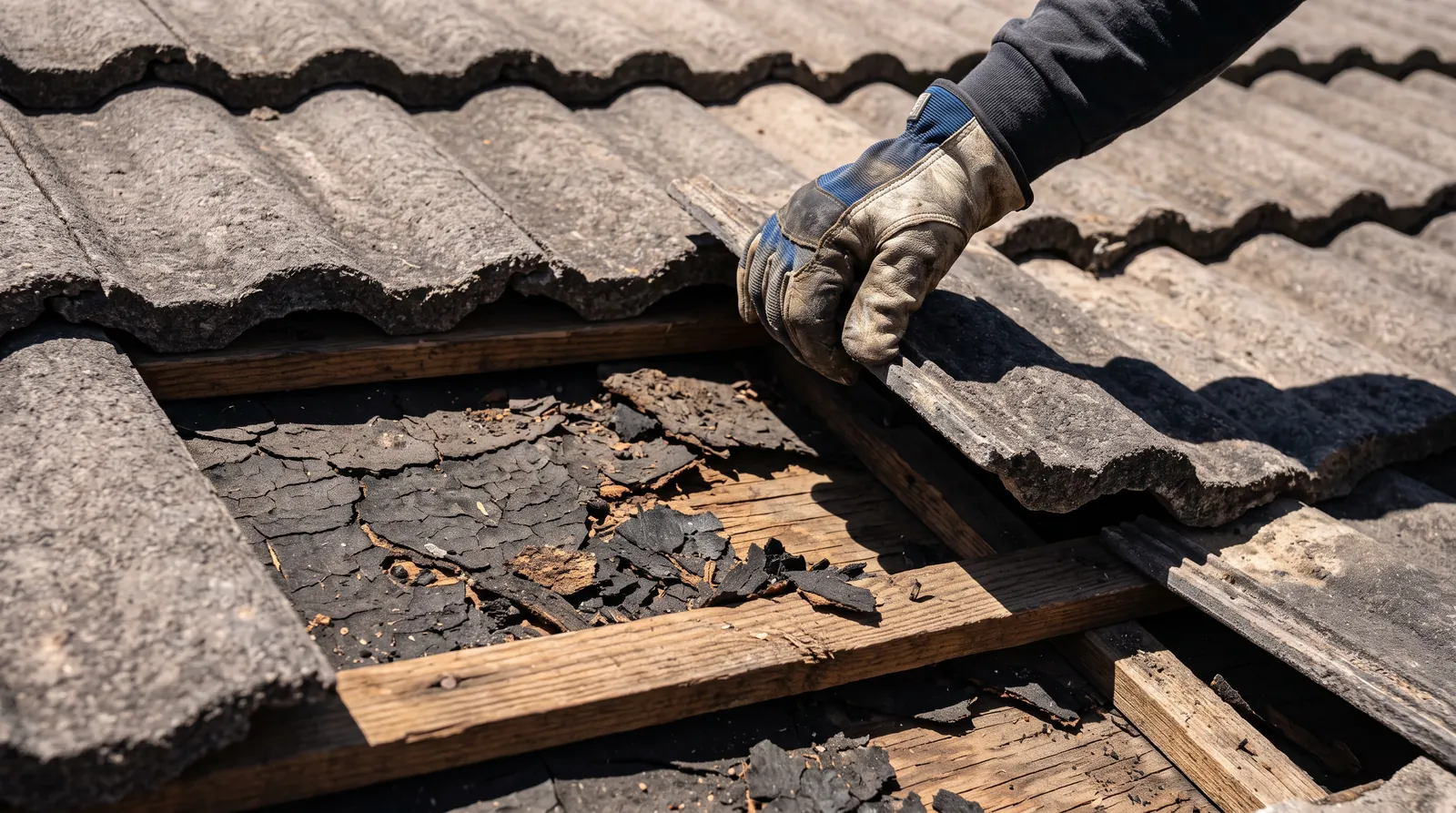
- Brittle, black or crumbling felt visible at the eaves, or when a tile is lifted
- Stains or soft spots on the roof deck when you look from the attic
- The roof is 20 or more years old and has never been relayed
- Dark granules or felt fragments collecting in gutters and at scuppers
What is a tile roof relay and how does it work?
A relay replaces everything under your tile while keeping the tile itself. The crew removes the tiles and stacks them on the roof, tears off the old underlayment and battens, and checks the deck. Any soft or delaminated plywood gets replaced. Then new underlayment goes down, along with new valley metal, pipe jacks, edge metal and bird stop. Finally, the original tile is reset and any broken pieces are swapped for matches.
For a typical East Valley home, the whole job takes 3 to 6 working days. Because you keep the same tile, many HOAs only need notice rather than a full color review, though rules vary by community.
How much does a tile roof relay cost in 2026?
Prices depend on roof size, pitch, tile type, how much decking needs replacing and how complex the roof is. These are typical 2026 ranges we see across Mesa, Gilbert, Chandler and the rest of the East Valley. Your own estimate may land outside them.
- A roofing square equals 100 square feet of roof surface, not floor space
- Steep or cut-up roofs with many valleys cost more to relay
- Replacement tile for breakage is usually included up to a set percentage
| Job | Typical price per square | Typical total, 2,500 sq ft roof |
|---|---|---|
| Underlayment relay, concrete tile | $550 to $850 | $13,750 to $21,250 |
| Underlayment relay, clay tile | $700 to $1,000 | $17,500 to $25,000 |
| New concrete tile, full replacement | $950 to $1,400 | $23,750 to $35,000 |
| Decking replacement, per sheet | $85 to $130 | Varies with deck condition |
Should I relay now or wait for a leak?
Waiting has a real cost. When underlayment fails, water reaches the deck first, and a deck that stays wet through a few monsoon seasons rots. Every sheet of decking we replace adds to the bill, and ceiling and insulation repairs inside the house are not cheap either.
If your roof is past 20 years, the smart move is an inspection that includes lifting tiles in a few key spots. If the underlayment still has life, you have a plan and a budget for later. If it is failing, a spring or fall relay avoids the monsoon rush and the price of emergency work.
FAQ
Can underlayment be replaced without removing the tile?
No. The tile has to come off so the old underlayment can be torn out and new material installed. In a relay, the tile is removed carefully, stacked on the roof and reset once the new underlayment is down.
How much of my tile will break during a relay?
Usually a small percentage, depending on the tile's age and type. Good crews plan for it and carry matching replacements. Many estimates include breakage up to a stated percentage.
Does homeowners insurance pay for a relay?
Generally no. Underlayment wearing out from age and heat is maintenance, not sudden damage. Insurance may cover specific storm damage, but not normal aging.
Is a relay worth it on a 20 year old home?
In most cases yes, because good tile can last another 25 years or more. A relay gives it a new waterproof layer at a much lower cost than new tile.
Written by the people who inspect and build East Valley roofs every week.