Before monsoon season, check for cracked or slipped tile, clear valleys, gutters and scuppers, reseal pipe and vent flashings and have the underlayment checked if your roof is over 20 years old. After storm damage, stay off the roof, photograph everything, get it tarped and request an itemized damage report.
Key takeaways
- The Arizona monsoon runs from June 15 to September 30, with most damage in July and August.
- Clogged drains and old underlayment cause more summer leaks than broken tile does.
- Do the checklist in May or early June, while repair crews still have open schedules.
- After a storm, documentation comes before cleanup. Photos first, then tarps and repairs.
In this article
When is monsoon season in Arizona?
Officially, the Arizona monsoon runs from June 15 through September 30. In practice, the East Valley usually sees its first real storms in early July, and the most damaging ones come in late July and August. Storms tend to build over the mountains in the afternoon and push into Mesa, Gilbert, Queen Creek and San Tan Valley in the evening.
The damage comes from three things: microburst winds that can top 60 to 70 mph, heavy rain that falls fast and sideways, and dust storms that clog every drain before the rain arrives. Any weakness in a roof gets found.
In our Mesa office, leak calls roughly triple in the two weeks after the first big storm of the year. Most of those roofs had warning signs in the spring that nobody looked for. That is the whole point of this checklist: find the small problems while they are still small and while a crew can get to them on your schedule instead of the storm's.
What should I check on my roof before monsoon season?
You can do most of this from the ground with binoculars, or from a ladder if you are comfortable. Do not walk on a tile roof yourself. Tile cracks easily under a misplaced step.
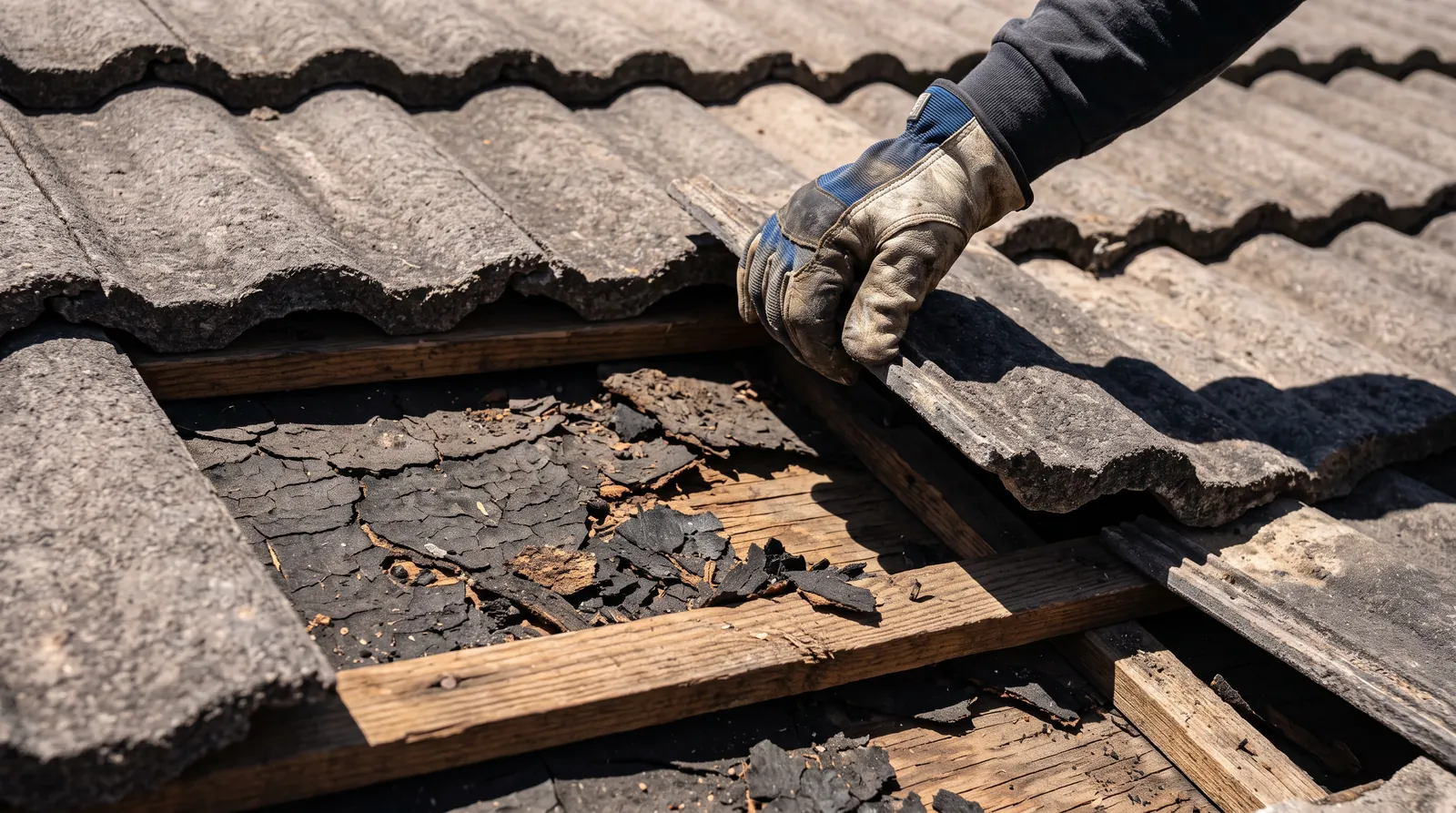
- Look for cracked, slipped or missing tiles, especially along ridges, hips and edges
- Check that ridge caps are straight and firmly set, since wind lifts loose ones first
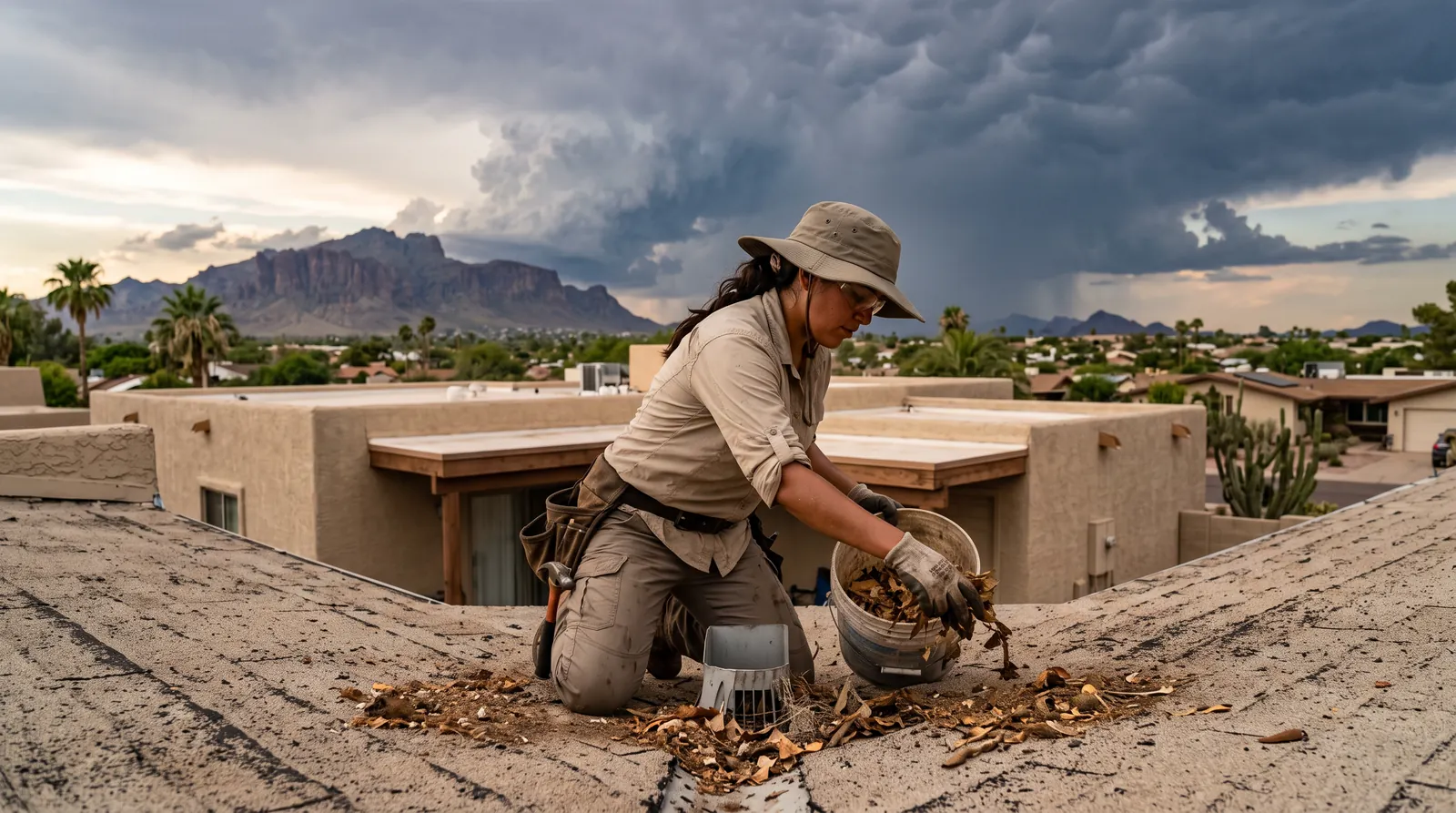
- Clear leaves, dust and debris from valleys, gutters and downspouts
- On flat roofs, clean out scuppers and look for places where water has been ponding
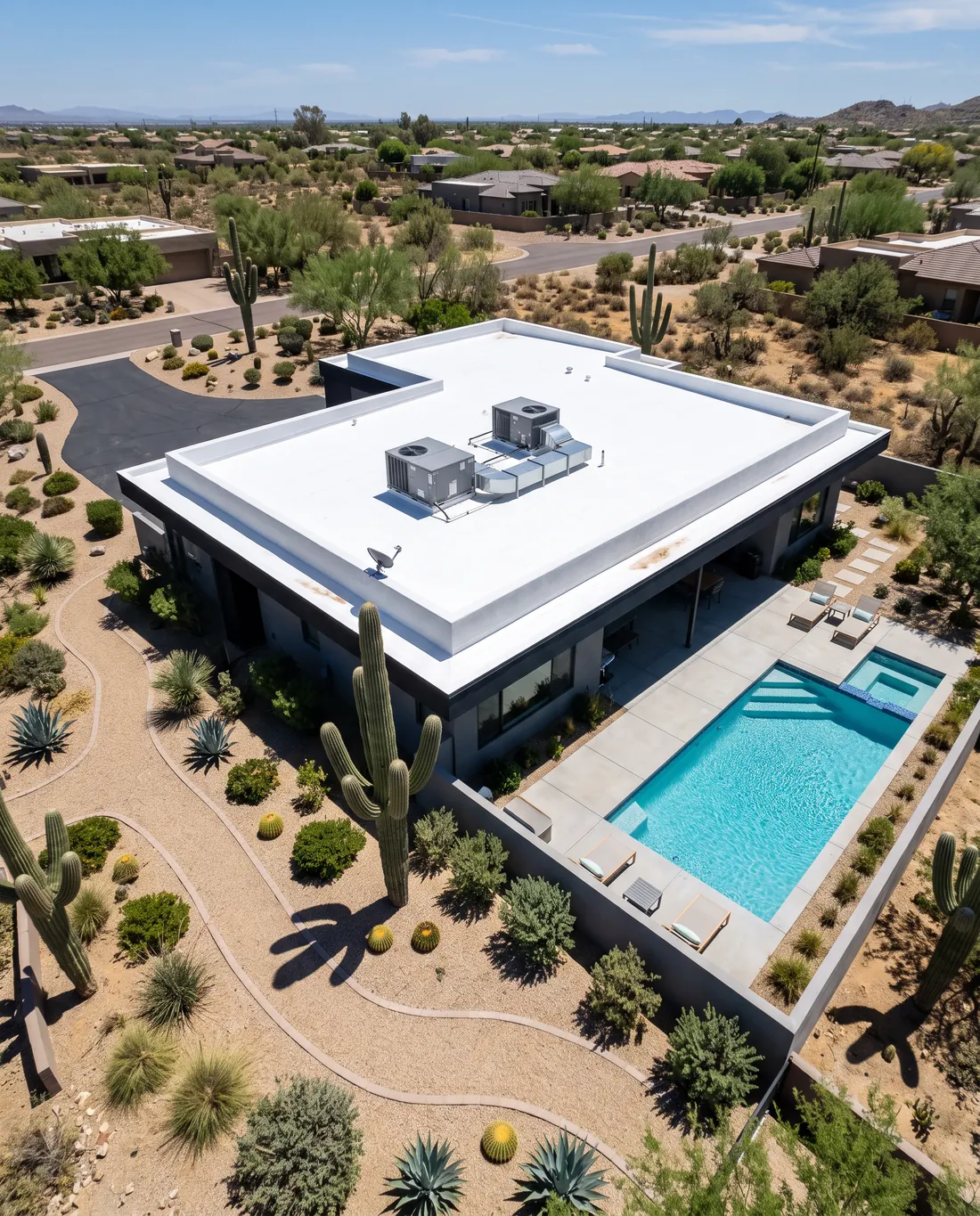
- Check the white coating on foam roofs for worn spots where tan foam shows
- Look at pipe jacks, vents and skylight curbs for cracked sealant or rusted flashing
- Trim tree branches that hang over or rub against the roof
- Look in the attic with a flashlight for old stains or daylight around penetrations
Should I get a professional roof inspection before monsoon?
If your tile roof is more than 18 to 20 years old, yes. The most common cause of monsoon leaks we see is not broken tile. It is worn underlayment that finally lets wind-driven rain through. You cannot see that from the ground, and you usually cannot see it from the roof without lifting tiles.
A pre-season inspection with a drone flight and a few tiles lifted at valleys and eaves costs far less than an emergency call in August. It also gives you a written record of the roof's condition before any storm, which can help if you ever need to show an insurer what changed.
For flat and foam roofs, the same logic applies to coating. A recoat done in May cures in dry weather and is ready for the first storm. A recoat pushed into August often waits on weather and competes with emergency calls for crew time.
What should I do right after a storm damages my roof?
Take a breath and go in this order. The goal is to keep water out of the house, keep yourself safe and keep a clean record.
- Stay off the roof, especially while it is wet or dark
- Move furniture and electronics away from drips and set out buckets and towels
- If a ceiling is bulging with water, poke a small hole to drain it into a bucket
- Photograph ceiling damage, tiles in the yard and any debris before cleaning up
- Call a roofer for emergency tarping and keep every receipt
- Ask for a written, itemized damage report with photos
Will homeowners insurance cover monsoon roof damage?
Sudden wind and hail damage is often covered, depending on your policy and deductible. Normal wear, like underlayment that has aged out, usually is not. That is why a good damage report separates the two. Adjusters want to see wind-lifted tile, fresh breaks and damaged flashing, not years of sun wear.
Before you file, compare the repair estimate to your deductible. For smaller damage it may make more sense to pay for the repair directly. If you do file, ask your roofer to meet the adjuster on the roof. A second set of eyes on scope helps make sure nothing is missed.
How do I avoid storm chasers after a monsoon?
Every big storm season brings out-of-state crews knocking on doors in the East Valley. Some are fine. Many are gone by October, along with any warranty. A few simple checks protect you.
- Confirm an active Arizona ROC contractor license and a local address
- Ask who will actually do the work, their own crew or subcontractors
- Get a written, itemized estimate, never just a signature on a claim form
- Do not pay large deposits before materials arrive
FAQ
When should I schedule roof repairs before monsoon?
April, May or the first half of June is ideal. Crews still have open schedules and there is time for HOA approvals if you need them. Once storms start, roofers across the Valley book up quickly.
How do I know if my roof has wind damage?
Look for tiles on the ground, lifted or shifted ridge caps, missing edge tiles and new stains inside. A drone inspection can spot damage you cannot see from the yard.
Can I put a tarp on my roof myself?
We do not recommend it, especially on tile. A wet tile roof is slippery and tiles break easily. A poorly secured tarp can also blow off and cause more damage.
How long does a monsoon roof repair take?
Small repairs are often done in a day. Larger repairs depend on materials and, if you file a claim, on adjuster timing. Tarping keeps the house dry in the meantime.
Written by the people who inspect and build East Valley roofs every week.